

Claire Makes Angel Food Cake | From the Test Kitchen | Bon Appétit
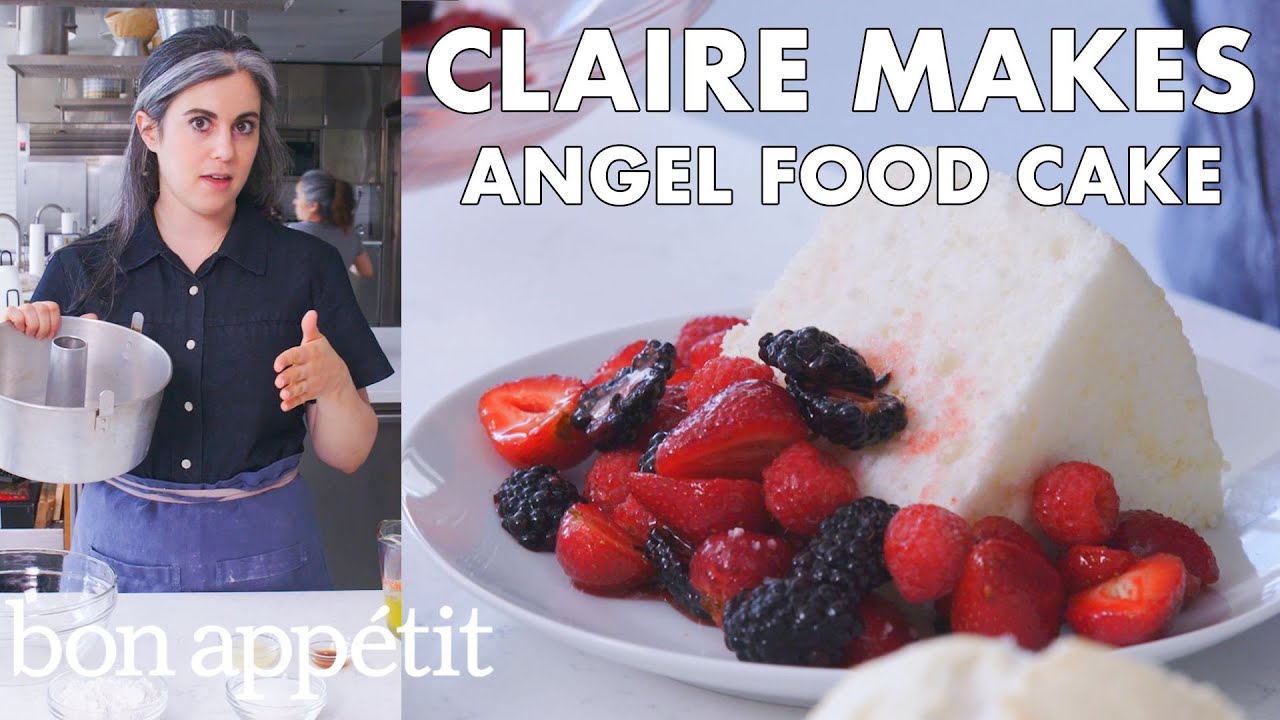

Claire Saffitz sets out to fix everything wrong with angel food cake’s reputation.
Angel food cake spent the 1990s getting a bad rap — cloying, rubbery, the dessert nobody actually asked for at the potluck. In this “From the Test Kitchen” video, Bon Appétit pastry chef Claire Saffitz walks through BA’s Best Angel Food Cake and makes the case that the problem was never the cake itself, just sloppy technique. Her version leans on precise aeration, minimal fat, and a short list of ingredients handled with real discipline.
- The recipe uses 1¾ cups of egg whites — roughly 12 to 14 large eggs — whipped with 1½ teaspoons of cream of tartar, 1 teaspoon of kosher salt, and two-thirds cup of granulated sugar to glossy, medium-soft peaks.
- Two teaspoons of vanilla extract and two tablespoons of fresh lemon juice cut the sweetness, while one cup of cake flour sifted with two-thirds cup of powdered sugar gets folded in gently to keep the meringue from deflating.
- Saffitz insists on baking in an ungreased 10-inch tube pan and cooling the cake completely upside down for at least an hour — non-negotiable steps for keeping the structure from collapsing.
The Essential Need for Meringue Perfection
Everything in this cake hinges on the egg whites. Saffitz whips 1¾ cups of them — the yield from about 12 to 14 large eggs — with cream of tartar and kosher salt before slowly streaming in two-thirds cup of granulated sugar, building to glossy, medium-soft peaks rather than the stiff, dry peaks bakers often chase. That distinction matters: over-whipped whites turn brittle and lose the elasticity needed to trap air as the cake climbs in the oven.
She also breaks from the classic single-acid approach. Cream of tartar stabilizes the foam, but Saffitz adds two tablespoons of fresh lemon juice on top of two teaspoons of vanilla extract, layering acidity into the batter to counteract the flat sweetness that made older angel food cakes taste one-note.
The Dry Mix and the Fold
For structure without heaviness, Saffitz sifts one cup of cake flour together with two-thirds cup of powdered sugar. Cake flour’s lower protein content keeps the crumb soft, and sifting it with the powdered sugar — rather than granulated — helps it disappear into the meringue instead of weighing it down. She folds the dry mixture in gradually, in stages, because dumping it in all at once collapses the air pockets she just spent minutes building.
Bake it in an ungreased pan, or the batter has nothing to climb.
The Pan Rules That Make or Break the Cake
Saffitz treats the baking and cooling steps as non-negotiable. The batter goes into an ungreased 10-inch tube pan — angel food cake has no fat to speak of, so it needs to grip the bare metal sides to climb properly as it bakes. Any grease on the pan and the batter slides instead of rising.
Once it’s out of the oven, the cake gets flipped immediately, resting upside down on its pan’s built-in feet or balanced over a bottle neck for at least an hour. Skip that step and the delicate structure sags under its own weight before it sets. Only after it’s fully cooled does Saffitz run an offset spatula around the edges to release it from the pan.
Serving It Up
The payoff is simple by design: sliced angel food cake with freshly whipped cream and berries, letting the airy crumb and the lemon-cut sweetness do the talking instead of a heavy frosting. For anyone tired of the ’90s version of this cake, that’s the whole pitch — technique over gimmicks, and a slice that actually tastes like something.








10 STRANGE Requirements To Work As A Flight Attendant
Is Shiloh Jolie-Pitt Ready To Delve Into The Modeling Industry?
Professional Chefs Blindly Taste Test Cheese | Test Kitchen Talks | Bon Appétit
Strange Things We Learned About Joan Rivers After She Died
The Most Uncomfortable Letterman Interviews Ever