

Painting the MIRA
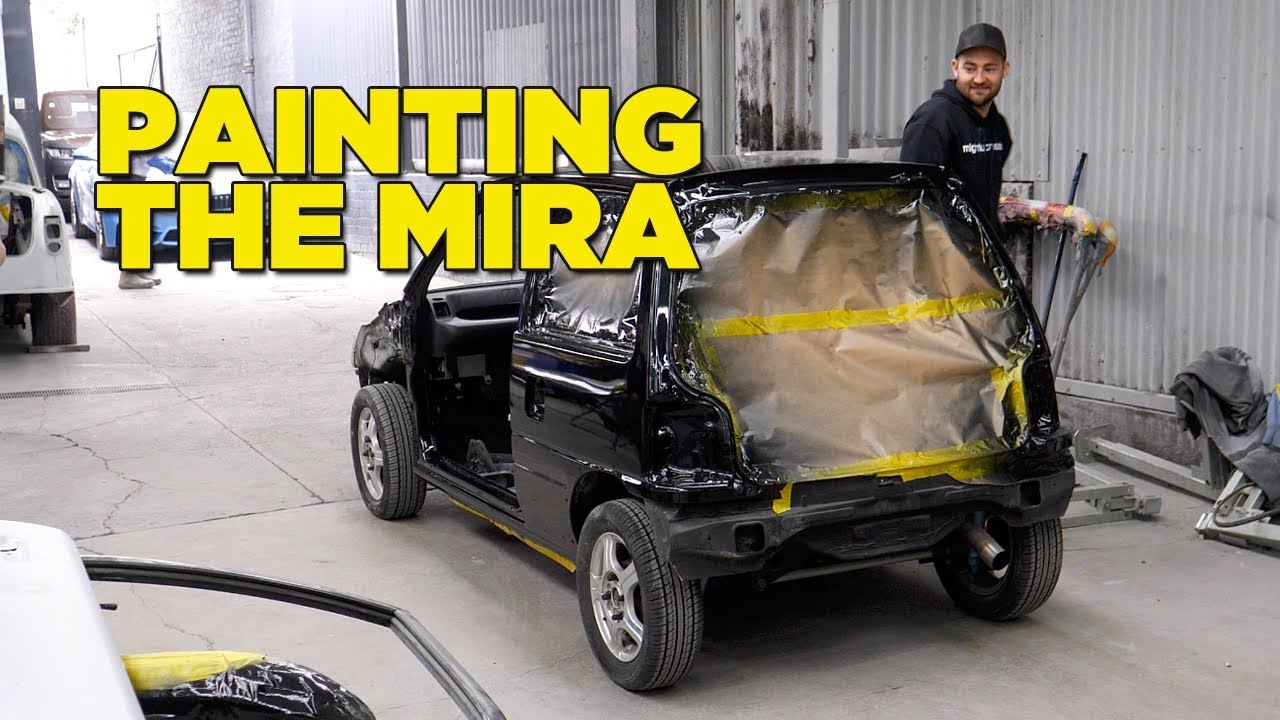

A JDM icon that Australian law once cut in half is finally getting its skin back.
Mighty Car Mods hosts Marty Mulholland and Blair “Moog” Joscelyne have spent years chasing one specific car back to life, and “Painting the MIRA” is the episode where the project finally starts looking less like a science experiment and more like a finished machine. The Daihatsu Mira TR-XX Avanzato at the center of the build isn’t some random kei car — it’s the actual car Marty and Moog bought and drove across Japan for their feature film “Kei to the City.” Getting it street-legal in Australia meant taking a chainsaw to automotive nostalgia, and this video covers the moment the rebuilt body finally gets its color back.
- The car being restored is the turbocharged JDM Daihatsu Mira TR-XX Avanzato that Marty and Moog originally drove in Japan for “Kei to the City.”
- Australian import rules wouldn’t allow the whole car to be registered, so the original vehicle came into the country as a severed “half-cut.”
- The team sourced an Australian-market Mira donor shell and spent months transplanting the turbo powertrain, interior, and floor pan into it before this episode’s bodywork and full respray.
Engineering Challenges Required Splitting Mira
The backstory here is what makes the paint stage matter. Marty and Moog didn’t just buy a project car off Gumtree — they bought this specific Mira in Japan, built an entire road trip film around it, and then ran headfirst into Australia’s import compliance rules, which flatly refuse to register a complete JDM-spec vehicle that doesn’t meet local design standards. The workaround was brutal but effective: import the car as a “half-cut,” essentially a severed drivetrain-and-cabin section, which compliance law treats differently than a whole car.
That half-cut approach meant the actual Mira that made the “Kei to the City” memories existed for years as a stripped, sectioned donor unit rather than a driveable car. To get a legal, registerable Mira back on Australian roads, MCM sourced a separate local-market Daihatsu Mira shell and began the long process of moving the turbocharged guts of the original into it.
Months of Transplant Work Before the Spray Gun
Before any primer touched the panels, the team had already spent months on the mechanical transplant — pulling the turbo engine, the interior, and even the floor pan out of the half-cut and fitting them into the Australian donor body. That’s not a weekend swap; matching floor pans, wiring, and drivetrain mounts across two different production shells is the kind of finicky, unglamorous labor that eats entire weekends without producing anything visually dramatic.
By the time “Painting the MIRA” picks up the story, that unglamorous phase is finished. What’s left is a bare, spliced shell — structurally whole again, mechanically sorted, but still wearing the patchwork scars of the transplant, ready for the surface prep that turns a project car into something you’d actually want parked in your driveway.
Surface Prep and the Full Respray
This is the episode’s centerpiece: the bodywork, sanding, and prep work needed to get a spliced, salvaged shell ready for a professional-grade paint job, followed by the full respray itself. It’s the visual payoff after all the invisible mechanical labor — the point where a car that’s spent its recent life as a stripped patchwork shell starts looking like the showpiece it’s meant to be.
The car that lived in Marty and Moog’s memory as a half-cut finally gets its skin back — same turbo heart, same floor pan, a body that can legally touch Australian tarmac.
For longtime MCM viewers, that respray moment lands harder than a typical build reveal because of everything the car represents — a physical souvenir of “Kei to the City” that had to be legally dismembered just to come home. Long-running creator channels built around drawn-out, multi-part projects tend to earn that payoff the same way — think of the incremental grind behind something like a marathon survival build or the step-by-step escalation of a project chasing one big finish line, where the reveal only hits because you watched every unglamorous stage that got there.
Mira Symbolizes Essential Channel Connectivity
Mighty Car Mods has built its channel on exactly this kind of long-form, real-consequence project — cars that get driven, broken, imported, fought over with bureaucracy, and rebuilt on camera rather than staged for a single episode. The Mira saga, stretching from a Japanese road trip to a customs headache to months of chassis transplant work, is the clearest example of that formula running at full length.
With the body finally painted, the next logical milestone for the Mira is getting it roadworthy and back on Australian streets — the whole point of the half-cut workaround in the first place. That’s the episode fans are waiting on: the first drive of the “new” Mira, turbo intact, floor pan intact, paint finally matching the car’s reputation.








10 Unique Models Revolutionizing The Fashion World
Why The Biggest Loser Disappeared
Convicted sex offender Jeffrey Epstein died by apparent suicide overnight in a Manhattan jail cell
Celebs Who Have Come Out As Pansexual
UFC 241 Embedded: Vlog Series – Episode 1