

Dueling Hats – Key & Peele
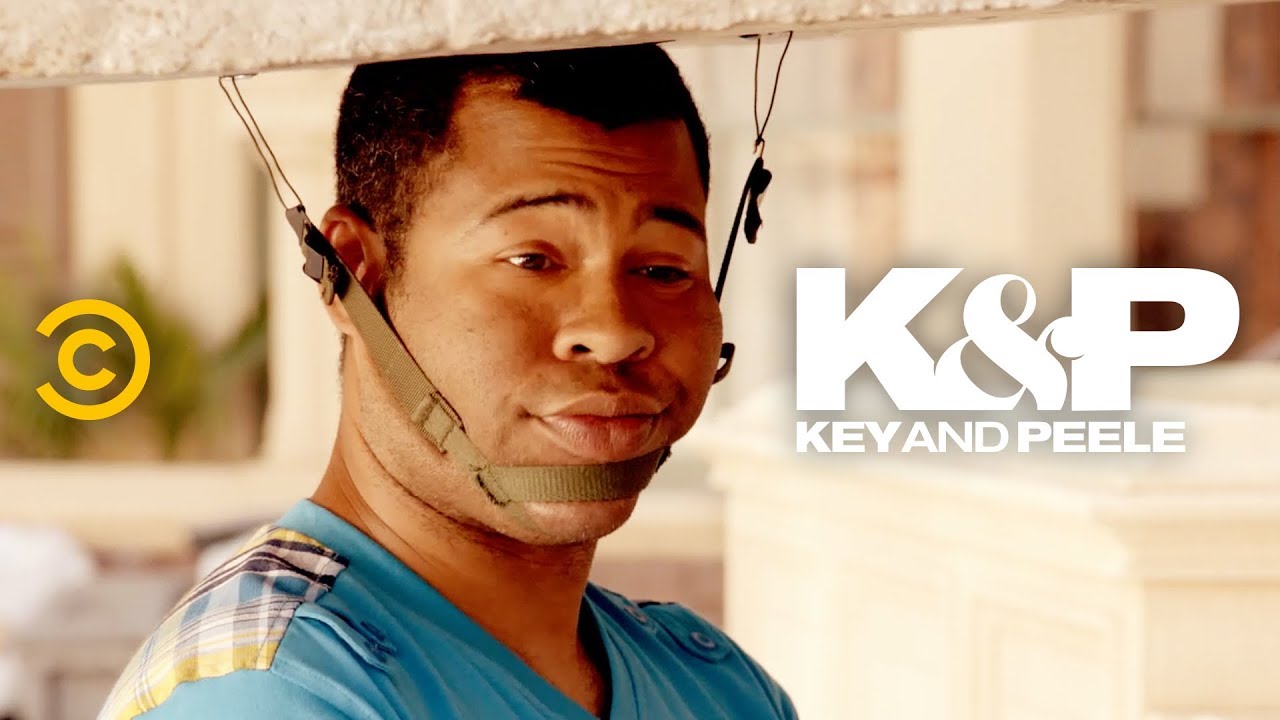

Two guys on a street corner turn a snapback flex into an all-out war of absurdity.
“Dueling Hats” is one of the sharpest sketches Comedy Central’s Key & Peele ever produced, and it built its entire premise around a real hip-hop fashion habit: leaving the factory stickers, price tags, and packaging on a brand-new baseball cap to prove it’s fresh out of the box. Keegan-Michael Key and Jordan Peele play two friends who run into each other repeatedly on the same corner, and each time the conversation turns into a one-upmanship contest over whose hat is more untouched. What starts as a sticker on a bill spirals into something the show’s writers turned into a signature escalation gag.
- The sketch, from Season 2, Episode 10 of Key & Peele (2012), parodies the trend of keeping tags and stickers on flat-brim caps to signal they’re brand new.
- The one-upmanship escalates from a metallic sizing sticker to a hanging price tag, then to keeping the hat sealed in its original plastic packaging.
- By the final beat, one friend shows up wearing the cardboard shipping box, then balancing the factory sewing machine on his head, before the other tops him by arriving with the actual assembly-line seamstress stitching his hat live, mid-conversation.
The Setup on the Corner
The sketch opens simply enough. Key’s character notices Peele’s hat still has the sizing sticker stuck to the brim — a small detail real streetwear culture treated as a badge of honor in the early 2010s, when leaving tags on was shorthand for “I just bought this.” Peele counters immediately by pointing out his own hat still has the store price tag dangling off it, and the game is on. Neither man wants to concede that the other’s hat looks newer, and neither is willing to just take the stickers off.
That refusal to simply remove the tags — the obvious, common-sense move — is the engine of the whole bit. It’s the kind of premise Key & Peele built entire seasons around: take one small, recognizable social tic and refuse to let either character back down from it.
The Escalation Ladder
Once the two characters part ways, the sketch cuts back to them separately, each returning to the corner with a more ridiculous flex than the last. The plastic packaging comes first — an entire hat still shrink-wrapped and worn as-is. Then one friend shows up wearing the actual cardboard shipping box the hat came in, still perched on his head like a normal accessory. From there it gets stranger: the factory sewing machine itself ends up balanced on top of his head, as if that’s a completely reasonable next step in proving the hat’s authenticity.
By the last exchange, one friend walks up with the actual sweatshop seamstress still attached to his head, stitching the hat together in real time while he casually keeps the conversation going.
That final image — a live seamstress mid-stitch, treated by both characters as a completely normal part of a street-corner chat — is the joke taken to its full, absurd conclusion. Neither man reacts to how insane the escalation has become, which is exactly why it lands.
Functional Mechanics of the Bit
What makes “Dueling Hats” hold up isn’t just the shock value of the final gag — it’s the commitment. Key and Peele play every stage with total sincerity, never winking at the camera, which is the same disciplined delivery that made other Key & Peele sketches, and plenty of sketch comedy elsewhere on Comedy Central, work as well as they did. Compare it to something like the escalating chaos of an SNL cold open, where the joke also depends on characters treating an absurd situation as completely routine — it’s the straight-faced commitment that sells the exaggeration, not the exaggeration itself.
The sketch also works because it’s rooted in something specific and real: the actual trend of leaving stickers and tags on caps to prove they’re new. That specificity is why it plays as satire rather than just randomness, in the same way the sharper cultural breakdowns on shows like Last Week Tonight land harder when they’re built on a real, recognizable detail rather than an abstract target.
The whole sketch runs under three minutes, and there isn’t a single line of dialogue wasted getting from a metallic sticker on a hat bill to a seamstress stitching away on someone’s head — which is about as tight as escalation comedy gets.






The Truth About Jill Duggar’s Husband
The Universal S
TikTok Stars You Might Not Know Passed Away
Celebrities Who Married Their Fans
LITTLE WOMEN – Official Trailer (HD)