

The Untold Truth Of The ‘Old Man’ From Pawn Stars
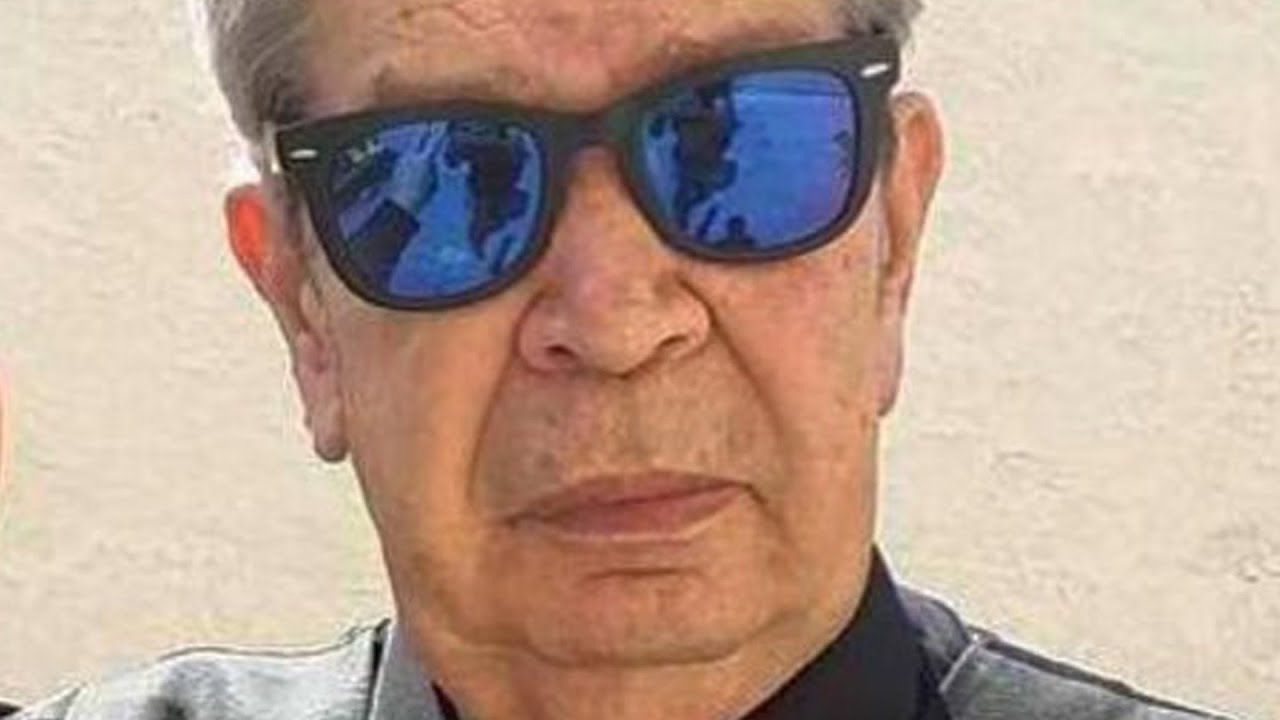

Las Vegas lost its most famous pawnbroker on June 25, 2018, when Richard Benjamin Harrison Jr. died at 77 after years of fighting Parkinson’s disease.
To millions of History Channel viewers, he was simply “the Old Man” — the scowling, sharp-eyed patriarch who ran the counter at the World Famous Gold & Silver Pawn Shop on Pawn Stars. Behind the gruff on-screen persona was a Navy veteran who rebuilt his life more than once, first after a brutal financial collapse in real estate and then again when he turned a $10,000 investment into a multi-million-dollar business with his son Rick. His death closed the book on one of reality television’s most recognizable characters.
- Richard Harrison died June 25, 2018, in Las Vegas at age 77, surrounded by family, after a multi-year battle with Parkinson’s disease.
- He served 20 years in the U.S. Navy (1958–1979), reaching the rank of Petty Officer First Class, before losing an estimated $1 million in real estate and relocating to Las Vegas in the 1980s.
- He and Rick Harrison opened the World Famous Gold & Silver Pawn Shop in 1988 with just $10,000, a business that later became the setting for History’s top-rated show, Pawn Stars, which premiered in July 2009.
From Lexington to the Navy
Harrison grew up in Lexington, North Carolina, and enlisted in the United States Navy, where he served for two full decades between 1958 and 1979. He left the service as a Petty Officer First Class, a rank that reflected the discipline and work ethic he later carried into civilian life and, eventually, into the pawn business.
That work ethic became something of a personal creed. “Work is in my blood,” Harrison said of himself, a line that fans of the show would come to associate with his no-nonsense approach to running the shop and appraising everything that came through the door.
A Fortune Lost, Then Rebuilt
Life after the Navy wasn’t smooth. Harrison ventured into real estate and lost an estimated $1 million when the market turned on him, a financial gut-punch that forced him to start over. Rather than stay put, he packed up his family and moved to Las Vegas in the 1980s looking for a fresh start.
That fresh start arrived in 1988, when Harrison and his son Rick opened the World Famous Gold & Silver Pawn Shop with a starting investment of only $10,000. What began as a modest storefront grew into a multi-million-dollar operation — and, two decades later, the backdrop for a television phenomenon.
Becoming “The Old Man”
Harrison picked up his famous nickname when he was just 38 years old, long before gray hair and a Parkinson’s diagnosis made it seem inevitable. On Pawn Stars, which debuted in July 2009 and quickly became History’s highest-rated program, he became known as the shop’s master appraiser — the guy who could size up a Rolex, a vintage automobile, or a piece of forgotten history and tell a customer, bluntly, what it was actually worth.
Fans latched onto his hard-bargaining style and dry wit as much as his expertise. He wasn’t there to make friends across the counter; he was there to make a deal that made sense.
“He was the best father, grandfather, and great-grandfather you could have.” — Rick Harrison
Honors and a Community’s Farewell
Off camera, Harrison’s rise from a Navy man with a wrecked bank account to a nationally known TV figure earned him formal recognition in both of the places he called home — he received keys to the city in Las Vegas and in his hometown of Lexington, North Carolina. Those honors sat alongside the cult following he built simply by being himself on screen for nearly a decade.
When word of his death spread, fans didn’t wait for a formal service to pay tribute. An impromptu memorial sprang up at the Gold & Silver Pawn Shop, with his signature fedora and his counter chair set out as a stand-in for the man who wasn’t there to fill them anymore.
Rick Harrison and the rest of the family that built the shop around him will keep the counter running, but the chair behind it says everything about who’s missing now. For a guy who once said work was in his blood, it’s fitting that the tribute wasn’t a plaque or a statue — it was his hat and his seat, left exactly where he used to sit.
![KSI – Holiday [Official Music Video]](https://entertainment.infosearched.com/wp-content/uploads/sites/5/2021/06/47690-ksi-holiday-official-music-video.jpg)






The Perfect Woman Body Type Throughout History
FULL FACE OF FROZEN MAKEUP CHALLENGE | WTF DID I JUST DO???
Minecraft, But My Friend Is A Wither…
This Is How Blush, Eyeshadow and Highlighter Are Made
90 Day Fiance Stars Who Had Plastic Surgery Transformation