

Why Oil Paint Is So Expensive | So Expensive

A tube of blue paint can cost more than a bottle of fine wine, and the reason has nothing to do with marketing.
Squeeze open a $1,100-per-liter tube of artist-grade oil paint and you’ll find the exact same two ingredients as a $12 student tube: pigment and a drying oil like refined linseed, walnut, safflower, or poppy seed. Business Insider’s “So Expensive” series set out to explain that gap, and the answer turns on how much pigment actually makes it into the tube, where that pigment comes from, and how many times it gets run through a mill before it’s fit to paint with.
- Professional oil paints can run 75% pigment concentration, while cheaper student-grade tubes drop to roughly 23%, with the rest made up of fillers like blanc fixe and additives such as driers and white spirits.
- Pigment cost swings wildly by chemistry: cheap earth tones like yellow ochre are simple to produce, while cobalt blue requires sintering cobalt(II) oxide with alumina at 1,200°C, and genuine lapis lazuli ultramarine sits at the extreme high end.
- Paint paste has to pass through a triple-roller mill three to nine times depending on the pigment’s hardness — over-grinding kills the color’s vibrancy, under-grinding leaves it gritty.
Pigment Determines The True Cost
According to fine art specialists at Jackson’s Art Supplies, the biggest swing factor in a tube of oil paint isn’t the oil — it’s what’s suspended in it. Basic earth pigments like yellow ochre come out of the ground in usable form and cost next to nothing to refine. Synthetic pigments sit in the middle. But a color like cobalt blue demands sintering cobalt(II) oxide with alumina at 1,200°C, an industrial process that adds real manufacturing cost before a single tube gets filled. Historic pigments push the price further still — genuine ultramarine made from lapis lazuli has been one of the most expensive pigments in art history for centuries, which is exactly why so many painters switched to synthetic substitutes once they became available.
Pigment Load Versus Filler
The report’s clearest number is the concentration split: professional-grade paint can carry up to roughly 75% pigment, while student-grade paint can fall to around 23%, with the difference made up in colorless fillers like blanc fixe plus chemical additives such as driers and white spirits. That’s not just a cost-cutting trick — those fillers and additives can degrade, crystalize, or cause a painting to “weep” decades down the line, which is precisely the kind of long-term failure that professional-grade paint is engineered to avoid.
Professional oil paint can run up to 75% pure pigment; student-grade paint can drop to around 23%.
The Milling Process Nobody Sees
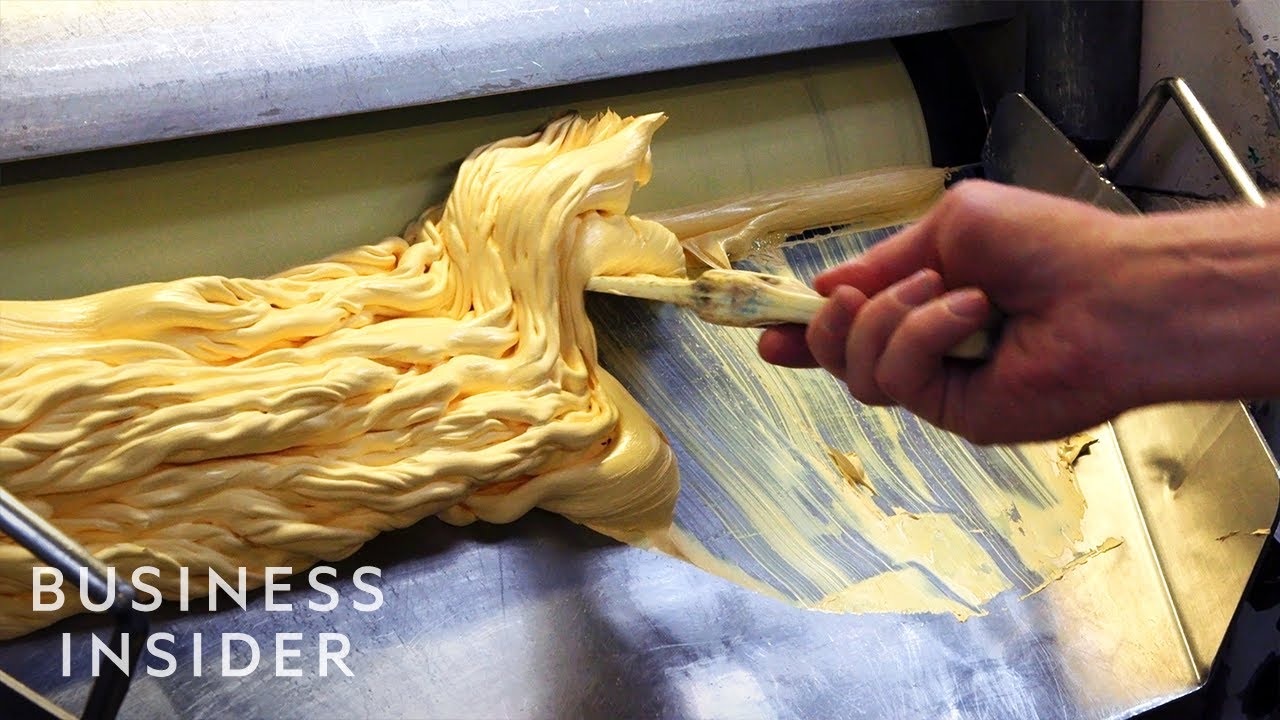
Getting pigment and oil to actually bond into usable paint means running the paste through a triple-roller mill built from granite or steel, anywhere from three to nine passes depending on how hard the pigment’s particles are. Every pass has to be calibrated for roller heat expansion and the paste’s viscosity in the moment — over-mill it and you strip the color’s vibrancy, under-mill it and you’re left with gritty, unmixed particles that will show up on canvas. It’s the kind of quality-control step that separates a boutique paintmaker from a bulk manufacturer, in the same way that provenance and craftsmanship separate a one-of-a-kind gown from something off the rack, the way the price gap plays out among the most expensive royal wedding wedding dresses ever commissioned.
Market Value Endures Through Centuries
Unlike water-based paints, which dry through simple evaporation, oil paint cures slowly through oxidation, and it does so without a significant color shift. That’s the trade-off buyers are actually paying for: tactile richness now and durability that can outlast the artist by hundreds of years. It’s a market logic not unlike watching a small stake compound into something disproportionately larger, the same principle behind turning a single cent into a house in under a month — a tiny, carefully controlled input, multiplied by patience and process, into something worth far more than its raw materials would suggest.
That durability is also why the fine-art market keeps paying premium prices rather than switching to cheaper alternatives. A muralist or student painter can get by on a $23-a-tube student set. A painter selling canvases meant to hang for a century can’t risk fillers that crystalize or oils that weep — so the $285-to-$1,100 range isn’t really about vanity pricing, it’s about what a tube has to survive.









10 UNORIGINAL Copy Cats of Famous People
Meanwhile… The New 007 Is A Black Woman
IT CHAPTER TWO – Final Trailer [HD]
Eric Trump’s Most Bizarre Behavior Since His Dad Left Office
The World’s Longest Drink Waterfall? | This Could Be Awesome #1