

20 Things You Didn’t Know About The Barbie Doll
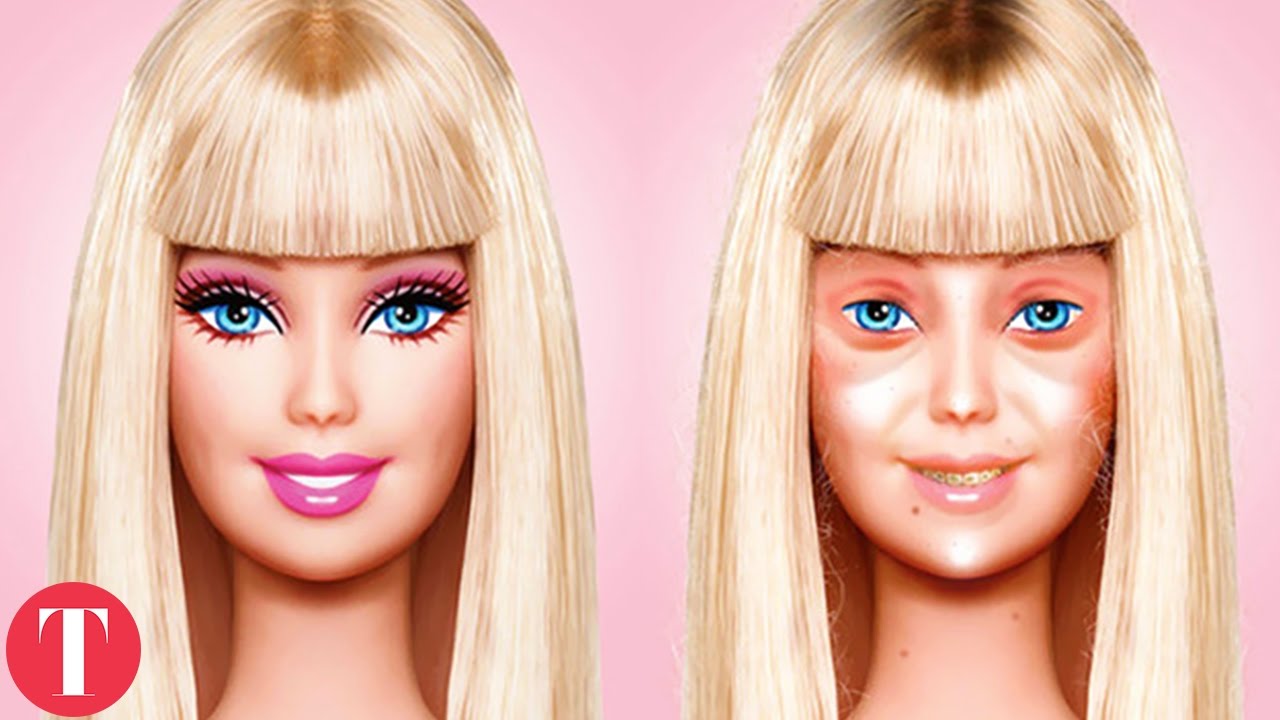

Barbie has been Mattel’s best-selling doll for 57 years, and the story behind her creation is stranger than the toy itself.
Every little girl who ever lined up a shoebox full of miniature heels knows the name Barbara Millicent Roberts — even if she never learned it. Barbie debuted at the American International Toy Fair in New York City on March 9, 1959, and despite skepticism from buyers who doubted parents would spend money on a doll with an adult figure, Mattel moved roughly 300,000 to 351,000 units in her first year alone. Nearly six decades later, she’s still one of the most recognizable toys ever made, and her backstory involves a European gag doll, a real family’s names, and a body-image reckoning that took Mattel more than 50 years to address.
- Barbie made her public debut on March 9, 1959, at the Toy Fair in New York City, selling between 300,000 and 351,000 dolls in her first year.
- Her creator, Ruth Handler, based the physical design on Bild Lilli, a West German gag doll, after watching her daughter Barbara play with adult paper dolls.
- In early 2016, Mattel overhauled its Fashionistas line with three new body types — curvy, petite, and tall — along with new skin tones, eye colors, and hair textures.
The Paper Doll That Started Everything
Ruth Handler, who co-founded Mattel, watched her daughter Barbara spend hours playing with adult paper dolls and realized there was nothing three-dimensional on the market that let young girls imagine themselves as grown women. While vacationing in Europe, Handler came across Bild Lilli, a comic-strip gag doll sold in West Germany, and used it as the physical prototype for what became Barbie, according to Study.com’s timeline of the doll’s history.
The gamble almost didn’t pay off. Toy buyers at the 1959 Fair were reportedly unconvinced that an adult-figured doll would sell to children or their parents. Handler pushed ahead anyway, and the first 11.5-inch Barbie — sold in a black-and-white striped swimsuit with white sunglasses, gold hoop earrings, and a ponytail available in blonde or brunette with side-glancing eyes — became an instant hit, moving hundreds of thousands of units before the year was out.
Barbara Millicent Roberts and Her Wisconsin Roots
Barbie’s full fictional identity is Barbara Millicent Roberts of Willows, Wisconsin, named directly after Handler’s daughter. Ken arrived in 1961, two years after Barbie’s launch, introduced because consumers were asking for a companion doll — and he was named after Handler’s son, Kenneth, according to Antiques Trader. The naming wasn’t a marketing gimmick dreamed up by an ad agency; it was literally a mother naming toys after her own kids.
Barbie’s early wardrobe and expanding cast of friends turned her into something closer to a fashion franchise than a single toy. Twiggy became the first celebrity to get her own Barbie doll in 1967, a licensing move that decades later would feel routine every time a pop star or model gets a collectible line — the same instinct that keeps sites tracking celebrities who look freakishly alike in the public eye. Malibu Barbie followed in 1971 with forward-facing eyes, a design tweak that made her feel less like a static figurine and more like a character.
From Fashion Model to Astronaut to Presidential Candidate
Barbie’s career resume reads like nothing else in the toy aisle. She started as a teenage fashion model and has since held hundreds of jobs, including astronaut, doctor, and — in 1992 — presidential candidate, according to Study.com. The breadth of those careers is part of why generations of parents have leaned on her as a tool for showing kids that women can do just about anything, decades before that idea became standard marketing language across the industry.
That same era of reinvention runs parallel to how modern entertainment treats fashion and image; shows built entirely around runway culture, like the ones tracked in America’s Next Top Model contestants who actually made it, owe something to the idea Barbie normalized decades earlier — that a single figure could cycle through wildly different roles and still be recognizable as herself.
The Controversies Mattel Couldn’t Avoid
Barbie’s run hasn’t been controversy-free. Critics have hammered her proportions as unrealistic for years, and specific products made things worse at times — 1992’s Teen Talk Barbie drew sharp backlash for a pre-programmed phrase that suggested math wasn’t a girl’s strong suit.
“Math class is tough!”
The line, one of several phrases the talking doll could say at random, became a flashpoint for how Mattel handled gender messaging, and the company eventually pulled it from the doll’s rotation. A decade later, 2003’s pregnant Midge doll stirred its own round of controversy over what was considered age-appropriate for a toy aimed at children.
Mattel’s most direct answer to decades of body-image criticism came in early 2016, when it relaunched its Fashionistas line with curvy, petite, and tall body types alongside a broader range of skin tones, eye colors, and hair textures — the biggest structural change to Barbie’s physical design since her 1959 debut.
Mattel hasn’t said publicly what’s next for the Fashionistas expansion beyond the 2016 rollout, but the three new body types are already sitting on store shelves next to the original silhouette that walked into the Toy Fair 57 years ago — which means, for the first time, a kid picking a Barbie off the shelf actually has more than one body to choose from.



Hollywood Stopped Casting These Actors In 2018 And Here’s Why
Baywatch Abs with Alexandra Daddario | Gym Time w/ Zac Efron
10 Celebs Who Went From TRASH To CLASS
Simple Everyday Things You’ve Been Doing Wrong
Why Beauty Superstar Michelle Phan Left YouTube