

Watch Elon Musk’s Neuralink presentation
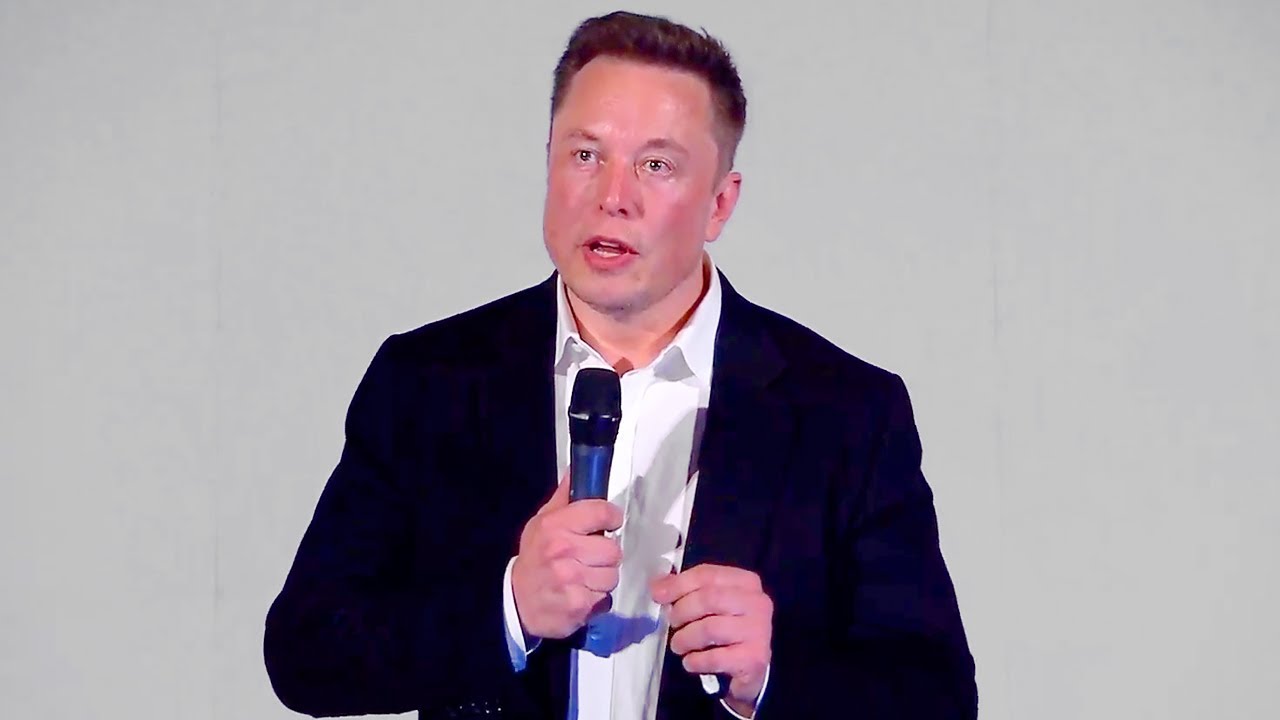

Elon Musk pulled back the curtain on the technology he says will eventually let humans keep pace with artificial intelligence.
On the evening of July 16, 2019, Musk and his neurotechnology startup Neuralink held a launch presentation at the California Academy of Sciences in San Francisco, laying out for the first time exactly what the company has been building behind closed doors. The event doubled as a recruiting pitch, with Musk telling the room the primary goal was luring top-tier engineers in robotics, neuroscience, optics, and chip design to join the project. What followed was a detailed look at hardware most of the audience had never seen outside a lab.
- Neuralink unveiled a custom 4×4 mm ASIC built to process data from up to 1,024 flexible, ultra-thin polymer threads implanted directly into brain tissue.
- The company showed off a purpose-built neurosurgical robot, described as operating like an automated sewing machine, designed to insert those microscopic threads while steering clear of blood vessels.
- Musk said Neuralink is targeting FDA approval to begin its first human clinical trials as early as the first half of 2020.
The Hardware Behind the Pitch
The centerpiece of the presentation was the chip itself — a 4×4 mm ASIC capable of handling signals from over a thousand threads at once, a scale far beyond what most existing brain-machine interfaces have attempted. Those threads are described as flexible and ultra-thin, engineered specifically to sit inside brain tissue without the rigidity that has historically made implanted electrodes so damaging over time. Neuralink’s team framed the chip and thread combination as the foundation for reading and eventually writing neural signals with much finer resolution than prior approaches.
Placing that many hair-fine threads into living brain tissue by hand isn’t realistic, which is where the robot came in. Neuralink demonstrated a neurosurgical robot built to insert the polymer threads with the kind of precision a human surgeon can’t reliably replicate, threading them into place while avoiding blood vessels — Musk’s team compared its motion to a sewing machine, stitching rather than drilling.
Scientific Research Leadership Structure
Neuralink President Max Hodak joined Musk on stage along with other team scientists to walk through the medical rationale for the project. Their pitch centered on treating neurological disorders, paralysis, and spinal cord injuries first, before any talk of broader cognitive enhancement. That near-term, patient-focused framing was deliberate — Musk and Hodak both leaned on the argument that Neuralink’s early value is medical, not speculative.
The stated long-term goal: achieving symbiosis between human cognition and artificial intelligence.
The Timeline Musk Is Chasing
Musk didn’t just describe a distant vision — he put a date on it, saying Neuralink hopes to secure FDA approval to start its first clinical trials in human patients as early as the first half of 2020. That’s an aggressive target for a device this invasive, and it puts Neuralink on a much faster clock than most neurotech companies attempting anything comparable. Whether the agency moves at that pace is a separate question, but the ambition itself was the headline coming out of the Academy of Sciences that night.
It’s the kind of bold, compressed timeline Musk has floated before across his companies, and skeptics will recognize the pattern — similar to how predictions about where technology would be by a certain year tend to age unevenly against reality. Neuralink’s own team was careful to frame the 2020 target as a goal to work toward with regulators, not a guarantee.
Musk Positions Event for Recruitment
Musk was explicit that the presentation wasn’t primarily about announcing a product to consumers — it was about hiring. He wants specialists in robotics, chip design, optics, and neuroscience to see what Neuralink has already built and decide they want in. Ventures like this tend to live or die on whether a small, elite team can move fast enough to justify the ambition, the same tension that shows up whenever a founder tries to move at a speed that outpaces the systems built to contain it. For Neuralink, that means finding people who can build a surgical robot and a custom chip on a clock measured in months, not years.
The next real marker to watch is whatever Neuralink brings to the FDA in pursuit of that first-half-of-2020 trial target — until then, the ASIC, the threads, and the sewing-machine robot shown off at the Academy of Sciences are the only proof of concept anyone outside the company has actually seen.








The UNBELIEVABLE Price Of Being Most Beautiful Kid In The World
TRADITIONAL Chinese STREET FOOD Tour of Hong Kong! BEST CLAY POT RICE!
10 Crazy Things Celebs Have Done For Fashion
IT CHAPTER TWO – Final Trailer [HD]
Cochise – Tell Em ft. $NOT (Directed by Cole Bennett)