

Is Leaded Fuel better than Unleaded? Let’s find out!
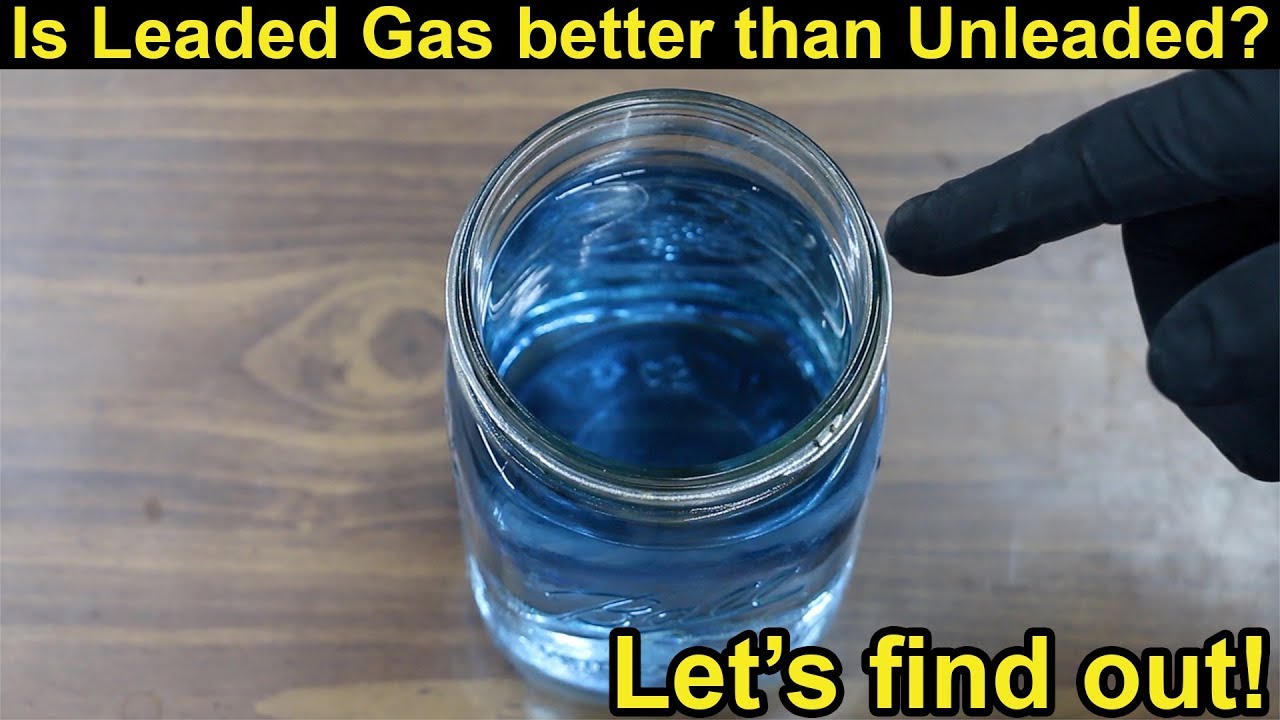

A YouTube gearhead runs 100LL avgas through a rotary engine, a see-through cylinder, and a lawnmower motor just to settle a bar argument.
Project Farm host Todd Finch has built a channel around bench-testing products people argue about — oils, fuel additives, tools — and this time he turned his rig toward a question that pops up at every airport hangar and gearhead forum: does 100 octane low-lead aviation fuel actually outperform pump unleaded gasoline in a regular engine? In “Is Leaded Fuel better than Unleaded? Let’s find out!” he runs 100LL avgas, the blue-dyed racing and aviation fuel that still carries tetraethyl lead, against standard unleaded across five very different test rigs.
- Finch tests 100LL avgas against pump unleaded across a Wankel rotary engine, a see-through piston cylinder engine, a fuel-injected generator, a long-run small engine, and a Predator 212cc engine.
- The see-through cylinder setup lets viewers visually compare flame front speed and combustion behavior between the two fuels.
- An extended-run test on the small engine checks the spark plug and cylinder head for the grayish lead deposit buildup that avgas is known to leave behind.
The Necessity of Lead in Avgas
Tetraethyl lead was banned from automotive gasoline decades ago for public health reasons, but it never left aviation fuel. 100LL — “low lead” is relative, not absolute — still uses the additive because piston aircraft engines run high compression ratios and need serious anti-knock protection at altitude, where detonation can be catastrophic. That’s the whole rationale for the fuel Finch pours into his test engines: it’s built for aircraft, not for a Predator 212cc clone engine sitting on a garage bench.
Visible Evidence in Transparent Cylinders
The most visually convincing piece of the video is the clear piston cylinder engine, which lets Finch record the flame front as it moves across the combustion chamber on each fuel. Side by side, viewers can watch how the burn characteristics differ between 100LL and pump gas rather than just take a dyno number on faith. It’s the kind of demonstration that turns an abstract octane-rating argument into something you can actually watch happen in real time.
The Rotary Engine and Generator Tests
Finch also runs the comparison through a Wankel rotary engine to see how each fuel affects startup and running behavior, and through a fuel-injected generator to measure efficiency and how much wattage load it can carry on each fuel. Neither test is built to flatter avgas — a rotary and a small generator engine aren’t remotely tuned for a fuel designed around high-compression aviation detonation resistance, and the results track with that mismatch.
Lead Deposits and the Predator 212 Speed Run
Two of the tests get at the practical downside and the practical myth. The extended-run small engine, once torn down, shows visible grayish lead deposit buildup on the spark plug and cylinder head after running on 100LL — the same kind of fouling that’s long been a maintenance headache in aviation circles. And on the Predator 212cc engine, where Finch measures straight-line acceleration and top speed, the avgas doesn’t deliver the power gain some assume comes standard with a higher octane number.
High octane doesn’t mean high power — it means high resistance to knock, and in a low-compression engine that never needed that protection, 100LL just leaves lead behind instead of speed.
That’s the through-line of the whole test: 100LL avgas earns its octane rating for a reason, but that reason is detonation resistance in high-compression aircraft engines, not a free horsepower bump in a Predator clone or a Wankel. Finch’s teardown of the fouled spark plug is the receipt — anyone tempted to run avgas in a small engine “for the extra power” now has a torn-down cylinder head showing exactly what they’d be trading for it.









Shady Things Everyone Just Ignores About Kim Zolciak-Biermann
Hollywood’s Most Arrogant Celebrities
CHEVELLE – Everything You Need to Know | Up To Speed
SCARY STORIES TO TELL IN THE DARK (2019) Ending + Monsters Explained
KSI – Holiday [Official Music Video]