

Every Cut of Beef! (Almost) | Basics with Babish
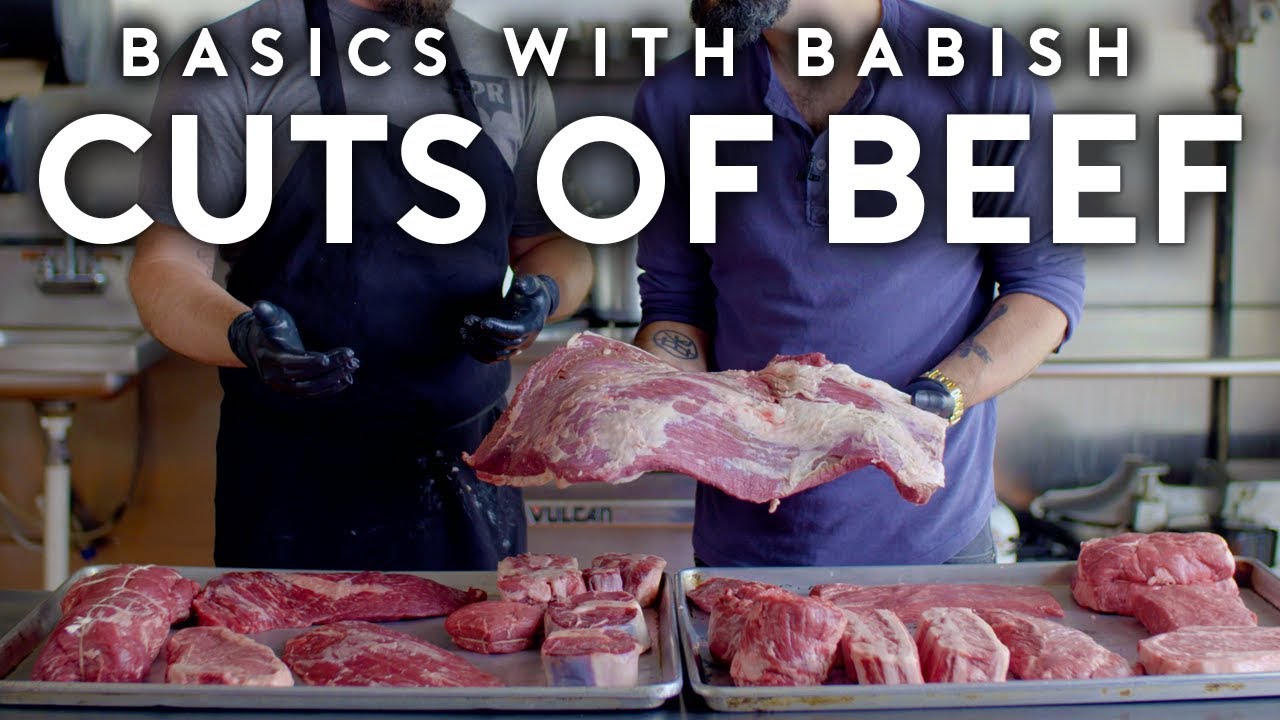

Buying beef at the counter doesn’t have to feel like a pop quiz you didn’t study for.
In an August 2019 episode of “Basics with Babish,” host Andrew Rea took on one of the most common kitchen anxieties out there: standing in front of a butcher case full of unfamiliar names and having no idea what to actually buy. Teaming up with Porter Road, a craft butcher shop out of Nashville, Rea broke the cow down into its working parts — literally — to show why some cuts cost more, cook faster, and taste completely different from others. The video, titled “Every Cut of Beef! (Almost),” turns anatomy into a shopping strategy.
- Rea splits beef into three sections — forequarter, middle primal, and hindquarter — and ties tenderness directly to how much a given muscle works on a live animal.
- Forequarter cuts like chuck and brisket carry dense connective tissue and need low-and-slow braising, stewing, or smoking to turn tender.
- Middle primal cuts such as ribeye, tenderloin, and strip loin are naturally tender and suited to quick, high-heat searing, grilling, or butter-basting, while hindquarter cuts like round are leaner and tougher, with flank and hanger steak singled out as versatile flat cuts for marinating and thin slicing against the grain.
Reading the Cow Like a Map
Rea’s framework starts with a simple idea: a muscle’s toughness is a direct record of how hard it worked while the animal was alive. The forequarter — shoulder, chest, and front legs — is constantly in motion, bearing weight and absorbing stress, which builds up thick bands of collagen. The middle section, running along the back where the ribs and loin sit, does comparatively little heavy lifting, which is exactly why those muscles stay soft and marbled. The hindquarter falls somewhere in between: lean and hard-working, but built differently than the front end.
That anatomy lesson isn’t trivia for its own sake — it’s the entire point of the video. Once a home cook understands that chuck is chewy because it’s a shoulder muscle that flexes constantly, the decision of whether to sear it or braise it stops being a guess and becomes obvious.
Forequarter: Flavor That Needs Time
Chuck and brisket anchor Rea’s forequarter breakdown, and both get the same prescription: don’t rush them. Their connective tissue is loaded with collagen that only turns into silky gelatin after hours at low temperatures, whether that’s a Dutch oven pot roast, a slow braise, or a smoker running for half a day on brisket. Rea frames this as a trade — these cuts demand patience, but they pay it back with a depth of flavor the leaner sections simply don’t have.
The harder a muscle works on the animal, the tougher it gets — and the tougher it gets, the more time and low heat it needs before it’s worth eating.
Middle Primal: Built for Speed
Ribeye, tenderloin, and strip loin sit in the part of the cow that barely does any work, and Rea treats them accordingly — fast, hot, and simple. A ribeye’s marbling means it can handle a hard sear without drying out, while a tenderloin’s near-total lack of connective tissue means overcooking is the only real threat. Butter-basting, grilling, and quick pan-searing all show up here because these muscles are already tender before they ever hit the heat; the cooking method just needs to get out of the way.
Hindquarter and the Flat-Cut Workarounds
The hindquarter, exemplified by cuts like round, gets the least forgiving treatment in the video — lean, tough, and unforgiving if cooked the wrong way. But Rea carves out an exception for flank and hanger steak, flatter cuts that split the difference: still lean and a little chewy, but responsive to a good marinade and, critically, to being sliced thin against the grain. That single technique — cutting against the grain — is presented as the difference between a hanger steak that’s a weeknight bargain and one that’s a workout for your jaw.
Basics with Babish has built its following on exactly this kind of practical demystifying, and the format has plenty of company in YouTube’s broader boom of process-driven content — everything from marathon builds like 100 Hours In Minecraft Hardcore: Episode 1 to stunt records such as World’s Longest T-Shirt Launch | OT 33. What sets Rea’s beef breakdown apart is how directly it translates to a Tuesday night grocery run: know the section of the cow, know the cook time, and the butcher counter stops being intimidating.









CREATING the Polar Peak MONSTER with Clay!! (Fortnite Battle Royale) – Polymer Clay Tutorial
I Bought A Water Park
Tragic Details About Khloe Kardashian
10 Celebs With Identical Twins From The Past
Jacob Tremblay Does His Best Seth Rogen and Arnold Schwarzenegger Impressions