

10 Most Beautiful Faces According To Science
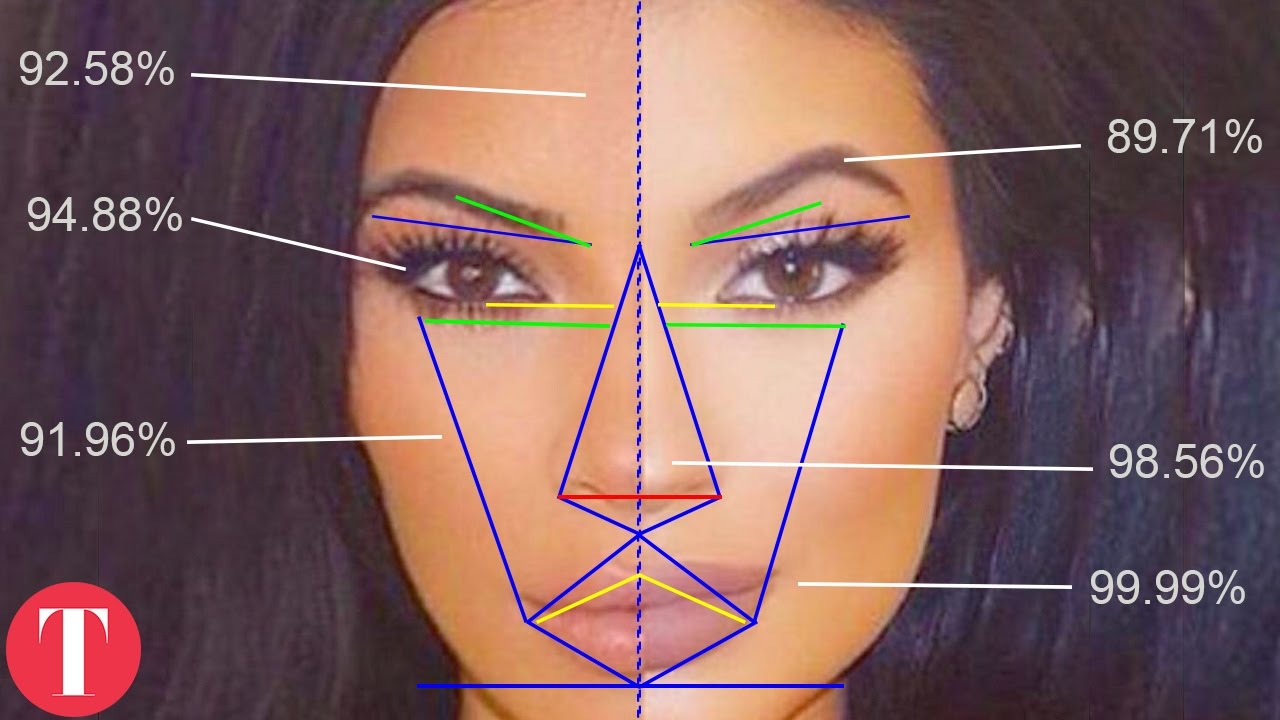

Science put a number on beauty in 2016, and Amber Heard came out on top.
For most of human history, “beautiful” was whatever a given culture said it was — the Han Dynasty prized large eyes, the ancient Egyptians favored narrow shoulders and high waists. In the summer of 2016, London-based facial cosmetic surgeon Dr. Julian De Silva took that argument and ran it through a calculator, applying the ancient Greek Golden Ratio of Beauty — Phi, 1.618 — to a slate of famous faces. The result was a viral ranking that reduced supermodels and A-list actresses to percentages, and it’s the same digital facial-mapping method broken down in TheThings Celebrity’s video “10 Most Beautiful Faces According To Science.”
- Dr. Julian De Silva’s 2016 analysis scored Amber Heard as the most scientifically beautiful woman, with a 91.85% overall match to the Golden Ratio, anchored by the highest-rated chin (99.6%) and nose (99.7%) in the study.
- Kim Kardashian (91.39%, best eyebrows), Kate Moss (91.06%, best forehead proportions), Emily Ratajkowski (90.8%, best lips at 96.7%) and Kendall Jenner (90.18%) rounded out the top scorers behind Heard.
- Separate facial-symmetry research from specialists including Dr. Kendra Schmid singled out Natalie Portman for exceptional bilateral balance, reinforcing the same math from a different angle.
Golden Ratio Facial Measurement Methods
Phi isn’t a beauty myth invented for tabloid clickbait — it’s the same 1.618 ratio ancient Greek architects used on the Parthenon, later mapped onto human anatomy by artists like Leonardo da Vinci. De Silva’s technique takes that ratio and applies it to specific anchor points on the face: the distance between the eyes, the width of the nose relative to the mouth, the proportions of the forehead, and the placement of the jawline and chin. A face is digitally mapped, measured, and compared against the mathematically “ideal” proportions, producing an overall percentage match.
The method also leans on the concept of facial thirds — dividing the face horizontally from hairline to eyebrows, eyebrows to nose base, and nose base to chin — with the most universally appealing faces showing those three sections in near-equal balance. Bilateral symmetry, meaning how closely the left and right sides of the face mirror each other, is weighted heavily too, since the human brain reads symmetry as a shortcut for health and genetic fitness.
Amber Heard’s Numbers Led the Pack
Heard’s 91.85% overall score wasn’t just the highest in De Silva’s rankings — it was driven by two standout individual measurements. Her chin scored 99.6% against the Golden Ratio ideal, and her nose came in at 99.7%, both the top marks recorded in the entire study. Those two features alone were enough to push her ahead of a field stacked with some of the most photographed women in the world.
Amber Heard’s 91.85% match included the study’s highest-rated nose (99.7%) and chin (99.6%).
The Rest of the Top Five
Kim Kardashian landed second at 91.39%, with her eyebrows measuring as the best-proportioned in the analysis — a detail that lines up with how much attention her brow shape has drawn across a career built partly on those exact features. Kate Moss followed at 91.06%, earning her spot largely on forehead proportions that hit close to the Phi ratio. Emily Ratajkowski’s 90.8% score came with the study’s top lip rating at 96.7%, and Kendall Jenner closed out the top five at 90.18%.
Outside of De Silva’s celebrity leaderboard, other researchers were running similar experiments with their own methodology. Dr. Kendra Schmid’s facial-symmetry work, which uses computer mapping rather than the strict Golden Ratio formula, flagged Natalie Portman as a standout for how closely her left and right sides mirror each other — a reminder that “scientific beauty” isn’t a single fixed test but a cluster of overlapping mathematical models all pointing at the same handful of faces.
Reasons for Viral Ranking Success
Part of what made De Silva’s numbers spread the way they did is that they gave people something to argue with using actual data instead of vague opinion. It’s the same instinct that fuels lists like celebrity doppelgänger comparisons — audiences like measuring famous faces against each other, and putting a percentage next to a name turns a subjective debate into something that feels settled. It also helped that the rankings touched stars already living under constant public scrutiny, from Kim Kardashian’s family — whose every feature gets dissected the same way people once dissected Kim Kardashian’s own comments about her daughter North — to supermodels whose faces have been studied by photographers for decades before a surgeon ever ran them through a formula.
Kate Moss and Kendall Jenner making the same list at nearly a decade apart in their careers is really the whole point of the exercise: Phi doesn’t care about the calendar. The formula just measures the distance between a jawline and a nose bridge, and whoever’s proportions land closest to 1.618 wins that round — until the next celebrity gets mapped.








SCARY STORIES TO TELL IN THE DARK (2019) Ending + Monsters Explained
6 Places That Have Banned The Kardashians
The Truth About Tiffany Haddish
“I Spent My Whole Life In Prison”
10 “Evil” Celebs Who Are Actually VERY NICE