

 InfoSearched
Kabul fell in a single day, and the Taliban didn’t have to fire a shot to take it.
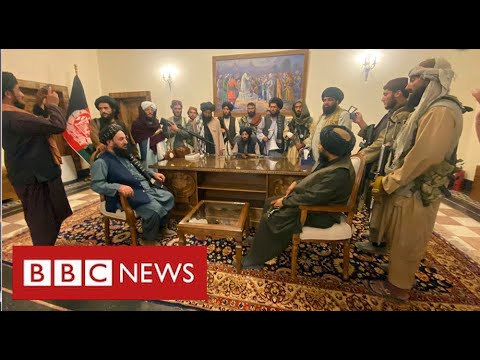
Twenty years after U.S. and coalition forces removed the Taliban from power in the wake of the September 11 attacks, the group walked back into the Afghan capital on August 15, 2021, and occupied the Arg Presidential Palace without resistance. President Ashraf Ghani had already fled the country, and by nightfall Taliban fighters were telling reporters simply that “the war is over.” BBC News at Ten, anchored by Mishal Husain, pieced together the collapse in real time through diplomatic correspondent Paul Adams, Kabul correspondent Malik Mudassir, political correspondent Ben Wright and North America editor Jon Sopel.
- Taliban forces took the Arg Presidential Palace in Kabul after President Ashraf Ghani fled the country, and prepared to declare the return of the “Islamic Emirate of Afghanistan.”
- The collapse followed President Joe Biden’s decision to accelerate the withdrawal of U.S. and NATO troops ahead of an August 31 deadline, ending a 20-year military intervention that began after the 9/11 attacks.
- Thousands of Afghan civilians rushed roads toward Hamid Karzai International Airport as the U.S. Embassy was evacuated by Chinook helicopter and thousands of U.S. and British troops moved in to secure the airfield.
The Palace Falls Without a Fight
There was no siege, no last stand. Taliban fighters simply walked into the Arg Presidential Palace once it became clear Ghani was gone, and posed for cameras in the halls of the building that had housed every Afghan head of state since the monarchy. The group’s message was blunt and deliberately brief: the war was over, and the Islamic Emirate of Afghanistan — the name the Taliban used for its regime before 2001 — was being restored.
Ghani’s departure, confirmed by BBC reporting, came as government forces across the country folded province by province in the final weeks of the Taliban’s offensive. He left, by his own account relayed through officials, to avoid further bloodshed in the capital. His exit removed the last obstacle to a takeover that had been gathering speed since U.S. and NATO forces began their final drawdown.
A Twenty-Year Withdrawal Reaches Its Deadline
The endgame traces back to President Biden’s decision to pull all remaining U.S. troops out ahead of an August 31 cutoff, a timeline that also forced NATO allies to accelerate their own exits. That drawdown stripped away the air power, logistics and advisory support that had propped up Afghan government forces for two decades, and the Taliban’s ground offensive moved faster than almost anyone in Washington or Kabul had planned for.
Jon Sopel’s reporting from North America framed the political fallout building in Washington even as the situation in Kabul was still unfolding — a foreign policy decision now measured against images of a government collapsing in days rather than the months U.S. intelligence assessments had projected.
Chaos on the Road to the Airport
As word spread that the Taliban controlled the capital, the roads to Hamid Karzai International Airport gridlocked with Afghans trying to get onto any outbound flight. Commercial flights were suspended. The U.S. Embassy lowered its flag and evacuated staff by Chinook helicopter directly to the airfield, while thousands of U.S. and British troops moved in to hold the airport perimeter amid sporadic gunfire.
“The war is over.”
That was the line Taliban fighters gave reporters inside the palace grounds — three words summing up a takeover that had, in the space of about a week, rolled through provincial capitals and reached Kabul itself. Malik Mudassir’s dispatches from inside the city captured a population caught between disbelief and panic, with residents describing streets emptying of traffic and filling instead with people trying to reach the airport on foot.
The Diplomatic Scramble
Paul Adams’ diplomatic reporting tracked how quickly Western embassies moved once the palace fell — staff pulled out within hours, documents and sensitive material removed or destroyed, and military transport aircraft pressed into service as makeshift evacuation flights. Ben Wright’s political reporting turned to Westminster and Washington, where the speed of the collapse raised immediate questions about intelligence assessments that had suggested Kabul could hold out far longer than it did. Biden’s own decisions on the drawdown timeline, examined elsewhere by our sister coverage of the political pressures facing his administration, were suddenly the central fact of the story rather than a footnote to it.
For now, the story that matters is the one playing out on the tarmac at Hamid Karzai International Airport, where U.S. and British troops are holding the perimeter so evacuation flights can keep running past the chaos on the roads outside. Whatever comes out of the Taliban’s promised announcement on the Islamic Emirate, the next 48 hours will be decided by how many people get through that airport gate before commercial air traffic and diplomatic patience both run out.







Times The View Hosts Completely Lost It On Camera
Where Has NCIS: Los Angeles’ Hetty Been All Season?
20 Things You Didn’t Know About Justin Bieber
Strange Things About Lebron James’ Marriage
10 Secrets For Flawless Skin From Other Countries