

General Tso’s Chicken | Basics with Babish
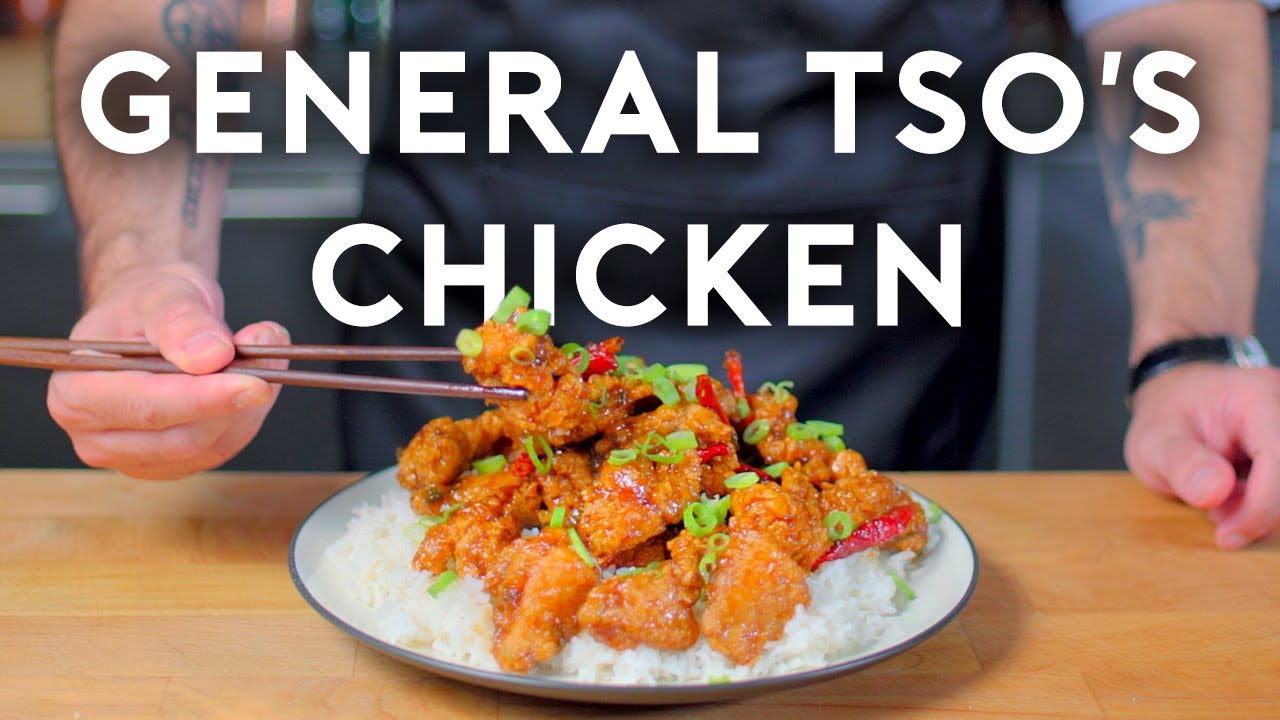

Andrew Rea just made the case that takeout’s most abused dish deserves better than a soggy batter and a sugar bomb of a sauce.
On his YouTube series Basics with Babish, host and filmmaker Andrew Rea walks through a homemade version of General Tso’s chicken built to fix everything wrong with the mall-food-court standard: the cloying sauce, the heavy, flabby crust, the chicken that tastes like an afterthought under all that glaze. Rea’s version leans on marinating, dredging, and deep-frying techniques borrowed from Chinese cooking fundamentals rather than the shortcuts most takeout kitchens rely on.
- Rea marinates 1.5 pounds of boneless, skinless chicken thighs in egg whites, dark soy sauce, Shaoxing wine, vodka, baking soda, and cornstarch — a velveting technique meant to keep the meat tender through frying.
- A portion of that same marinade gets folded into a dry dredge of equal parts all-purpose flour and cornstarch plus baking powder and salt, producing the craggy, crisp shell Rea says takeout versions almost never achieve.
- The sauce itself is whisked from dark soy sauce, Shaoxing wine, rice wine vinegar, chicken stock, sugar, roasted sesame oil, and cornstarch, then briefly cooked down with scallions, garlic, ginger, and whole dried chile de árbol before it ever touches the fried chicken.
The Problem With Takeout General Tso’s
Rea frames the episode around a familiar complaint: the version delivered in a paper carton after a 45-minute wait is usually oversauced, undercooked in flavor, and buried under a batter that goes soft the second it sits. His fix isn’t a shortcut — it’s a full rebuild of the technique, starting with how the chicken itself is treated before it ever sees hot oil.
Velveting And The Marinade
The chicken thighs go into a marinade of egg whites, dark soy sauce, Chinese cooking wine, vodka, baking soda, and cornstarch — a classic velveting mixture used in Chinese restaurant kitchens to keep proteins tender and moist through high-heat cooking. Rea holds back a portion of this marinade rather than discarding it, folding it directly into the dry dredge later so the coating carries the same seasoning as the meat underneath.
Building The Craggy, Crisp Coating
Instead of a smooth, uniform batter, Rea combines equal parts all-purpose flour and cornstarch with baking powder, salt, and that reserved marinade to create a shaggy, textured dredge. Fried in a deep pot, it’s designed to shatter rather than go chewy — the specific flaw Rea singles out in most delivery versions of the dish.
The whole point is a coating that’s craggy and crisp, not a heavy, flabby batter that goes soft the moment the sauce hits it.
The Sauce And Final Toss
For the sauce, Rea whisks dark soy sauce, Chinese cooking wine, rice wine vinegar, chicken stock, sugar, roasted sesame oil, and cornstarch, then cooks it briefly with sliced scallions, minced garlic, grated ginger, and whole dried chile de árbol peppers until it thickens. The fried chicken gets tossed in that sauce at the very end, keeping the crust from drowning the way it does in a takeout container left to steam on the drive home.
Basics with Babish has built its following on exactly this kind of teardown — taking a dish everyone thinks they already know and rebuilding it plank by plank, the same instinct that’s turned long-form YouTube cooking and challenge content into its own durable genre alongside series like 100 Hours In Minecraft Hardcore. Rea’s next episode in the series was already teed up for his subscribers before this one even finished uploading — the format runs on that same steady, technique-first rhythm every time.









The Shady Side Of The Roberts Family Revealed
KYLIE JENNER Wants To Be NICKI MINAJ (30 Quick Facts About The Kardashians)
Why NASA hasn’t gone back to the Moon
Strange Things About Lebron James’ Marriage
10 Celebrities Who Had Kids Too Young