

Don’t Ignore THIS Early Warning Sign – MUSCLE LOSS!!
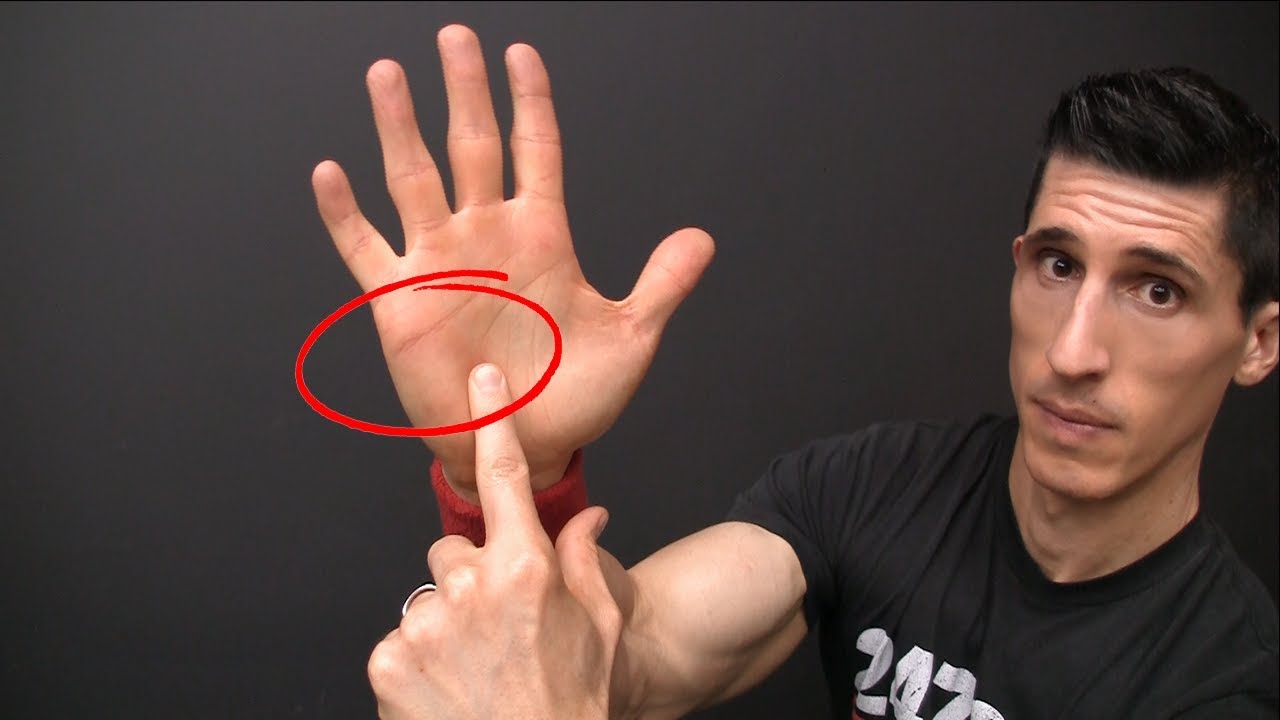

Your handshake might be the first sign your training program is quietly wrecking your gains.
In “Don’t Ignore THIS Early Warning Sign – MUSCLE LOSS!!” ATHLEAN-X founder Jeff Cavaliere, a physical therapist and strength coach, argues that lifters are overlooking a metric sitting right in their hands: grip strength. Cavaliere lays out why a weakening grip is often the first measurable signal that the central nervous system is fried, recovery is behind schedule, and a workout is about to do more harm than good.
- Cavaliere identifies grip strength as one of the earliest and most direct indicators of neuromuscular efficiency, meaning it drops before other signs of fatigue or illness become obvious.
- He explains that a strong grip drives the irradiation effect, recruiting and stabilizing proximal muscles throughout the kinetic chain on heavy compound lifts — so a weak grip undercuts performance on everything from deadlifts to rows.
- He demonstrates a low-cost self-test using a non-digital bathroom scale, telling viewers to intervene on their training if their squeeze number drops more than 10 percent from baseline.
Primary Causes of Grip Failure
Cavaliere’s core point is that grip strength is dictated by neuromuscular efficiency more than almost any other physical output. When the body is under-recovered, run down, or fighting off illness, the nervous system’s ability to fire muscles at full capacity takes a hit — and the hands show it before the big lifts do. He points out that trying to make a tight fist while sick or exhausted makes this obvious immediately: the max squeeze just isn’t there.
That’s not a cosmetic issue. A firm grip triggers the irradiation effect, the neuromuscular phenomenon where squeezing hard recruits and stabilizes proximal muscles up the arm, through the shoulders, and into the trunk to generate more force on compound lifts. Lose grip capacity and you lose the stability that anchors the entire kinetic chain, which is why Cavaliere treats hand strength as a gatekeeper for everything else in the program.
The Overreaching Trap
Cavaliere warns that a lot of lifters sabotage their own recovery by constantly bolting new exercises or extra volume onto a program without subtracting anything. The muscular system eventually hits a ceiling on what it can actually recover from, and piling more onto it just pushes the body deeper into a state he describes as under-recovery — the kind that shows up as decreased strength, a plateau in hypertrophy, or a strength gain that stalls out indefinitely.
The protective mechanisms the body triggers in that state are exactly why grip becomes such a useful early-warning gauge — it reflects systemic readiness before a lifter grinds through a wasted session or gets hurt trying to force a number that isn’t there anymore.
The Bathroom-Scale Test
Rather than pointing viewers toward a clinical hand dynamometer — the tool physical therapists use as the gold standard, but one that’s expensive and impractical for daily home use — Cavaliere demonstrates a two-minute substitute anyone can run with equipment already in their house. He supports a non-digital bathroom scale on one knee, wraps his fingers around it with the thumb pointing up, and squeezes as hard as possible, noting the number in pounds displayed.
The value isn’t in one isolated number; it’s in the trend. Cavaliere tells viewers to test consistently and compare each reading against their established baseline.
If you see a drop of more than 10 percent from your baseline number then you want to take action to intervene on your current workout.
Strategies for Declining Performance Metrics
Once that 10-percent threshold is crossed, Cavaliere’s prescription is straightforward: back off. That could mean a full reload week, trimming overall volume, or simply lightening the loads being used so the central nervous system gets a break. He acknowledges it might take roughly a week to see grip numbers return to baseline, but argues that’s a far better outcome than continuing to train through under-recovery and risking wasted sessions, injury, or outright muscle loss.
The bigger fix, he says, is building a program that never outruns what the body can actually recover from in the first place — the same recovery-first philosophy that runs through the ATHLEAN-X programs he references at the close of the video, and one that shows up even in the brand’s more extreme content, like the endurance test featured in WORKING OUT FOR 24 HOURS STRAIGHT!!, where managing fatigue becomes the entire point of the exercise.
Cavaliere’s takeaway is simple enough to run tomorrow morning: grab the bathroom scale before you touch a barbell, squeeze it once, and write the number down. Do that daily and you’ll know whether today’s workout should be a personal record attempt or a deload — before your central nervous system forces the answer on you mid-set.







Whatever Happened To The First Viral YouTube Stars
Call of Duty: Vanguard – Official Teaser
Everybody Loves Raymond Stars Who Sadly Passed Away
Binging with Babish: Sea Salt Ice Cream from Kingdom Hearts
Nardo Wick – Me or Sum (feat. Future & Lil Baby) [Official Video]