

 InfoSearched
Japan keeps building gadgets nobody asked for — and somehow, half of them make sense.
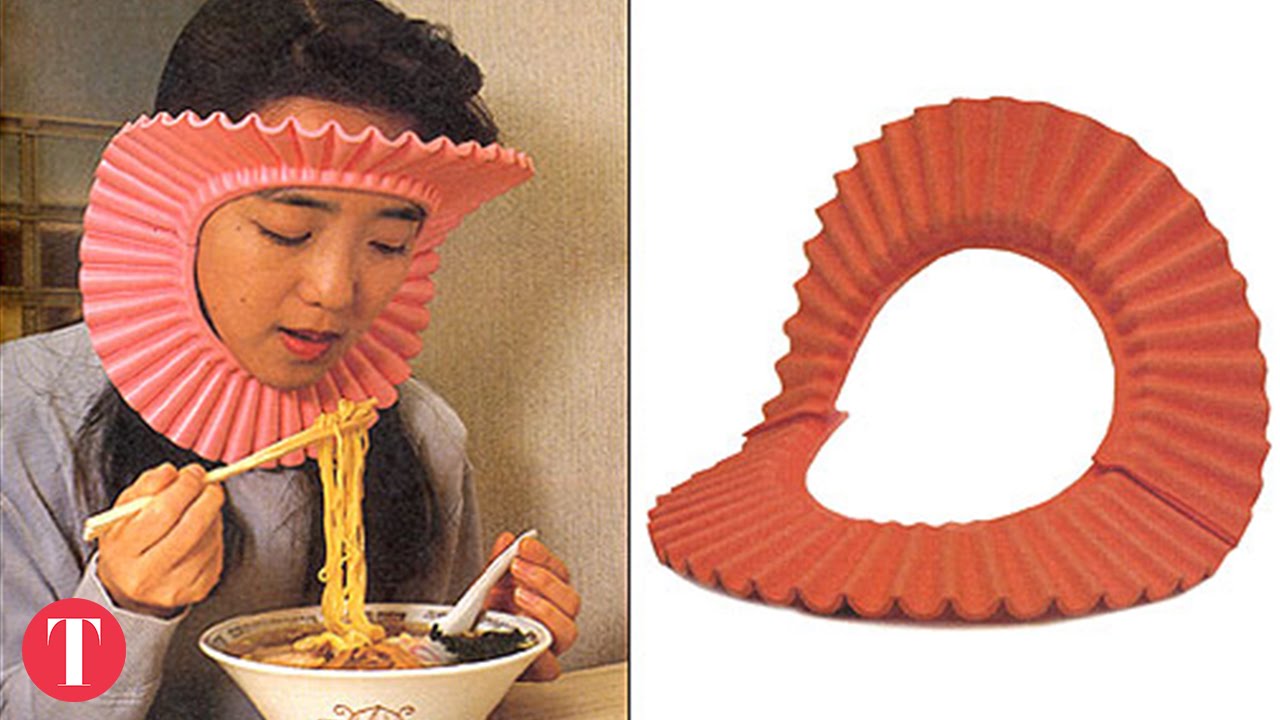
The video “10 Amazing Japanese Inventions” runs through a lineup of contraptions that fall under a very specific Japanese art form: chindogu, the practice of engineering solutions to everyday annoyances that create just as much social awkwardness as they solve. Rain-splattered shoes, hot noodles, sore necks on the train — Japan’s inventors have a device for all of it, even if wearing one in public means drawing stares.
What makes the reel worth watching isn’t just the novelty. It’s the contrast between gadgets built purely for a laugh and genuine engineering — like Kokoro’s I-Fairy robot, a humanoid built to guide museum visitors through exhibits that also made headlines for officiating a real wedding ceremony in Tokyo.
- Chindogu inventions featured include shoe umbrellas, portable subway chin stands and head-rests, stick-style butter dispensers, chopstick-mounted noodle-cooling fans, and wearable baby “mop” onesies that clean floors as infants crawl.
- Kokoro’s I-Fairy robot was developed to deliver automated museum tours and became famous for officiating an automated wedding ceremony in Tokyo.
- The video frames these gadgets against Japan’s high-end robotics work, drawing a line between DIY lifestyle novelties and legitimate humanoid engineering.
The Chindogu Philosophy Behind the Gadgets
Chindogu inventions are designed to solve a real, specific annoyance — but the fix comes loaded with a catch that makes it impractical for daily use. That tension is the whole point. A shoe umbrella genuinely blocks rain splatter from soaking your feet, but strapping a miniature umbrella to each shoe means walking around looking like nobody’s ever seen before at a bus stop.
The subway chin stand and head-rest gadgets highlighted in the video follow the same logic. Commuters on Japan’s famously packed trains fall asleep standing or seated mid-ride constantly, so someone built a portable prop that holds your chin or head steady while you doze off. It works. It also means clipping a brace to your face in front of a train car full of strangers.
Kitchen and Nursery Fixes
Two of the gadgets tackle problems that sound almost mundane until you see the workaround. Cold butter is hard to spread — so the stick-applicator butter dispenser lets users twist up a stick of butter and swipe it across toast exactly like a glue stick, no knife required. It’s a small fix, but it’s the kind of small fix that only chindogu culture bothers to actually manufacture and sell.
Then there’s the noodle problem. Ramen and other Japanese noodle dishes are served hot enough to burn a tongue, so inventors mounted a tiny battery-powered fan directly onto a pair of chopsticks, blowing cool air onto each bite before it reaches your mouth. On the domestic side, the wearable baby mop onesie turns a crawling infant into a de facto floor-cleaning device, with mop fibers stitched into the fabric so the baby polishes the hardwood while playing.
From Whimsy to Real Robotics: The I-Fairy
The video pivots from novelty gadgets to something built with actual engineering ambition: Kokoro’s I-Fairy, an interactive humanoid robot developed to guide visitors through museum exhibits and deliver automated tours on its own. It represents the other end of Japan’s invention spectrum — not a joke gadget solving a minor annoyance, but a functioning robot doing a job that normally requires a human guide.
The I-Fairy didn’t just walk museum-goers through exhibits — it stood in as an officiant for an actual wedding ceremony in Tokyo, a humanoid robot presiding while a human couple exchanged vows.
That wedding appearance is what pushed I-Fairy beyond tech-conference novelty and into mainstream coverage. A robot built for museum tour duty ending up at the center of a legal marriage ceremony is the kind of story that captures exactly why Japan’s inventions — silly or serious — keep going viral well outside the country.
It’s the same appetite for spectacle that drives other viral stunt videos, whether it’s a world’s-longest T-shirt launch or an attempt at the world’s most dangerous escape room — audiences want to see somebody actually build the thing everyone else only joked about.
None of these ten gadgets are likely to show up on store shelves outside Japan anytime soon, but that’s not really the point of chindogu. The shoe umbrella and the noodle-cooling chopsticks were never meant to replace normal umbrellas or normal chopsticks — they’re proof that somebody, somewhere, took a passing joke seriously enough to actually build it.









Sequel to The Legend of Zelda: Breath of the Wild – E3 2021 Teaser – Nintendo Direct
10 Weird Fashion Life Hacks EVERY Girl Should Know
Binging with Babish: Inferno Wing Challenge from Regular Show
Why Kate Middleton’s Absence From Diana’s Statue Unveiling Is Very Telling
CRUEL SUMMER’S Olivia Holt and Chiara Aurelia Play ’90s This or That