

How Volcanoes Froze the Earth (Twice)
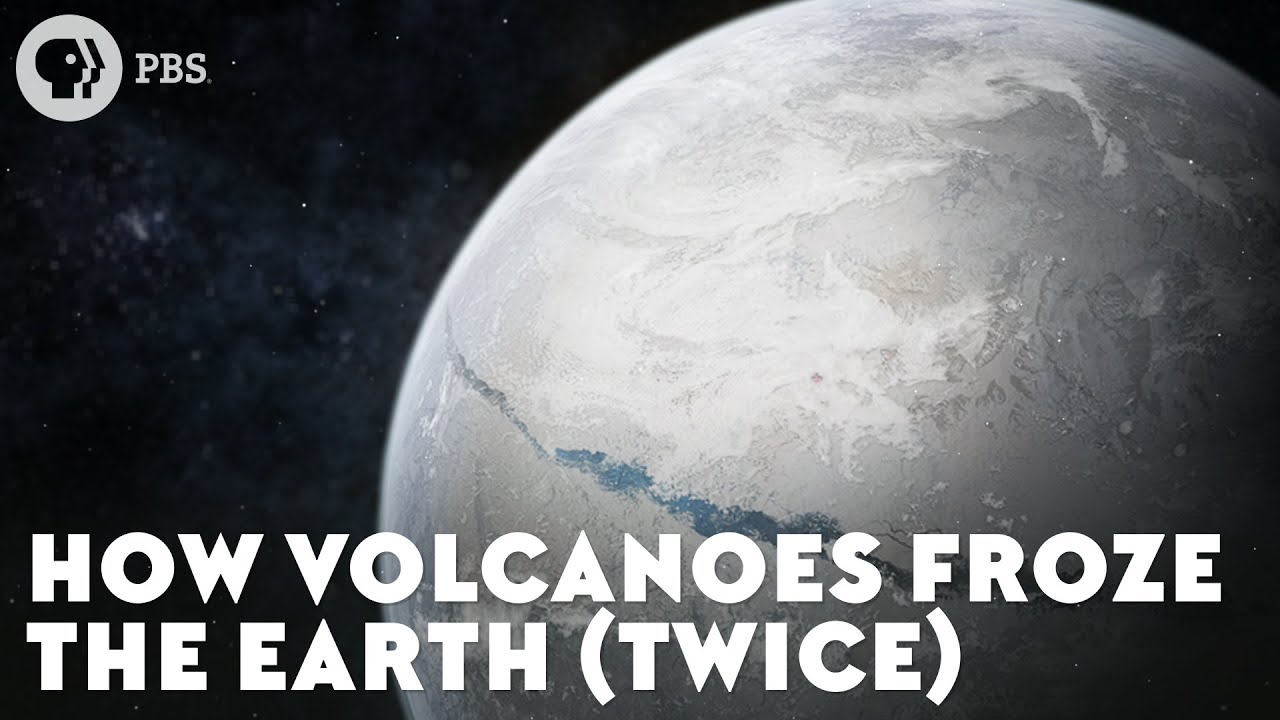

Twice in Earth’s deep past, the entire planet locked itself inside ice — and volcanoes were both the cause and the cure.
Long before dinosaurs, before fish, before anything with a backbone existed, Earth went through two stretches where glaciers didn’t just creep down from the poles — they reached the equator. The planet turned into a frozen marble for tens of millions of years at a stretch, twice, during the Cryogenian Period of the Neoproterozoic Era. The trigger both times traces back to volcanic rock, and so, eventually, does the thaw.
- Two global glaciations bookend the Cryogenian: the Sturtian, running roughly 717 to 660 million years ago (about 55 million years), and the Marinoan, running roughly 650 to 635 million years ago (about 15 million years).
- Both freezes were set off by the breakup of the supercontinent Rodinia, which scattered fresh volcanic basalt across warm, rain-soaked equatorial latitudes where weathering could strip carbon dioxide out of the atmosphere at an unusual rate.
- Once ice crept to about 30 to 33 degrees latitude, runaway ice-albedo feedback took over, and ice sheets kilometers thick sealed the oceans — until trapped volcanic outgassing built up enough CO2 to blow the planet back into a super-greenhouse and end each freeze.
Rodinia Breaks Apart and the Weathering Machine Starts Up
The story starts with plate tectonics, not ice. Rodinia, the supercontinent that had held most of Earth’s landmass together, began splitting apart in the late Precambrian, and the breakup happened to leave huge stretches of fresh basalt sitting right along the equator. That’s the part that matters: this wasn’t polar rock, it was rock sitting under some of the wettest, warmest conditions on the planet.
Tropical rainfall is a chemical weathering engine. Rain reacts with exposed silicate minerals in volcanic basalt, and that reaction consumes atmospheric carbon dioxide, locking it away in carbonate minerals that eventually wash into the ocean. With so much new basalt exposed at exactly the latitudes where rain falls hardest, weathering rates spiked and carbon dioxide started disappearing from the atmosphere faster than volcanism could replace it.
The Tipping Point: Ice Reaches 30 Degrees
Losing greenhouse gas means losing heat. As CO2 concentrations fell, global temperatures dropped, and ice began forming at the poles the way it always does when the planet cools. The dangerous part came once that ice crept down to roughly 30 to 33 degrees latitude — close enough to the equator that the extra reflected sunlight bouncing off the ice’s white surface started cooling the planet further, which grew more ice, which reflected more sunlight. That’s the ice-albedo feedback loop, and once it engaged, there wasn’t a way to stop it.
The result was total: ice sheets several kilometers thick covering both land and ocean, all the way to the tropics, for millions of years at a time. It’s the reason geologists gave the phenomenon its blunt nickname, Snowball Earth — there wasn’t a corner of the globe that stayed liquid on the surface.
Once ice reached roughly 30 to 33 degrees latitude, the feedback loop reflecting sunlight back into space became unstoppable — and the whole planet went white.
Volcanic Activity Extinguishes Its Origins
Here’s the twist that makes this a volcano story rather than just an ice-age story: volcanism never actually stopped during either Snowball Earth episode. It just went underground, literally. With the oceans sealed under kilometers of ice, the weathering that had been pulling carbon dioxide out of the air shut down completely — there was no exposed rock left for rain to react with, and no open water to absorb gas. Earth’s main carbon sink switched off.
Volcanoes kept erupting anyway, venting CO2 the entire time the ice sat on top of everything. With nothing pulling that gas back out of the atmosphere, concentrations climbed for millions of years, uninterrupted, until they hit an extreme tipping point. When they did, the greenhouse effect came back online violently. Deglaciation happened fast on a geological clock, plunging the planet from ice sheets straight into a brief super-greenhouse climate.
The Rock Record Left Behind
That whiplash transition left a signature that geologists can still read today: layers of “cap carbonate” rock sitting directly on top of glacial deposits on nearly every continent, laid down as the super-heated, carbonate-saturated oceans of the meltdown period dumped mineral sediment everywhere at once. It’s the physical evidence that ties the whole sequence together — supercontinent breakup, tropical weathering, runaway ice, trapped volcanic outgassing, and a sudden thaw — and it’s also roughly the moment the fossil record starts getting more interesting, as the world coming out of the Marinoan glaciation set up the conditions for early multicellular life to start diversifying.
What’s striking watching this play out across 700 million years is that the same mechanism — basalt meeting rain meeting atmosphere — nearly froze the planet solid twice and then thawed it out both times, with nothing but geologic time and enough volcanic CO2 doing the work in between.









Putting the MIRA back together
10 AMAZING Kids You Won’t Believe Actually Exist
10 Things You Should NEVER Buy Online
7 Slicing Kitchen Gadgets Improved by Design Expert | Epicurious
What You Don’t Know About Pentatonix