

 InfoSearched
Unbox Therapy’s Lewis Hilsenteger just put a gaming rig in his pocket, and it’s not an iPhone.
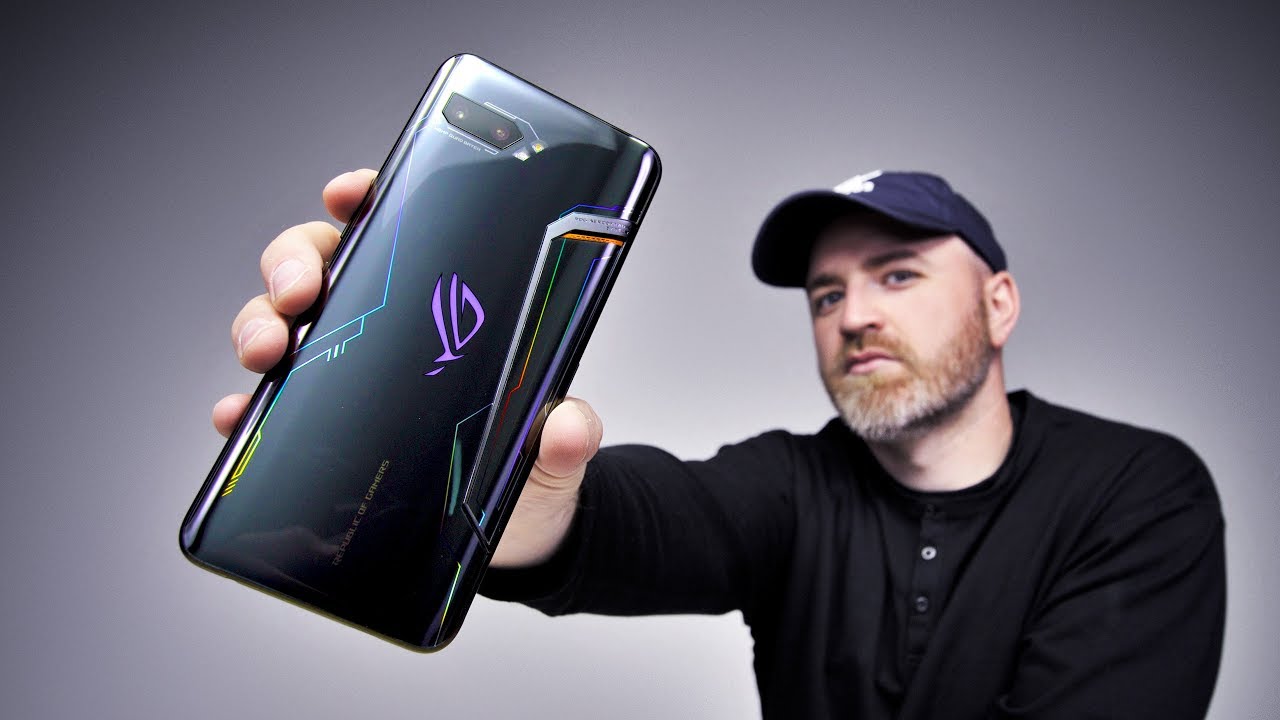
In “The Most Powerful Smartphone In The World,” Hilsenteger tears into the Asus ROG Phone 2, the extreme-performance gaming flagship Asus revealed in late July 2019. Rather than chasing camera megapixels or a thinner chassis, Asus built this device around raw frame rates, low input lag, and marathon battery life — the three things that actually matter to mobile gamers. The unboxing walks through a spec sheet and an accessory lineup that reads more like a console peripheral catalog than a typical phone launch.
- The ROG Phone 2 runs on Qualcomm’s Snapdragon 855 Plus with overclocked CPU and Adreno 640 GPU speeds, paired with a 6.59-inch AMOLED display running a 120Hz refresh rate and a 240Hz touch sampling rate.
- A 6,000mAh battery with 30W ROG HyperCharge and an integrated 3D vapor chamber cooling system are designed to keep the phone running at full tilt without thermal throttling.
- The device ships alongside modular gaming hardware — the AeroActive Cooler II fan, the TwinView Dock II dual-screen attachment, and the ROG Kunai Gamepad controllers — plus ultrasonic AirTrigger II shoulder-button sensors built into the frame.
The Chip and Screen Built for Frame Rates
The headline spec is the Snapdragon 855 Plus, Qualcomm’s overclocked variant of its 2019 flagship silicon, tuned here specifically to hold peak CPU and Adreno 640 GPU clocks under sustained load rather than throttling down after a few minutes of gameplay. Hilsenteger pairs that with the 6.59-inch AMOLED panel, which runs at a 120Hz refresh rate with HDR 10-bit support and a 240Hz touch sampling rate — a spec combination aimed squarely at competitive mobile titles where a fraction of a second of input lag decides a match.
That kind of clock speed and refresh rate are the same numbers chased by PC gamers dropping into fast-paced shooters, the mobile equivalent of wanting the smoothest possible frame pacing in something like Apex Legends rather than settling for whatever a stock flagship can push.
Battery, Charging and Cooling
Powering all of that overclocked silicon without gassing the battery in an hour required a different approach to hardware. Asus packed in a 6,000mAh cell — nearly double what most 2019 flagships carried — supported by 30W ROG HyperCharge for fast top-ups, and built the phone around an integrated 3D vapor chamber cooling system to pull heat away from the chipset during extended sessions.
The unboxing also highlights a detail unique to the ROG Phone 2’s layout: side-mounted dual USB-C ports. That placement lets a player plug in and charge while holding the phone horizontally, so a cable never sits where a thumb needs to be during gameplay.
A 6,000mAh battery, a vapor chamber, and side-mounted USB-C ports — every spec on this phone is built around not putting it down mid-match.
AirTrigger II and the Accessory Ecosystem
What separates the ROG Phone 2 from a phone that simply runs games well is the hardware Asus built around it. Ultrasonic AirTrigger II sensors sit along the edges of the frame, functioning like shoulder buttons on a console controller rather than relying purely on touchscreen inputs. Dual front-facing stereo speakers back that up for positional audio cues.
Then there’s the accessory lineup Hilsenteger unpacks piece by piece: the clip-on AeroActive Cooler II fan for extra thermal headroom, the TwinView Dock II that adds a second 120Hz display to the setup, and the ROG Kunai Gamepad controllers, which attach either directly to the phone’s chassis or to a separate handheld grip. It’s a modular system closer to what console and handheld manufacturers build than what smartphone makers typically ship in the box.
A Different Kind of Flagship
Hilsenteger is careful throughout the video to frame the ROG Phone 2 not as a general-purpose flagship competing with the likes of Samsung or Apple’s mainstream lineup, but as a purpose-built gaming machine that happens to also make calls. The spec sheet backs that framing up — nothing about the overclocked chip, the 120Hz panel, the oversized battery, or the AirTrigger sensors is there to help with photography or everyday productivity. Every choice traces back to frame rate, latency, or endurance.
For anyone deciding between the Kunai Gamepad’s clip-on grip and the TwinView Dock II’s second screen, Asus built the ROG Phone 2 so you don’t have to pick just one accessory — both attach to the same chassis, and Hilsenteger runs through swapping between them in the video without ever powering the phone down.









10 AMAZING Hidden Details In Disney Movies
Celebs Who Surprised Us With Their Red Carpet Looks
The Weirdest Dating Simulators I could find
Screening top soil
10 Ancient Beauty Secrets That Are Useful Even Today