

This Is What People Will Look Like In The Future

Humanity’s face is about to change more than at any point in recorded history.
A viral explainer video, This Is What People Will Look Like In The Future, lays out what demographers, geneticists, and evolutionary theorists actually expect the human face and body to look like by 2050 and beyond. It’s not science fiction guesswork — the video builds its case on real projections, starting with a magazine cover that rattled a lot of readers back in 2013.
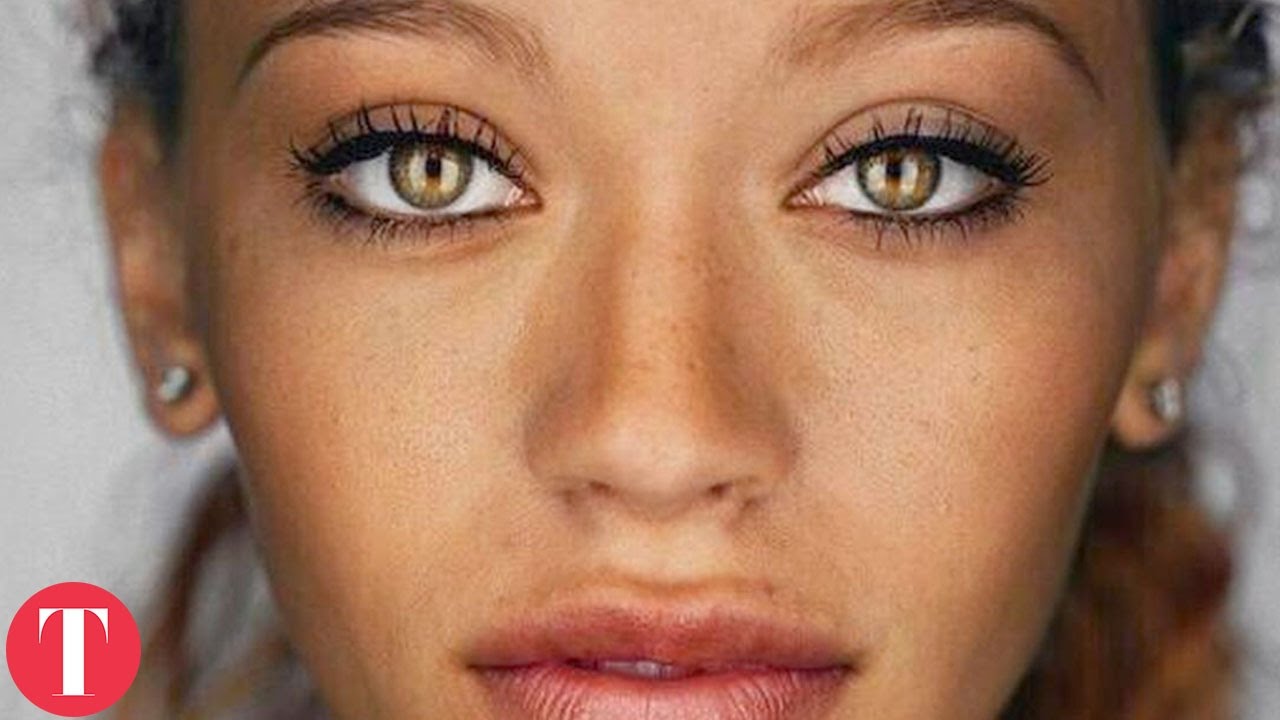
- The video’s premise leans heavily on National Geographic‘s October 2013 125th-anniversary issue, “The Changing Face of America,” which used portraits by photographer Martin Schoeller to depict a future United States population that is predominantly multiracial and blended.
- Researcher Nickolay Lamm and computational geneticist Dr. Alan Kwan have separately proposed physiological forecasts that include larger cranial vaults, broader eyes, and darker average skin pigmentation driven by global demographic shifts.
- The video identifies three main drivers reshaping human appearance going forward: genetic engineering, sexual selection, and technological augmentation — including elective gene editing for traits like height, eye color, and facial symmetry.
The National Geographic Blueprint
Everything in the video traces back to that single 2013 cover story. National Geographic commissioned Martin Schoeller to photograph subjects representing what the American population is projected to look like once current intermarriage and migration trends play out over a few more generations — faces that don’t fit neatly into any single census-box racial category. The magazine framed it as a preview, not a prediction: a country trending toward a majority-multiracial identity well before the middle of the century.
That framing gives the video its throughline. Rather than treating “the future human” as a single evolved species, it treats blending itself as the dominant visible trend — skin tones, eye shapes, and facial structures increasingly drawn from overlapping ancestries rather than from any one lineage.
Lamm and Kwan Predictions Explained
The more speculative half of the video turns to work from Nickolay Lamm and Dr. Alan Kwan, both of whom have published forward-looking models of the human face adapted to technology and, eventually, space colonization. Their versions of “future humans” feature larger cranial vaults to accommodate bigger brains, broader-set eyes theorized as adaptations to screen use and altered light environments, and skin tones trending darker on average as global population centers shift.
Kwan has been explicit that these are thought experiments extrapolated from current environmental and technological pressures, not hard predictions — but the visuals, once rendered, are strange enough to have circulated widely on their own.
Genetic engineering, sexual selection, and technological augmentation — the video’s own framework for the three forces most likely to redraw the human face.
Gene Editing Enters The Picture
The video’s third pillar is the least speculative and the most controversial: elective gene editing. As tools for altering genetic code become cheaper and more precise, the video raises the possibility that parents could select for traits like height, eye color, and facial symmetry the same way they now choose a name or a nursery color. It’s a leap from where the technology stood in 2017, but the trajectory — from correcting disease markers to selecting cosmetic ones — is the part researchers keep flagging as inevitable rather than hypothetical.
Paired with sexual selection trends already visible in dating and marriage patterns worldwide, the video argues these forces compound each other: what people already find attractive gets amplified once it can also be engineered.
Appearance As A Moving Target
None of this is new territory for people fascinated by how faces change — whether it’s a model watching their own look evolve on camera or fans tracking look-alikes who share features across totally unrelated bloodlines. The video’s bet is that the same blending logic that makes two strangers look eerily similar today is about to operate on the entire species at once, just over a much longer clock.
The video doesn’t land on a single face of the future — it lands on a moving target, one that starts with Schoeller’s 2013 portraits and keeps redrawing itself as gene editing tools get cheaper. Whatever the 2050 census actually shows, the framework here — blending, selection, augmentation — is the one researchers keep coming back to when they’re asked to sketch what’s next.








Malia Obama’s Boyfriend Comes From A Lot Of Money
HSMTMTS Cast Plays Finish the Lyric | Most Likely To | Olivia Rodrigo, Joshua Bassett
The Duggars Were Very Different Before Being Discovered By TLC
Celebs Who Have Come Out As Pansexual
Destiny 2: The Witch Queen – Weapons and Gear Trailer