

This Is How Blush, Eyeshadow and Highlighter Are Made
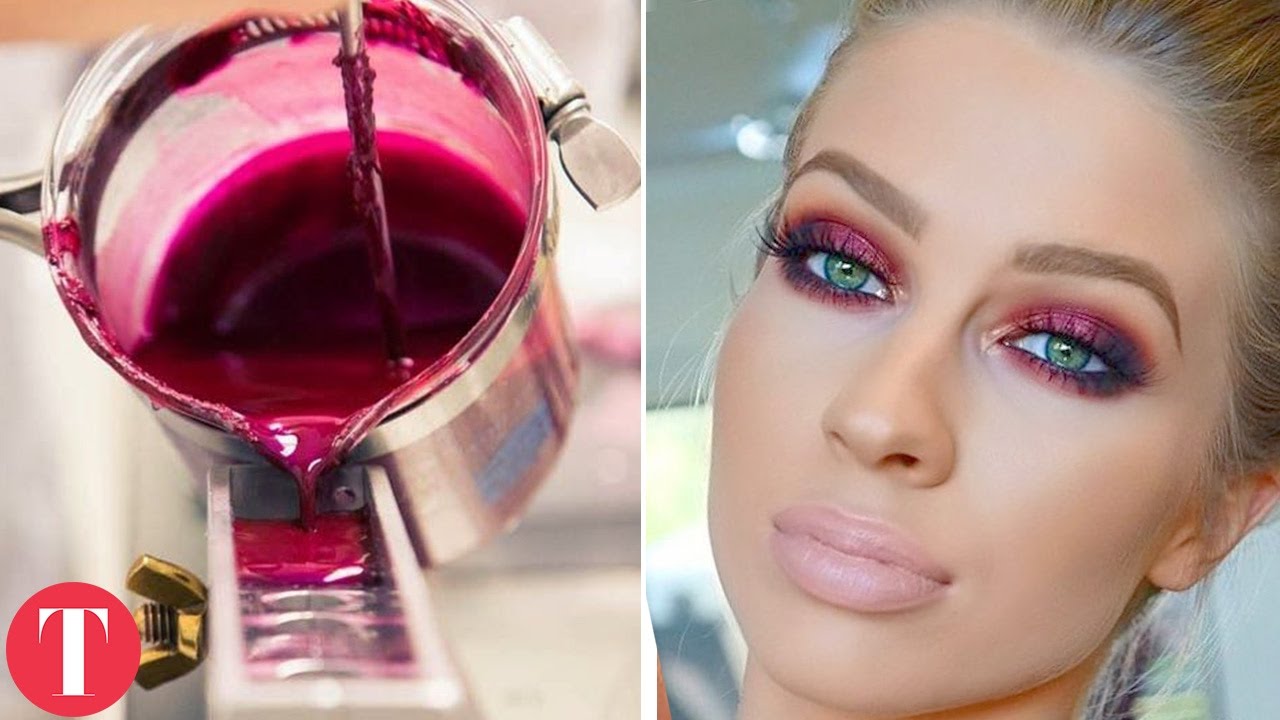

Every compact of blush and highlighter hides a small factory’s worth of chemistry.
Powder cosmetics look simple sitting in their little pans, but the road from raw mineral to pressed product runs through micronizing mills, hydraulic presses, and a surprisingly small list of core ingredients. The video “This Is How Blush, Eyeshadow and Highlighter Are Made,” produced by TheThings Celebrity, breaks down exactly what’s inside the compact you’re tapping your brush against — and how much of it you can replicate at home with a bottle of rubbing alcohol.
- Blush, eyeshadow, and highlighter all start from the same structural base: talc, mica, and kaolin clay, which give the powder its texture and let it grip the skin.
- Pigmentation comes from a blend of synthetic and mineral colorants plus iron oxides, with coated mica added specifically to create the shimmer in highlighters and metallic shadows.
- Manufacturers bind the powder with liquid emollients, oils, or silicone derivatives like dimethicone so the final product doesn’t crumble after it’s pressed into a pan.
The Base Powders Doing the Real Work
Before any color goes near a compact, manufacturers are working with three unglamorous minerals: talc, mica, and kaolin clay. Talc supplies the bulk and the silky slip that makes powder blend into skin instead of sitting on top of it. Mica contributes structure and, depending on how it’s processed, a natural sheen. Kaolin clay pulls double duty as an absorbent that helps control oil on the skin while still letting the formula press into a solid cake rather than staying loose. None of these ingredients do much on their own — the formula only becomes “blush” or “eyeshadow” once color and binder get layered in.
Getting the Color and Shimmer Right
Color is where the formulas actually diverge. Synthetic colorants and mineral pigments handle the flat tones, while iron oxides — the same family of compounds used for centuries in paint pigments — deliver the warm, skin-adjacent reds and browns that dominate most blush shades. Highlighters and metallic eyeshadows lean on pearlizing agents, typically mica that’s been coated to bend and reflect light, which is the entire mechanical reason a highlighter looks wet and luminous instead of just light-colored.
Once the pigment blend is set, it goes through high-speed micronization, a grinding step that breaks the particles down small enough for even, streak-free color dispersion. Batch-blending follows, ensuring every unit in a production run comes out the same shade rather than drifting from pan to pan.
Coated mica is the difference between a highlighter that looks powdery and one that looks lit from within.
Binders and the Hydraulic Press
Powder alone won’t hold together in a compact — tap it and it turns to dust. That’s the job of binders: liquid emollients, oils, or silicone derivatives such as dimethicone, mixed in at controlled ratios to give the pigment blend just enough cohesion. From there the formula goes into a hydraulic press, which compacts it into a metal pan under controlled pressure. Too little pressure and the product crumbles on first use; too much and it can crack or become difficult to pick up with a brush — which is exactly the balance industrial manufacturers are dialing in at scale.
DIY Repressing and At-Home Formulas
The video doesn’t stop at the factory floor. It also lays out how beauty enthusiasts can repress broken powder — a blush or eyeshadow pan that’s shattered isn’t necessarily trash. Crushing the pieces down and remixing them with a few drops of rubbing alcohol reactivates enough of the binder to let the powder be pressed flat again once the alcohol evaporates. For anyone building shades from scratch, the same DIY approach applies to loose cosmetic-grade mica pigments blended with natural binders, essentially a hobbyist version of the same talc-mica-binder logic the industrial side runs on a much larger scale.
It’s the kind of breakdown that makes a $6 drugstore blush and a $40 highlighter look a lot closer in raw materials than their price tags suggest — the real gap is in the grinding, the pearlizing agents, and how finely dialed in that hydraulic press gets during production.








80s Sitcom Stars Accused Of Serious Crimes
What Eugene From Grease Looks Like Today
The Real Reason Cardi B And Offset Broke Up
Reporters Who Ruined Their Careers On Social Media
10 Hot Guys The Disney Girls Are Dating