

Rich and Jay Talk About The Boys
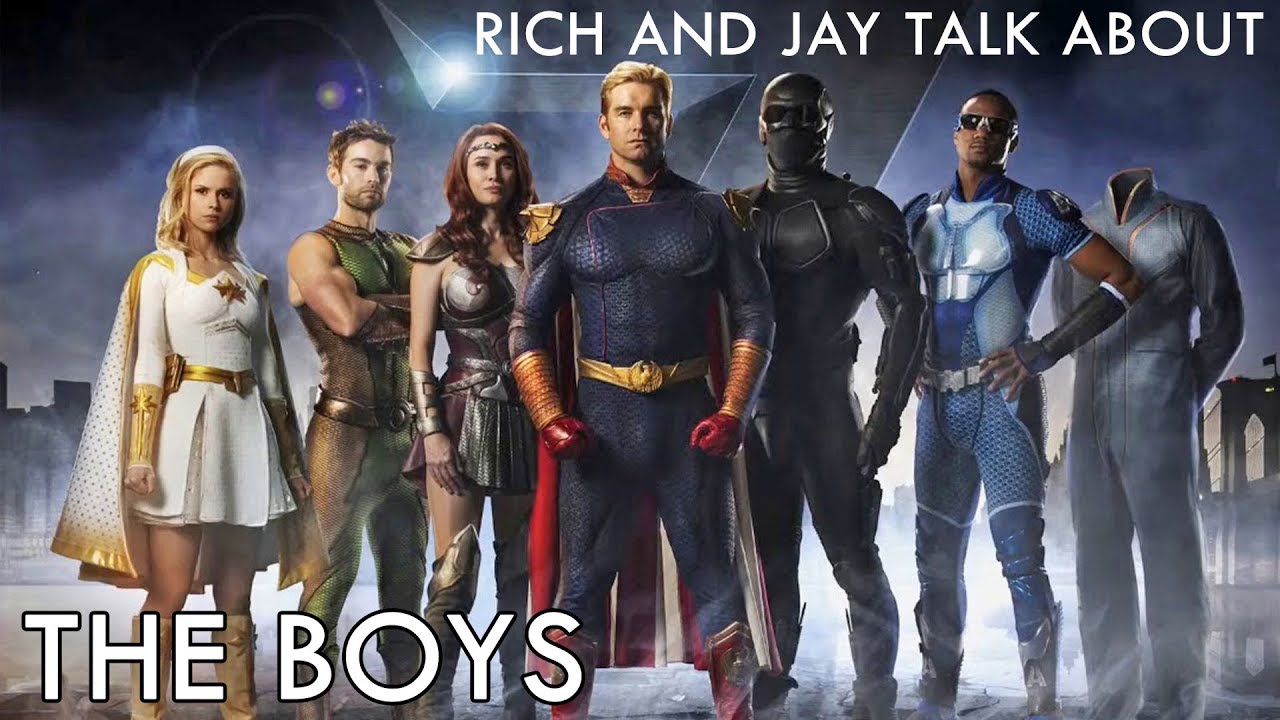

Two YouTube veterans sit down to hash out whether Amazon’s ultra-violent superhero satire actually works.
Rich Evans and Jay Bauman, the longtime RedLetterMedia mainstays known for their long-form movie breakdowns, turned their attention to Amazon Prime Video’s “The Boys” in a casual sit-down posted under the title “Rich and Jay Talk About The Boys.” The full eight-episode first season had dropped on July 26, 2019, and the pair walk through what worked, what surprised them, and why a show built on corporate-owned superheroes landed differently than they expected.
- Evans and Bauman review the complete eight-episode first season of “The Boys,” which premiered on Amazon Prime Video on July 26, 2019.
- The series, developed by showrunner Eric Kripke with executive producers Seth Rogen and Evan Goldberg, adapts the comic by Garth Ennis and Darick Robertson and stars Karl Urban as Billy Butcher, Jack Quaid as Hughie Campbell, and Antony Starr as Homelander.
- The two hosts single out Antony Starr’s performance as Homelander and the show’s satire of corporate media monopolies as the strongest elements of the adaptation.
A Show Built for the Superhero-Fatigued
Evans and Bauman frame “The Boys” as a series designed for people who have simply had enough of the genre it’s tearing apart. Rather than another origin story about heroism and sacrifice, the show imagines superheroes as corporate assets managed by a conglomerate called Vought, marketed like sneakers and just as disposable when they stop performing. That framing gives the two hosts plenty to chew on, since it lets the series mock the exact tropes — the slow-motion hero landings, the branded merchandise, the PR-friendly catchphrases — that mainstream studio output leans on.
They note that the show doesn’t need to invent a new formula so much as invert an existing one, and that inversion is what makes the satire land with viewers who might otherwise skip yet another cape story.
Trading Comic-Book Shock Value for Character Work
A big chunk of the conversation goes to how the Amazon adaptation departs from Garth Ennis and Darick Robertson’s source comic. Evans and Bauman point out that the comic leaned hard into gratuitous shock content for its own sake, while showrunner Eric Kripke’s version dials that back just enough to let character dynamics breathe. The relationship between Butcher’s crew of vigilantes and the superheroes they’re hunting gets more room to develop than the two expected going in, and they credit that shift with making the show’s darker instincts feel earned rather than gratuitous.
Executive producers Seth Rogen and Evan Goldberg get credit in the discussion for steering the tone toward something that still bites but doesn’t rely purely on gore to make its point.
Antony Starr’s Homelander Steals the Conversation
Of every performance in the cast, Evans and Bauman spend the most time on Antony Starr’s Homelander, the corrupted, unstable flagship hero at the center of Vought’s empire. They describe his portrayal as the show’s most effective psychological trick: a character who looks like Superman on a billboard but behaves like someone capable of anything the moment the cameras turn off.
The two keep circling back to Homelander as the reason the show’s satire actually has teeth — a smiling, all-American mascot with nothing underneath but rage and entitlement.
Karl Urban’s Billy Butcher and Jack Quaid’s Hughie Campbell come up too, with the hosts noting how the two vigilantes anchor the show’s more grounded, human side against Starr’s unraveling icon.
The Corporate Satire Underneath the Gore
Beyond the violence, Evans and Bauman keep returning to the show’s takedown of media monopolies and how corporations package heroism as a product line. Amazon’s own growing footprint in prestige streaming — the same platform behind big-budget swings like The Lord of the Rings: The Rings of Power — makes the show’s cynicism about corporate-controlled entertainment land as more than just a punchline for the two hosts. They contrast it favorably against glossier superhero properties, including the kind of polished studio trailers audiences get for shows like Marvel Studios’ Moon Knight, arguing that “The Boys” earns its cynicism by actually showing the machinery behind the cape instead of just selling it.
By the end of the sit-down, Evans and Bauman land on the same conclusion: eight episodes was enough to make them believers, and with Vought’s empire barely dented by the season finale, they’re already talking about where a second season could take Butcher’s crew next.








Gordon Is Amazed By Vegetarian Challenge | Hell’s Kitchen
The Kind of Story We Need Right Now: Mom Hunts Down Her Stolen Car
Inside Elizabeth Olsen’s Transformation
I Built a Gas Station That’s 100% Pure Insanity – Gas Station Simulator
LIFE AFTER INTERNET FAME: Where Are They Now ?