

The Rise And Fall Of Subway
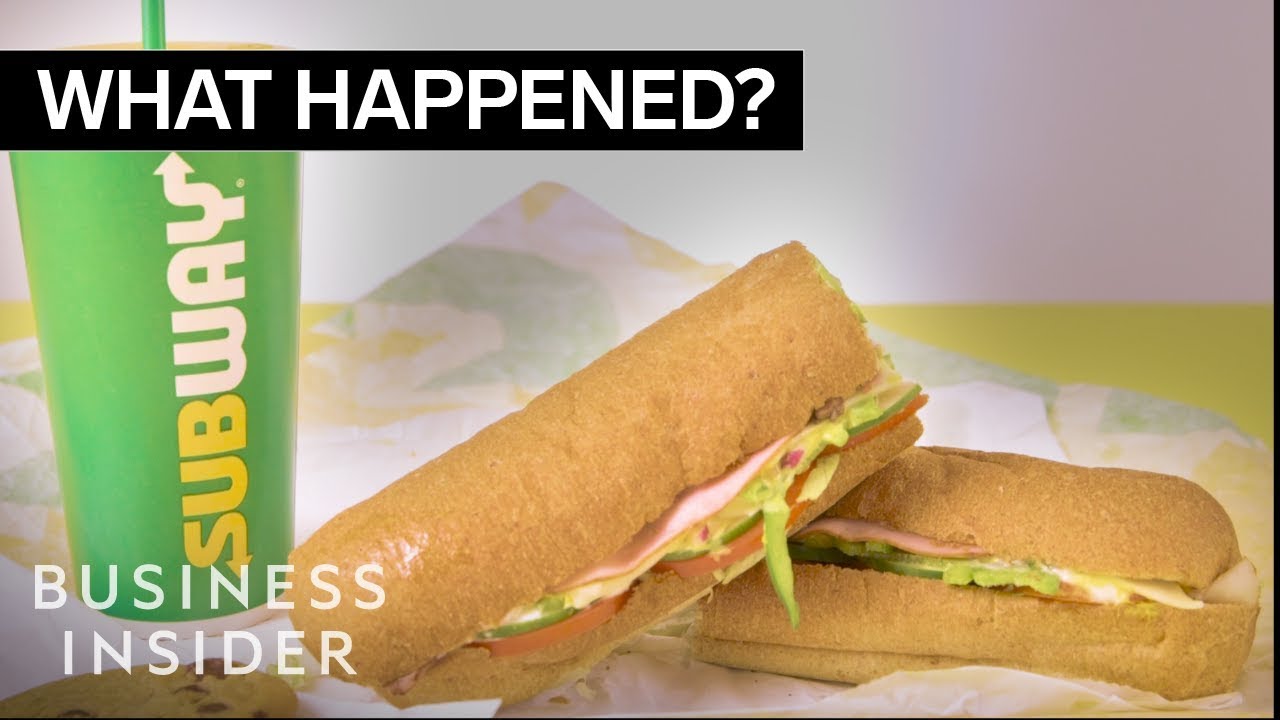

Subway once out-built McDonald’s on sheer volume — then spent the next decade finding out that more stores didn’t mean more money.
Business Insider’s video investigation, “The Rise And Fall Of Subway,” traces how a single sandwich shop in Bridgeport, Connecticut, grew into the largest restaurant chain on the planet by store count — and then buckled under its own footprint. The chain’s low-cost franchise model built an empire fast, but that same model left it exposed when the sandwiches, the headlines, and the math all turned against it at once.
- Subway surpassed McDonald’s in global locations by 2010 and eventually peaked at more than 44,000 stores worldwide, built on franchise fees of roughly $15,000 versus over a million dollars for rivals like McDonald’s.
- The chain’s 2013 “footlong scandal” — viral photos showing sandwiches measuring just 11 inches — and the 2015 arrest and guilty plea of longtime spokesperson Jared Fogle on child pornography and related charges did lasting damage to the “Eat Fresh” brand.
- Co-founder and longtime CEO Fred DeLuca died of leukemia in 2015, and Subway closed more than a thousand U.S. locations in 2018 alone amid franchisee revolts over the unprofitable $5 Footlong promotion.
From Pete’s Super Submarines to Global Domination
Subway began in 1965 as Pete’s Super Submarines, opened by 17-year-old Fred DeLuca with a $1,000 loan from family friend Peter Buck. The pair didn’t start franchising until 1974, but once they did, the model was almost impossible for a competitor to match: a startup franchise fee around $15,000, compared with the million-dollar-plus buy-in McDonald’s required. That price point let anyone with modest savings open a location, and Subway’s store count exploded through the 1990s and 2000s.
By 2010, Subway had done what once seemed unthinkable — it had more restaurants worldwide than McDonald’s. The chain eventually topped out above 44,000 locations across more than 100 countries, a number no other restaurant brand had approached. But the same low-barrier franchising that fueled that climb came without territorial exclusivity, meaning corporate could approve a new Subway a few blocks from an existing one with no protection for the original owner.
Saturation Started Eating Its Own Franchisees
That lack of territorial protection became the chain’s first structural problem. As Subway kept approving new units to keep growth numbers climbing, storefronts began opening within blocks — sometimes storefronts — of each other, splitting the same foot traffic across multiple locations instead of expanding the customer base. Franchisees who had sunk their savings into a store watched a second or third Subway open nearby with corporate’s blessing.
Layered on top of that was the 2008 “$5 Footlong” promotion, which had been a genuine sales phenomenon but became a financial trap as food and labor costs rose through the following decade. Franchise owners were locked into a price point that no longer covered their expenses, and the resentment boiled into organized pushback — petitions and open franchisee revolt against corporate leadership over a promotion the company had once treated as its signature.
The Footlong Scandal and the Fogle Collapse
Subway’s brand took its first major public hit in 2013, when viral photos showed that its “footlong” sandwiches actually measured closer to 11 inches, undercutting the “Eat Fresh” promise that had defined the chain’s marketing for years. It was embarrassing, but survivable. What came next wasn’t.
In 2015, longtime spokesperson Jared Fogle — the face of Subway’s health-focused advertising since 2000, built entirely on his own dramatic weight-loss story — was arrested, pleaded guilty to child pornography charges and to traveling across state lines to engage in illicit sexual conduct with minors, and was sentenced to more than 15 years in prison, a term that outpaced most of the celebrity prison sentences that have made tabloid headlines. Subway cut ties immediately, but the man who had personified the brand for a decade and a half was now radioactive, and the company had no equally recognizable figure to replace him.
Subway closed more than a thousand U.S. locations in 2018 alone.
A Leadership Vacuum and a Shrinking Footprint
The Fogle scandal landed the same year Subway lost the man who had run the company since its founding. Fred DeLuca, co-founder and longtime CEO, died of leukemia in 2015, leaving Subway without the leadership that had steered it through five decades of expansion right as the brand needed steady hands the most. Meanwhile, fast-casual competitors — Chipotle, Panera Bread, and specialty sandwich chains like Jersey Mike’s and Jimmy John’s — were pulling away customers who wanted fresher ingredients, more customization, and a less generic experience than Subway’s assembly-line counters offered.
The combination of oversaturation, franchisee anger over the $5 Footlong, the Fogle fallout, and DeLuca’s death produced years of contraction rather than growth. Subway went from closing a handful of underperforming stores to closing hundreds annually, shuttering more than a thousand domestic locations in 2018 alone — the same kind of boom-and-bust arithmetic explored in Made $1 Million in 7 Hours, Ruined a Whole City in One, where rapid expansion outran the ability to sustain it.
Subway still had more locations than almost anyone else in fast food as of 2019, but the story had flipped from “how did they get this big” to “how do they stop shrinking.” The franchisees who once lined up for a $15,000 buy-in were now the ones organizing against the company that sold it to them, and nobody at Subway’s Milford, Connecticut headquarters had found a fix that stuck.

![Floyd Mayweather vs Logan Paul: Fight goes the distance [Highlights, recap] | CBS Sports HQ](https://entertainment.infosearched.com/wp-content/uploads/sites/5/2021/06/47632-floyd-mayweather-vs-logan-paul-fight-goes-the-distance-highlights-recap-cbs-sports-hq.jpg)




Weird Things About Kris Jenner’s Marriages
EXPLODING Glitter Bomb 4.0 vs. Package Thieves
10 People Who DON’T Deserve Their Fame
Former Child Star Matthew Mindler, 19, Found Dead After Missing
Celebrities Who Openly Trashed Beyonce