

 InfoSearched
Sharks keep biting GoPros, and Mark Rober set out to prove it’s not because they’re hungry for tourists.
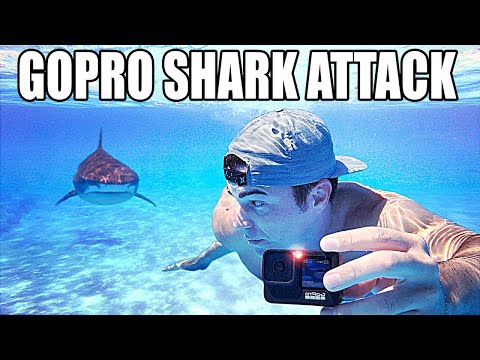
For Discovery’s 2021 Shark Week lineup, former NASA engineer and YouTuber Mark Rober teamed up with marine biologist Luke Tipple to figure out why sharks so often clamp down on GoPro cameras dangling in the water. The resulting video, “Shark vs. GoPro,” also aired as the television special “Shark Rober” and dug into the actual physiology behind the behavior rather than just chalking it up to shark aggression.
- Mark Rober partnered with Discovery’s Shark Week to produce “Shark vs. GoPro,” released as both a YouTube video and the TV special “Shark Rober” in July 2021.
- Rober worked alongside marine biologist Luke Tipple in shark-populated waters to test myths about shark sensory perception.
- The investigation pointed to the ampullae of Lorenzini — electroreceptor organs around a shark’s snout — as the reason sharks bite, bump, or lunge at underwater electronics like GoPros.
The Setup Behind Shark vs. GoPro
Rober built his reputation on elaborate, engineering-driven experiments, and “Shark vs. GoPro” fits that same mold — treating a viral internet phenomenon (footage of sharks chomping on cameras) as a testable question rather than a punchline. Instead of guessing, he brought Tipple into the water to run controlled comparisons, isolating variables like electrical signal, scent, and movement to see which one actually triggers a shark’s interest. It’s the same style of hands-on, stunt-adjacent experimentation that’s made channels built around large-scale physical challenges and elaborate rigged experiments so popular on YouTube.
The Ampullae of Lorenzini
The central finding centers on a shark’s ampullae of Lorenzini — jelly-filled pores clustered around the snout that detect minute electrical currents given off by living prey. Any operating electronic device underwater, including a GoPro, its housing, or its battery, emits a faint electromagnetic field. To a shark’s electroreceptors, that low-level signature can read similarly to the electrical activity produced by a fish or other prey nearby.
A GoPro’s battery and circuitry give off the same kind of faint electrical signal a shark’s ampullae of Lorenzini are built to detect in real prey.
Curiosity, Not Hunger
That electroreceptive trigger reframes the whole “shark attacks GoPro” narrative. Rober and Tipple’s testing suggests these bites are exploratory — sharks investigating an unfamiliar electrical signature with their mouths, the same way they might mouth other unfamiliar objects in the water — rather than a mistaken-identity feeding strike. The video specifically contrasts that electromagnetic and olfactory stimulation against scenarios involving real human threat, showing the two aren’t the same behavior at all.
It’s a distinction that matters for anyone strapping a camera to a surfboard or dive rig in shark territory: the bite marks on a GoPro housing say more about electroreceptors than about appetite. Whether that keeps divers any calmer the next time a fin circles their rig is a different question entirely.









CFP National Championship: Georgia Bulldogs vs. Alabama Crimson Tide | Full Game Highlights
What Happens To Your Body During Exercise?
15 Celebs Who Own Ridiculously EXPENSIVE TOYS
Stunning Plastic Surgery Transformations From Athletes’ Wives
10 Celeb Doppelgangers That Had Us Fooled