

Where Are All the Bob Ross Paintings? We Found Them.
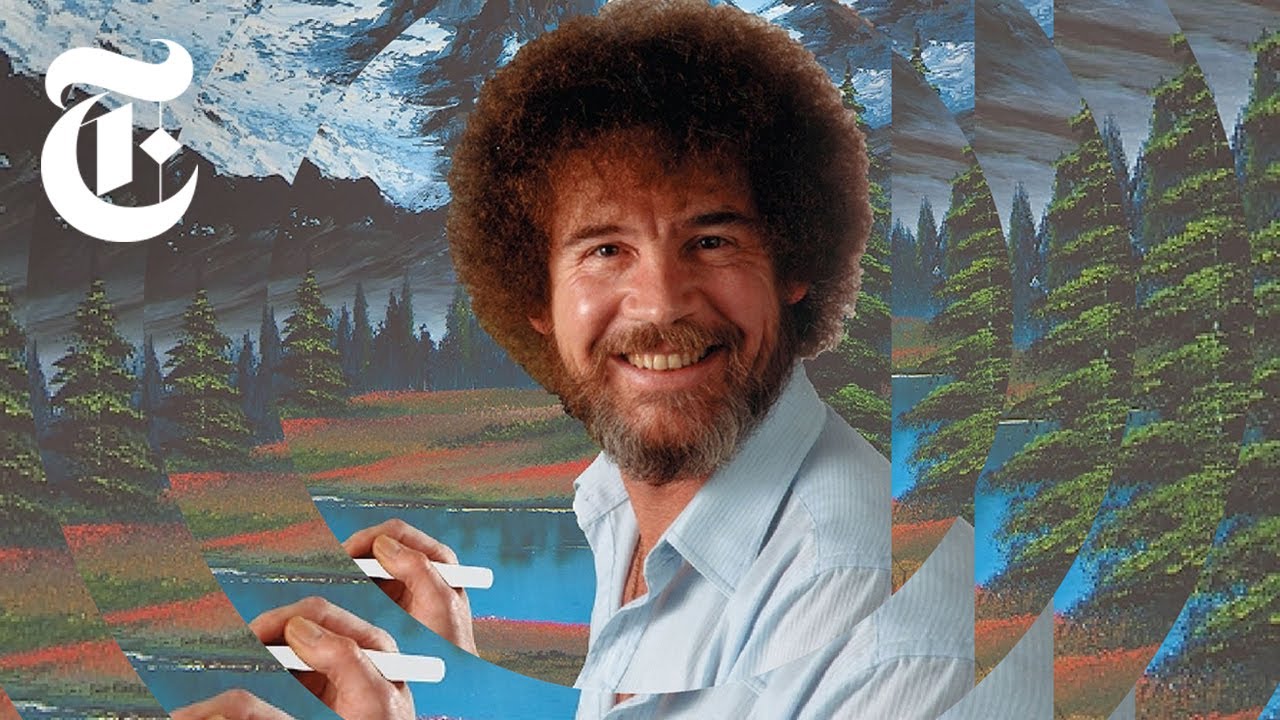

The internet’s longest-running art mystery just got solved, and the answer was sitting in cardboard boxes the whole time.
For years, fans of “The Joy of Painting” have asked the same question in comment sections and Reddit threads: if Bob Ross made that many paintings on camera, where did they all go? A July 12, 2019, video investigation from The New York Times, titled “Where Are All the Bob Ross Paintings? We Found Them,” finally tracked down the answer. It wasn’t a museum, a gallery circuit, or a wealthy collector’s wall — it was a warehouse in Herndon, Virginia.
- Ross painted three versions of nearly every scene across 31 seasons and 403 episodes of “The Joy of Painting” — a reference canvas, an on-air version finished in under 30 minutes, and a detailed copy photographed for instructional books — adding up to an estimated 1,165 canvases made directly for the show.
- The bulk of that archive sits in cardboard boxes inside the non-climate-controlled headquarters of Bob Ross Inc., the company Bob and Jane Ross co-founded with business partners Annette and Walt Kowalski, now run by Annette Kowalski and her daughter, Joan Kowalski.
- Authentic Bob Ross paintings that occasionally surface for sale online have fetched between $8,000 and $10,000, yet the company has no plans to sell off the television archive.
Three Canvases for Every Episode
The math behind the mystery is the first surprise in the video. Ross wasn’t just painting one canvas per episode — he was producing three. There was the reference painting he worked from off-camera, the version he actually completed live in front of the PBS cameras in under half an hour, and a third, more detailed rendition photographed for the instructional books sold alongside the show. Multiply that across 403 episodes and 31 seasons, and the Times investigation arrives at roughly 1,165 canvases tied directly to “The Joy of Painting.”
That volume alone explains why no single collector or museum ever cornered the market. There was simply too much material, made too quickly, by a man who treated the finished canvas as a byproduct of the demonstration rather than the point of it.
Inside the Herndon Warehouse
According to the investigation, most of those paintings never left the company that put Ross on the air in the first place. Bob Ross Inc.’s headquarters in Herndon, Virginia, houses the bulk of the archive, stacked in boxes without any special preservation setup — no humidity control, no climate-controlled vault, just storage.
An estimated 1,165 canvases, made across 403 episodes, mostly sitting in cardboard boxes in a Virginia warehouse.
Joan Kowalski, who now helps run the company alongside her mother, told the Times that selling the original artwork was never part of Bob Ross’s plan. The show wasn’t built as a fine-art venture — it was a vehicle for moving painting supplies and spreading his wet-on-wet technique to anyone willing to pick up a brush.
Bob Ross Inc. Rejects Sale
That distinction matters, because it explains why the archive has stayed locked away instead of hitting the open market. Even as individual authenticated Ross paintings have sold privately for $8,000 to $10,000 when they do surface, Bob Ross Inc. hasn’t treated the television collection as inventory to be liquidated. The company’s position, as laid out in the investigation, is that the paintings were teaching tools first — proof that the technique worked in real time — not a retirement fund waiting to be cashed in.
The headquarters itself remains closed to the public, meaning the collection functions less like a gallery and more like an archive nobody outside the company gets to browse.
The One Place the Public Can Actually See Them
There’s a single exception to the lock-and-key arrangement: the Bob Ross Art Workshop & Gallery in New Smyrna Beach, Florida, where select pieces from the archive are on display. It’s a small window compared to the full 1,165-canvas count, but it’s the only public-facing spot where fans can walk up to the real thing rather than a screenshot from an old episode.
So the mystery that fueled years of speculation ends not with an auction house or a hidden estate sale, but with a modest gallery in New Smyrna Beach and a much larger stash of boxes in Herndon that nobody outside Bob Ross Inc. gets to open. For a guy who spent 403 episodes telling viewers there are no mistakes, only happy accidents, it tracks that the paintings themselves ended up exactly where the business, not the market, decided they should.



Jessica Darrow – Surface Pressure (From “Encanto”/Sing-Along)
The Untold Truth Of Danielle Jonas
Inside the Taliban’s Takeover of Afghanistan
DMing Celebrities To Pick My Makeup
The Untold Truth Of Post Malone