

BEST OF The REAL Story Behind Hilarious Internet Memes
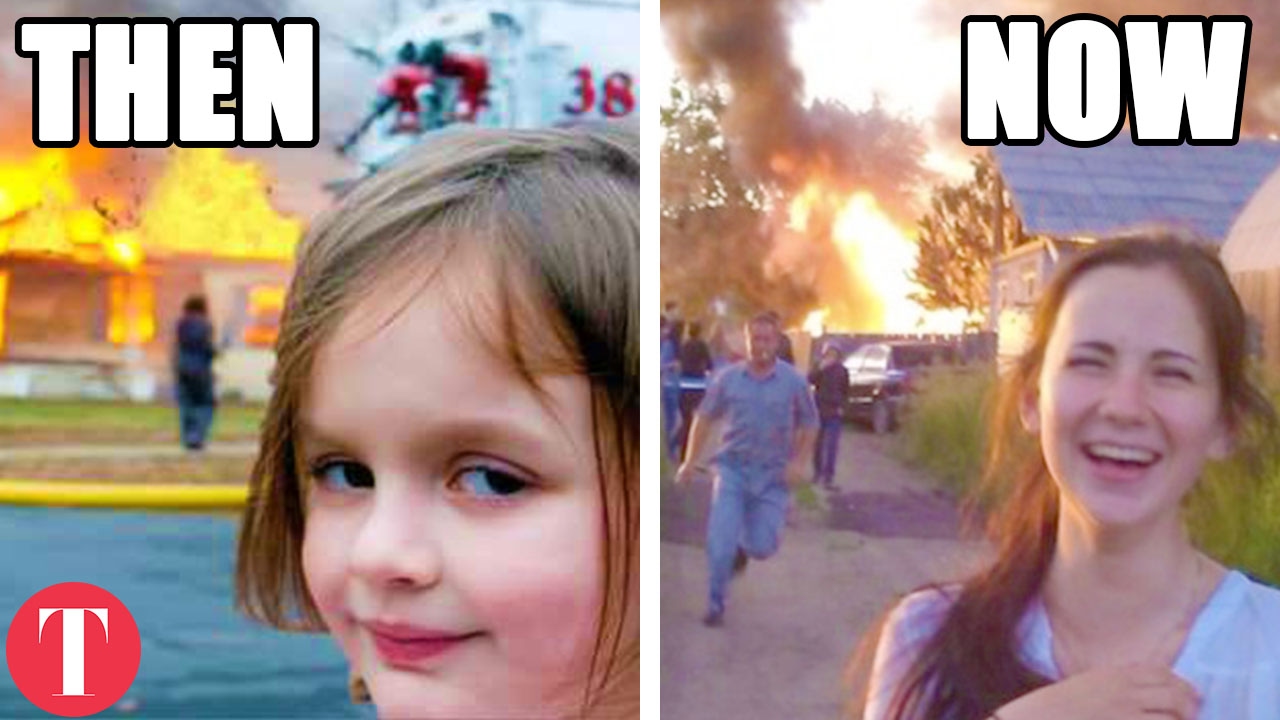

Behind every viral meme photo is a person who never asked for the attention.
A new compilation from TheThings Celebrity, “The Real Stories Behind Hilarious Internet Memes,” tracks down the actual people whose faces got hijacked by the internet and turned into shorthand for everything from awkwardness to delusion. Some of them cashed in. Others spent years fielding harassment from strangers who’d never met them. The video pulls together six of these origin stories, and the details are stranger — and in a couple of cases, more heartwarming — than the jokes themselves.
- Kyle Craven’s 2006 yearbook photo, posted to Reddit by his friend Ian Davies in 2012, became “Bad Luck Brian” and earned Craven between $15,000 and $20,000 in licensing and merchandise.
- Sammy Griner, photographed as an 11-month-old clutching sand on a Florida beach in 2007, became “Success Kid” and later helped crowdfund more than $100,000 in 2015 for his father Justin’s kidney transplant.
- Laina Morris uploaded her unblinking Justin Bieber fan-parody video in June 2012 and instantly became “Overly Attached Girlfriend,” while Blake Boston’s mother’s 2006 photo of him in a sideways cap turned him into the harassed face of “Scumbag Steve.”
The Yearbook Photo That Became a Punchline
Kyle Craven’s contribution to internet history came from a plaid sweater vest and a face he’d deliberately rubbed red before his 2006 high school yearbook photo was taken. It sat harmlessly in a photo album for six years until his friend Ian Davies posted it to Reddit in 2012 with a caption about chronic misfortune. “Bad Luck Brian” spread within days, spawning thousands of user-generated captions pairing Craven’s grinning, doomed expression with escalating catastrophes. Unlike a lot of meme subjects, Craven actually got paid — licensing deals and merchandise eventually put $15,000 to $20,000 in his pocket, turning an accidental yearbook mishap into a genuine, if modest, payday.
A Kidney Transplant Funded by a Fistful of Sand
Sammy Griner was 11 months old when his father snapped a photo of him gripping sand on a Florida beach in 2007, his face screwed into an expression that looked equal parts triumphant and furious. Once it hit the internet as “Success Kid,” it became one of the most reused reaction images in meme history, slapped onto everything from motivational posters to political ads. The story took a real turn in 2015, when the family used Sammy’s meme recognition to launch a crowdfunding campaign for his father Justin’s kidney transplant — and raised more than $100,000. It’s one of the rare cases where meme fame translated directly into a life-saving outcome rather than just internet notoriety.
A sand-covered fist on a Florida beach in 2007 eventually helped raise over $100,000 for a kidney transplant.
Jokes Escalating Into Workplace Harassment
Not every subject in this compilation got a happy ending. Blake Boston was a teenager in 2006 when his mother photographed him in a sideways-fitted cap — an image that later became “Scumbag Steve,” the internet’s go-to visual shorthand for teenage delinquency and bad decisions. Boston never asked to represent anything, but the meme’s staying power subjected him to years of online harassment from strangers who assumed the caption jokes reflected who he actually was. Laina Morris had a different but related experience: her June 2012 YouTube video, a parody of overzealous Justin Bieber fans featuring an unblinking, wide-eyed stare, made her “Overly Attached Girlfriend” almost overnight — instant fame, but also instant reduction to a single exaggerated expression she’d created as a joke.
The Accidental Stock Photo and the Dog That Became Doge
Griffin Kiritsy didn’t even know he was being turned into a meme. He posed for a 2007 Reader’s Digest photoshoot on the University of New Hampshire campus, and that stock-style image later got repurposed online as “College Freshman,” attached to jokes he had nothing to do with writing. Halfway around the world, a rescue Shiba Inu named Kabosu was living a much cozier life with her owner, Japanese kindergarten teacher Atsuko Sato, whose 2010 blog photos of the dog’s quizzical, side-eyed expression eventually spawned “Doge” — the broken-English, Comic Sans-captioned format that became one of the defining meme styles of the decade.
What ties all six stories together is how little control any of these people had over what happened next. A yearbook photo, a beach snapshot, a blog post about a dog — none of it was engineered to go viral, and none of the subjects had a say once it did. TheThings Celebrity’s compilation is really a reminder that the internet doesn’t ask permission before it turns your face into a punchline, whether that ends with a merchandising check or years of unwanted attention.

The Call | Season 2022 Cinematic – League of Legends (ft. 2WEI, Louis Leibfried, and Edda Hayes)
10 Reasons Why The Internet Will Miss Kim Kardashian
10 Famous People Ruined By Reality TV
10 Things ALL Girls Do But Won’t Admit
The Biggest Lies They Showed On My Super Sweet 16