

 InfoSearched
A Facebook insider stepped out of the shadows on national television to accuse the company she helped build of choosing profit over public safety.
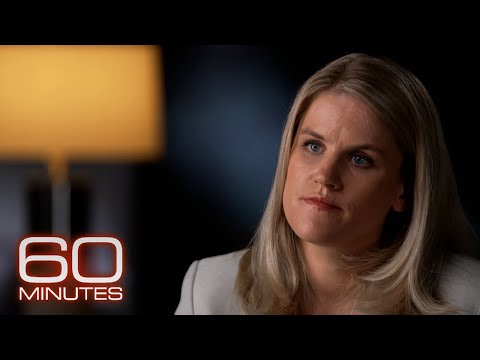
On October 3, 2021, CBS’s 60 Minutes aired Scott Pelley’s interview with Frances Haugen, the 37-year-old former Facebook product manager who spent months secretly funneling internal research to Congress and The Wall Street Journal before agreeing to unmask herself on camera. The Iowa-born computer engineer, who previously worked at Google, Pinterest and Yelp, joined Facebook in 2019 specifically to help the company fight election misinformation. What she found instead, she told Pelley, was a pattern of the company knowing about the harm it caused and choosing not to fix it.
- Haugen left Facebook in May 2021 with thousands of pages of internal research and executive communications, which fed The Wall Street Journal’s “Facebook Files” series.
- She told 60 Minutes that Facebook’s 2018 “Meaningful Social Interactions” algorithm change amplified angry, polarizing content because outrage drove more engagement and ad revenue.
- She has filed at least eight complaints with the SEC through the nonprofit Whistleblower Aid and was scheduled to testify before the Senate Commerce subcommittee.
The Insider Who Went Public
Haugen wasn’t a disgruntled outsider with an axe to grind — she was a civic integrity staffer brought in to solve the exact problems she ended up exposing. “The thing I saw at Facebook over and over again was there were conflicts of interest between what was good for the public and what was good for Facebook,” Haugen told Pelley. “And Facebook, over and over again, chose to optimize for its own interests, like making more money.”
That line became the spine of the entire broadcast. Rather than leak documents and disappear, Haugen worked with the legal nonprofit Whistleblower Aid, filed formal SEC complaints alleging Facebook misled investors about platform safety and user growth, and agreed to put her name and face on the allegations — a decision that set up her public testimony before the Senate Commerce subcommittee.
Meaningful Interactions Rewire Social Feeds
Haugen walked Pelley through the mechanics of the 2018 algorithm overhaul known internally as Meaningful Social Interactions, or MSI. The change was pitched as a way to prioritize posts from friends and family over passive content like news articles. In practice, Haugen said, it systematically rewarded content that provoked anger and division, because that kind of content generated more comments, shares and time on the app — the metrics that translate directly into ad revenue.
“Facebook, over and over again, chose to optimize for its own interests, like making more money.”
The interview framed this not as an accident of engineering but as a known tradeoff. Haugen’s documents indicated Facebook’s own researchers had flagged the polarizing effects of MSI internally, yet the company kept the system running because reversing it risked hurting engagement numbers investors watch closely.
Civic Integrity, Dissolved After the Election
One of the most damaging disclosures involved Facebook’s Civic Integrity team, the group Haugen was originally hired to join. She said the company built real safeguards ahead of the 2020 presidential election, then dismantled the Civic Integrity unit and switched off many of those safety measures shortly after the vote was certified. Haugen told Pelley she believes that decision directly contributed to the conditions that produced the violent January 6 riot at the U.S. Capitol.
It’s the kind of allegation that would fit right alongside the strangest things said under oath by public figures — a subject covered elsewhere when officials go off-script on live television. Here, though, the claim wasn’t a gaffe; it was a former employee describing a documented internal decision.
Instagram, Teen Girls, and the Secret XCheck List
Haugen also detailed two other leaked findings. Facebook’s own research showed Instagram worsened body image and mental health struggles among teenage girls, with the company aware of the effect internally well before it became public. Separately, she described a program known as “cross-check” or XCheck, which quietly exempted a roster of high-profile users from the content rules applied to everyone else.
Facebook, for its part, maintained it had “deliberately and consistently” shared information about its safety efforts — a defense that internal documents obtained by Haugen appeared to contradict point for point.
Upcoming Legislative Priorities on Capitol Hill
The 60 Minutes broadcast was designed as the opening move, not the finale. Haugen’s SEC complaints and her scheduled appearance before the Senate Commerce subcommittee put the same allegations — the MSI algorithm, the dissolved Civic Integrity unit, the Instagram research, the XCheck program — in front of lawmakers with subpoena power, days after millions of viewers heard them from Haugen herself.
Haugen’s next stop was the witness table in front of senators who’d spent months building the SAFE TECH Act and related proposals aimed at forcing platforms to disclose exactly what their algorithms optimize for. Whether that testimony moves any bill past committee is the real test — but for one night, at least, the argument that Facebook knew and chose profit anyway had a name and a face behind it.








Live PD: Tummy Tuck (Season 3) | A&E
10 Celebs Who Went From TRASH To CLASS
Steven Seagal’s Daughter Has Grown Up To Be Gorgeous
Cheap Online Shopping Disasters
10 Celebs Who Lied Straight To Your Face