

The Dark Side of the Video Game Industry | Patriot Act with Hasan Minhaj | Netflix
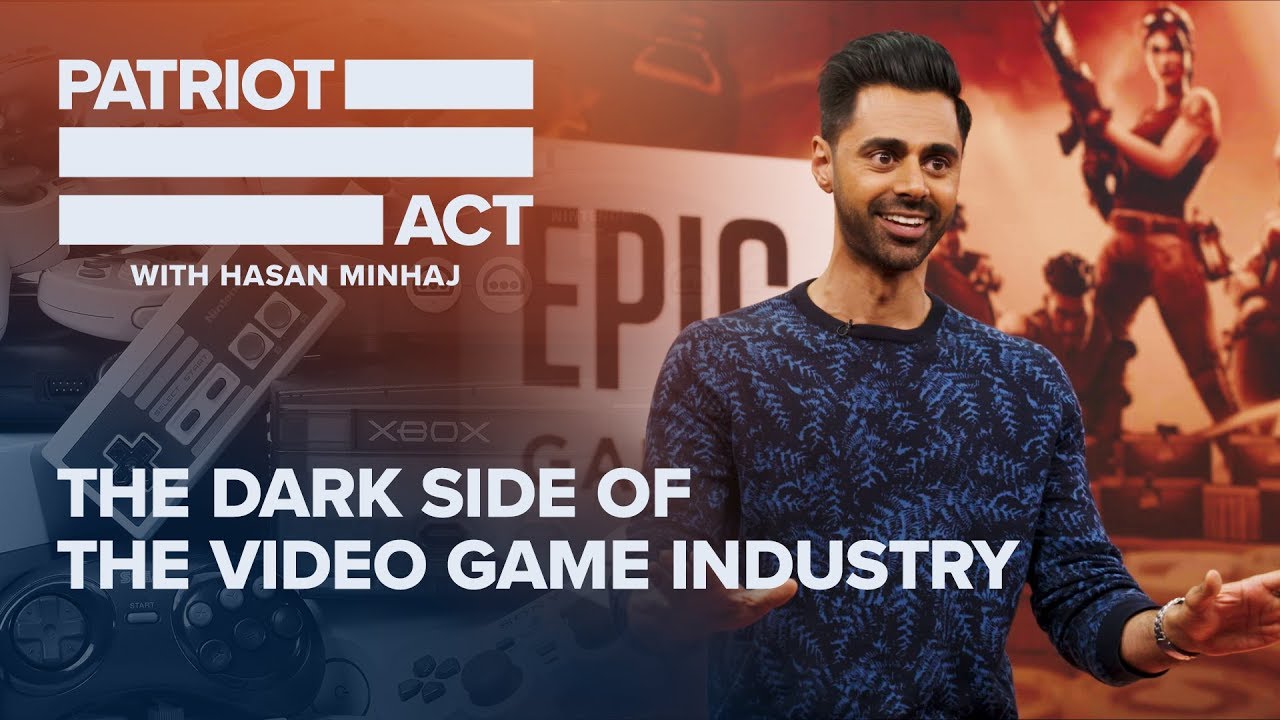

Hasan Minhaj turns his attention to a $139 billion industry that runs on unpaid overtime and non-disclosure agreements.
On the latest episode of Patriot Act, Minhaj digs into the gap between the polish gamers see on their screens and the conditions under which that polish gets made. With an estimated 2.7 billion people playing video games worldwide, the industry has become one of the biggest entertainment businesses on the planet — bigger than film and music combined by some measures. Minhaj’s episode argues that growth has been subsidized by developers who are overworked, underpaid, and, in some cases, silenced.
- The industry generates $139 billion annually while an estimated 2.7 billion people play video games globally.
- Developers at studios like Epic Games have described mandatory “crunch” periods running 70 to 100 hours a week to keep live titles like Fortnite updated.
- More than 150 Riot Games employees staged a walkout in May 2019 over forced arbitration clauses covering sexual harassment and gender discrimination claims.
Crunch as a Business Model
Minhaj zeroes in on “crunch” — the industry’s term for extended, often mandatory overtime stretches that studios lean on to hit release dates or push out new content. At Epic Games, the studio behind Fortnite, workers have described weeks stretching to 70 or even 100 hours as the company races to keep the game’s live seasons and events flowing without interruption. The episode frames this not as an occasional emergency but as a built-in expectation, with burnout and mental health strain treated as an acceptable cost of doing business rather than a problem to fix.
That pressure isn’t unique to one studio — it shows up anywhere a live-service game needs constant new content to hold players’ attention, the same demand that’s fueled ongoing expansions for franchises like Apex Legends and Destiny 2. Minhaj’s point is that the appetite for constant updates and seasonal content, which players now take for granted, gets built on the backs of teams working hours no software company outside of gaming would tolerate.
The Riot Games Walkout
The episode’s sharpest workplace-culture material centers on Riot Games, developer of League of Legends. In May 2019, more than 150 Riot employees walked out of the company’s Los Angeles offices to protest forced arbitration clauses that barred employees from suing the company over sexual harassment and gender discrimination claims and instead pushed those disputes into private, closed-door proceedings.
More than 150 Riot Games employees walked out in May 2019 to fight forced arbitration clauses covering sexual harassment and gender discrimination claims.
Minhaj uses the walkout as the episode’s clearest example of how leverage in the industry runs almost entirely toward the publisher. Employees who raise complaints about harassment or discrimination can find themselves boxed into arbitration rather than open court, a mechanism critics say keeps patterns of misconduct out of public view.
Passion as Leverage on Pay
Minhaj also makes the case that developers are systematically underpaid relative to peers with comparable technical skills elsewhere in tech. His argument: publishers know that programmers, artists, and designers went into gaming because they love it, and that emotional investment gets used as leverage to suppress wages compared to what the same skill set commands at a general software company. The episode ties that wage gap directly back to the crunch culture — when studios can count on passion to keep people at their desks unpaid overtime, there’s less financial incentive to fix the underlying schedules.
The Push to Unionize
The episode closes its argument by pointing to organized labor as the industry’s likely next fight. Minhaj highlights Game Workers Unite, an advocacy group pushing to unionize developers across studios, as the clearest organized response to crunch, wage suppression, and arbitration clauses. The group’s pitch is straightforward: without collective bargaining power, individual developers have little ability to push back against studios that can simply replace burned-out staff with the next wave of aspiring hires.
Game Workers Unite doesn’t have a contract at a major studio yet, and Minhaj doesn’t pretend otherwise — the segment treats unionization as a fight just getting off the ground rather than a battle already won. What the Riot walkout proved, at minimum, is that 150-plus employees were willing to put their names on a public protest against their own employer’s legal policies, which is the kind of number that gets a studio’s attention whether or not it shows up in a press release.







10 Lucky Kids Ellen DeGeneres Made Famous
10 Celebs Who Are NOTHING Like They Seem
10 Celebs No One Knew Were Trans
Malia Obama’s Boyfriend Comes From A Lot Of Money
Celebs Who Ditched Their Partners For Someone More Famous