

How to Get Bigger Biceps (TALLER & WIDER!)
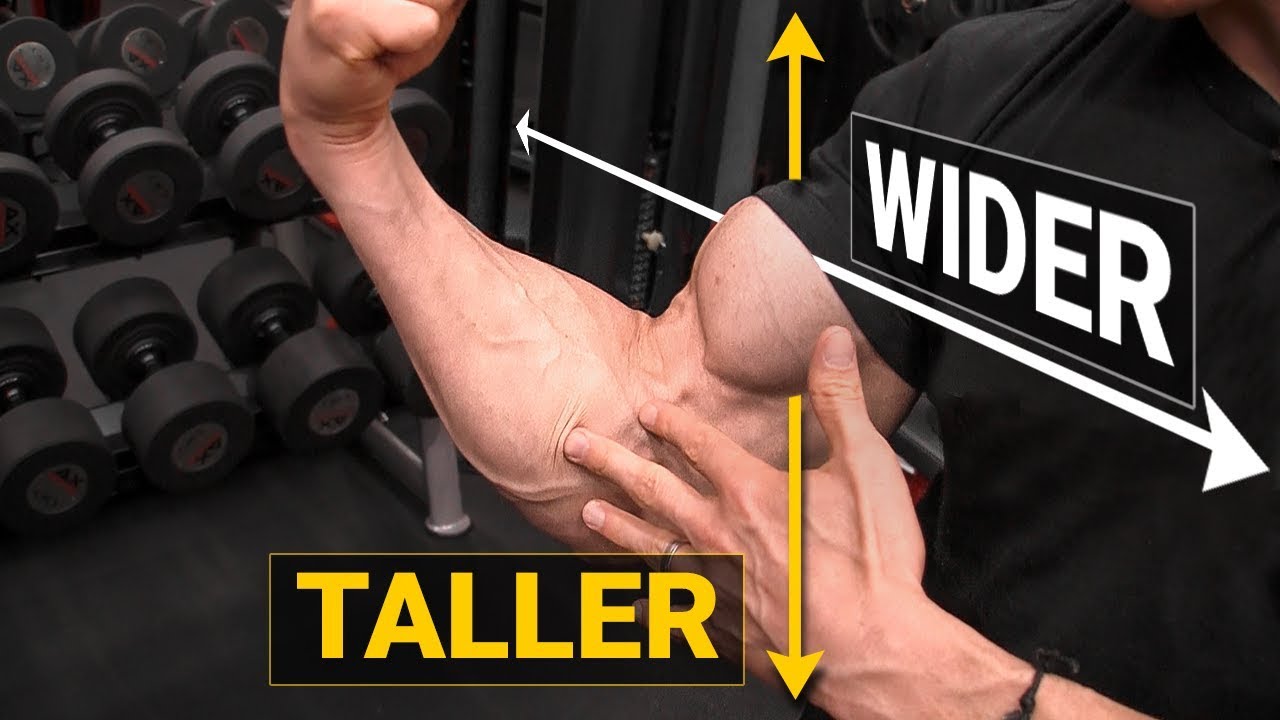

Jeff Cavaliere has a theory about why your biceps aren’t growing, and it has nothing to do with how much weight you’re curling.
In his August 2019 ATHLEAN-X tutorial, “How to Get Bigger Biceps (TALLER & WIDER!),” the physical therapist and strength coach breaks down why lifters who grind through curl after curl still can’t add size to their arms. Cavaliere, the former head physical therapist and assistant strength coach for the New York Mets, argues the problem isn’t effort — it’s that the body is quietly sabotaging the exercise before the muscle ever gets a real workout.
- Cavaliere identifies the forearm flexors as the primary “enemy” of bicep growth, since they share pulling function with the biceps and will hijack the movement if the lifter lets them.
- He grounds the fix in a biological tendency toward motor efficiency — the body’s default habit of recruiting secondary muscles to distribute load, which helps raw strength but actively blunts hypertrophy.
- The tutorial ties targeted growth to two specific structures: the long head (added height) and the short head and brachialis (added width), each requiring a different mechanical adjustment to isolate properly.
The Efficiency Problem
Cavaliere’s starting point is basic neuromuscular mechanics: when the body is asked to move weight from point A to point B, it doesn’t care which muscles do the work — it just wants the job done with the least energy spent. For pure strength training, that’s a feature, not a bug. Moving the most weight possible is, in his framing, the literal definition of strength, and recruiting every available helper muscle is exactly what you want.
Hypertrophy is a different game. If the goal is size in one specific muscle — in this case the biceps — then letting neighboring muscles pitch in defeats the purpose. According to Cavaliere, the forearm flexors are the biceps’ most persistent freeloaders because they sit right next to them and perform a nearly identical pulling function on curls, chin-ups, and rows.
The forearms are the enemy of your gains.
Fixing the Wrist to Isolate the Muscle
The correction Cavaliere demonstrates is deceptively simple: change the wrist position on every curl variation. Instead of letting the wrist curl toward the upper arm — which invites the forearm flexors into the lift — he has lifters allow the wrist to bend slightly backward, taking the forearms out of the equation almost entirely.
He introduces the concept using a two-handed waiter curl, a drill meant to teach lifters exactly what that isolated tension should feel like before carrying it into standard bicep work. Once a lifter can reproduce that feeling, Cavaliere says it transfers directly to every other curl variation and to chin-ups, where the same principle applies.
Grip placement matters just as much as wrist angle. Cavaliere warns against letting the bar or dumbbell drift toward the fingers, instead instructing lifters to keep the load deep in the palm. That detail isn’t cosmetic — sliding weight toward the fingers overloads the distal finger flexor tendons and creates unwanted stress on the medial elbow tendon attachment, exactly the kind of accessory-muscle compensation the whole tutorial is designed to eliminate.
Training for Height Versus Width
Cavaliere separates the bicep into functional targets rather than treating it as one lump muscle. Growing the long head adds visible peak height, while developing the short head and brachialis adds width to the arm — and he treats these as requiring distinct mechanical intent rather than the same curl repeated endlessly. Active supination and deliberate elbow flexion mechanics, he explains, are what let a lifter direct tension toward one head over another instead of defaulting to whichever pattern is easiest.
That distinction is the throughline of the whole tutorial: sloppy biomechanics might still move the weight, but it won’t build the specific shape a lifter is after. Precise execution — wrist angle, grip depth, supination, elbow path — is what turns a generic curl into progressive overload aimed squarely at the target fibers.
Cavaliere closes the video the way he closes most ATHLEAN-X tutorials, pointing viewers toward his 90-day training program for a full system built around these same isolation principles. But the standalone fix — bend the wrist back, keep the grip deep in the palm, feel the waiter curl before you load the bar — is the piece he wants lifters testing in their very next workout, not three months from now. For anyone chasing arm size after a long run of forearm-dominant curls, that’s the adjustment Cavaliere says shows up fastest, on the very next set.








10 CHILD STARS Who FINALLY Got Their Life Together
Who We Think Jason Momoa Should Date Next
The Untold Truth Of BTS
EVERY ROAD TRIP EVER
People Katy Perry Treated Like Trash