

Primitive Technology: Crossdraft kiln
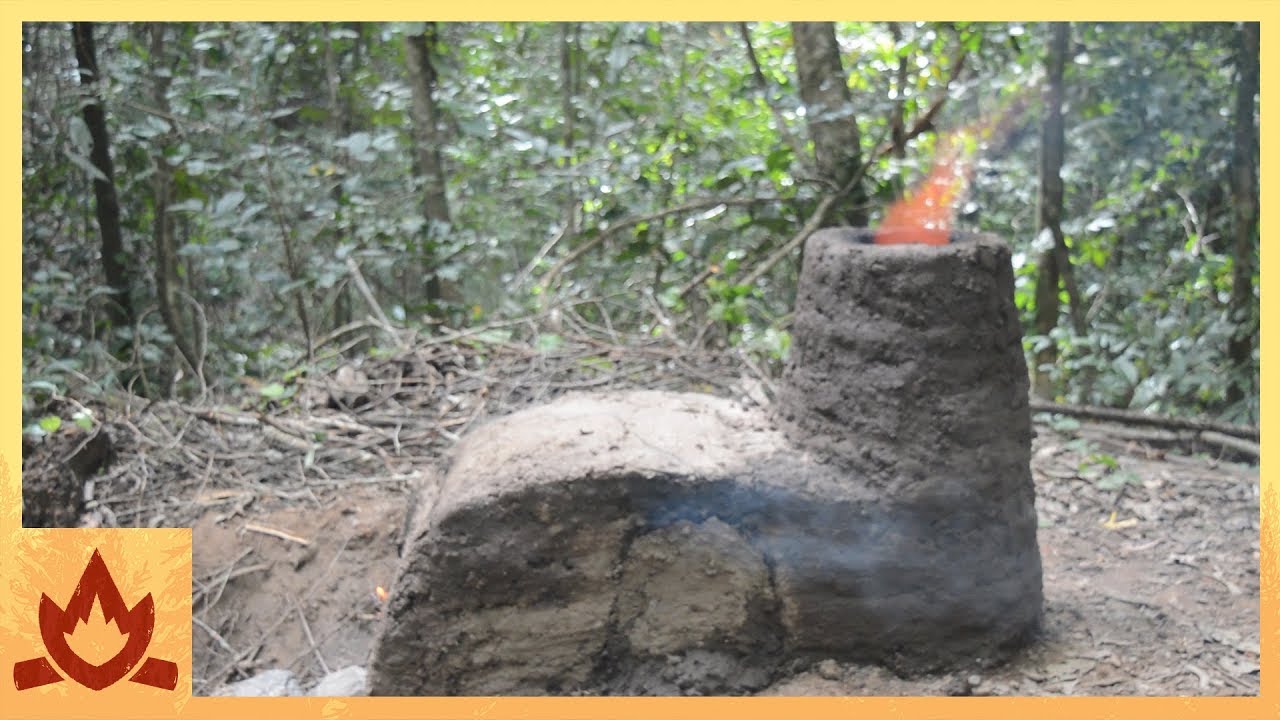

A man with no metal tools just built a working pottery kiln from mud, sticks, and creek clay.
The Primitive Technology channel has spent years proving that Stone Age methods can produce genuinely functional tools, and the latest upload pushes that experiment into ceramics engineering. In “Primitive Technology: Crossdraft kiln,” the creator builds a horizontal crossdraft kiln entirely by hand, then fires a hand-formed earthenware pot inside it to see whether the design actually performs the way pottery history says it should. No metal, no power tools — just mud, sticks, and clay dug straight from a creek bank.
- The kiln measures under one meter long with a 25 cm by 25 cm interior tunnel, built from mud recycled out of a previous kiln structure.
- A rear chimney roughly 25 cm wide and 65 cm tall pulls flames horizontally across the ware chamber through natural draft, while five hand-formed clay grate bars in the firebox boost combustion efficiency.
- A pot made from creek clay tempered with crushed pottery shards was fired directly inside the flame path and later held water successfully in testing.
The Crossdraft Design Explained
Unlike an updraft kiln, which relies on a perforated floor to let heat rise up through stacked pottery, a crossdraft kiln sends flames sideways first. Fuel burns in the firebox, and the fire travels horizontally across the floor of the ware chamber — directly around whatever’s being fired — before finally turning upward and exiting through a chimney at the back. That horizontal run is the whole point: it forces the fire to spend more time in contact with the pottery before the heat escapes.
The builder shaped the tunnel with slightly curved side walls, then layered sticks over the structure before sealing everything under a mud roof, which held the shape together while it dried. A 25 by 25 cm side opening was cut into the wall to give access for loading and pulling the ware without dismantling the whole kiln. The five clay grate bars sitting in the firebox weren’t decorative — they lift the fuel bed and let air move underneath it, which is a basic combustion trick that keeps a wood fire burning hotter and cleaner than fuel just piled on bare ground.
Firing the Test Pot
To actually test the design, clay pulled from a nearby creek bank was mixed with grog — crushed shards from earlier pottery — and shaped into a vessel with a pouring spout. That pot went straight into the chamber and sat directly in the flame path as the kiln fired, with no shelf or saggar protecting it from direct contact with the fire.
The pot was fired in a relatively short 1 hour and 20 minutes — and it would have gone faster still if the kiln itself hadn’t still been wet from construction.
Once cooled, the finished vessel was tested with water and held it without leaking, which is the practical proof-of-concept the whole build was chasing: a kiln thrown together with no metal tools still fired a usable, watertight pot in under an hour and a half.
The Importance of Physical Shape
The reasoning behind crossdraft kilns comes down to heat retention. Because hot gases have to travel the length of the ware chamber before finding an exit up the chimney, they linger longer around the pottery instead of venting immediately the way they can in a simple updraft setup. That extended dwell time is also credited with reducing hot spots, giving a more even firing across the load rather than scorching one section while another stays cooler.
Historically, crossdraft kilns are believed to have developed early in Asia, evolving out of the practice of digging tunnel kilns straight into hillsides. Whether European versions were adopted from that eastern tradition or arrived independently — through potters gradually stretching the firing arch of conventional updraft kilns outward — is still an open question in pottery history. Readers who enjoy watching a creator commit fully to a hands-on build from scratch, the same way channels have turned single-episode survival and construction projects into their own recurring content, will recognize the same obsessive follow-through in builds like Turning $0.01 Into a House in 1 Week.
The builder’s own takeaway was that this kiln style fires quickly and evenly, though he was upfront that more experimentation is needed to fully understand its downsides. That kind of iterative, show-your-work approach is exactly what’s kept the channel’s audience coming back — the same appetite that fuels long-haul survival and building content elsewhere, including 100 Hours In Minecraft Hardcore. Whatever kiln design gets tested next, this one already cleared its bar: a wet, freshly built structure still turned raw creek clay into a pot that holds water in under 90 minutes.








Surprising ESPN Scandals We Never Saw Coming
The Shady Side Of Nick Cannon Revealed
Fake Beauty – Celebrity Photoshop Fails
Olivia Rodrigo – brutal (Official Video)
The Real Reason Why Meg Ryan’s Career Was Destroyed