

How Did A Whole Village Disappear? (The Lost Colony of Roanoke Mystery)
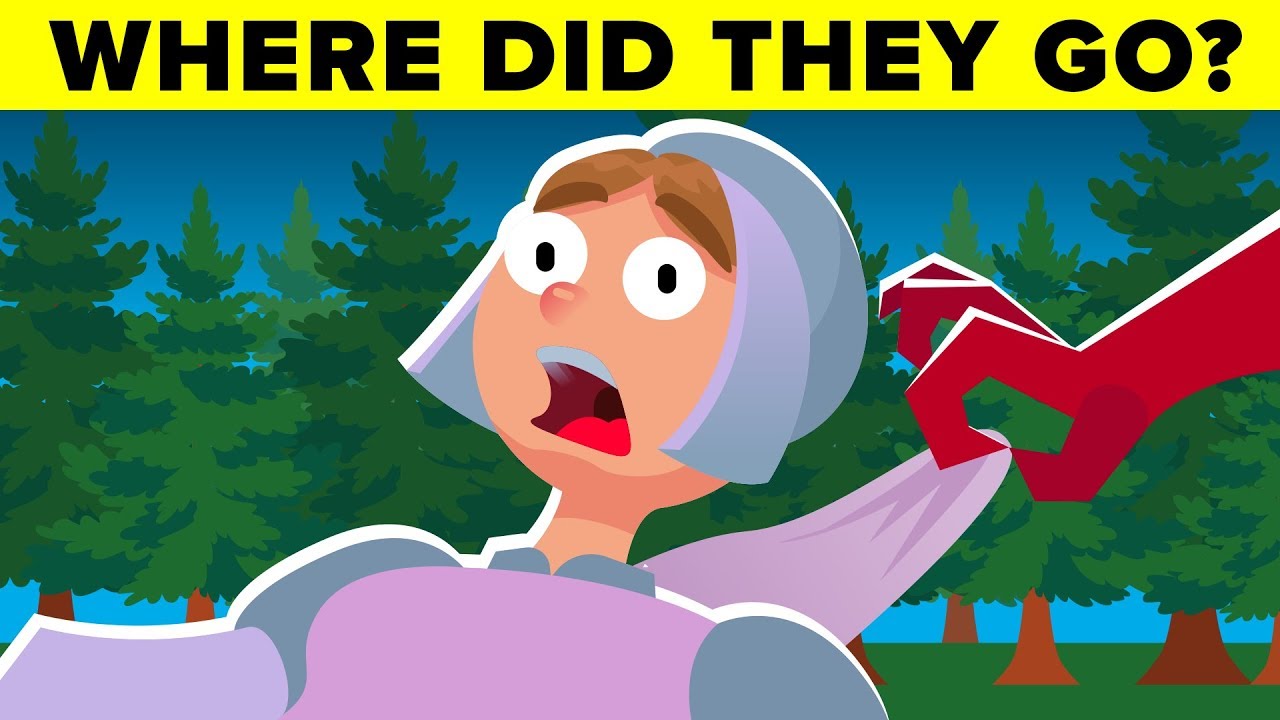

Four hundred years later, historians still can’t say what happened to the more than 100 English settlers who vanished from a small island off the coast of North Carolina.
In July 1587, roughly 115 men, women, and children stepped off English ships onto Roanoke Island, sent by Sir Walter Raleigh to plant the first permanent English colony in the New World. Their governor, John White, sailed back to England for supplies that same year and didn’t return for three years. When he finally made it back in August 1590, the settlement was gone — no bodies, no battle damage, just two carved words left behind as the only clue.
- Roughly 115 settlers, including Governor John White’s granddaughter Virginia Dare, landed on Roanoke Island in July 1587.
- White returned in August 1590 to find the colony dismantled with no signs of violence, only the letters “CRO” carved into a tree and “CROATOAN” carved into a palisade post.
- By 2019, archaeological work led by Mark Horton and a hidden fort symbol found on White’s own 1580s map had pushed the leading theory toward the colonists assimilating with local tribes rather than dying in place.
A Colony Built on Bad Timing
Raleigh’s settlers weren’t the first English arrivals to Roanoke — an earlier military outpost had already soured relations with some of the surrounding tribes — but the 1587 group came to farm, build, and stay. Shortly after landing, White’s daughter Eleanor gave birth to Virginia Dare, the first English child born in the Americas. Within weeks, the colonists convinced White that someone needed to sail home for reinforcements and supplies before winter set in, and White himself made the trip, believing he’d be back within months.
That plan collapsed almost immediately. England went to war with Spain, the Spanish Armada threatened the English coast, and every seaworthy ship, including the ones White needed, got pressed into naval service. White didn’t manage to secure passage back across the Atlantic until 1590 — nearly three years after he’d left his own family behind on Roanoke.
White’s Findings and Omissions
When White’s ship finally reached Roanoke on August 18, 1590 (his granddaughter’s third birthday, by his own account), there was no colony left to find. The settlers had dismantled their houses and the palisade fence themselves, in an orderly fashion — nothing burned, nothing left in a hurry. There were no graves, no signs of a struggle, no distress symbol carved anywhere, which the colonists had agreed to use if they were ever forced to leave under attack.
What White did find was a single word carved into a gatepost: CROATOAN. Nearby, the letters “CRO” were etched into a tree. Croatoan was the name of a nearby island — now Hatteras Island — and of the Native American tribe that had been friendly to the English throughout the colony’s short life. White took it as a message: the settlers had relocated there, or somewhere close to it.
No bodies. No battle damage. No distress marking. Just a single carved word — CROATOAN — and a colony that had vanished in an orderly, deliberate way.
White never got the chance to follow the trail. A storm battered his ships as he prepared to search Croatoan Island and a second, agreed-upon fallback site roughly 50 miles inland. With his vessels damaged and his crew unwilling to risk another season, White was forced to turn back for England without setting foot on Croatoan. He never returned to America and never learned what became of his daughter or granddaughter.
The Competing Theories
In the centuries since, historians have circled around five basic explanations: the colonists assimilated peacefully into a nearby tribe; they starved or succumbed to disease before anyone could help them; they were wiped out by a hostile tribe, possibly connected to Powhatan’s confederacy in Virginia; they were killed by Spanish raiders patrolling the coast for rival English outposts; or they attempted to sail back toward England or another settlement and drowned. Each theory has surface support and each runs into the same wall — no confirmed remains, no colony-wide grave site, and no Spanish or Native American record explicitly claiming responsibility.
The unsolved nature of it is exactly why the story has outlasted just about every other colonial-era puzzle in American history — it’s the same pull that keeps people glued to any good unsolved-case breakdown, the kind of thing John Oliver has poked fun at when digging into centuries-old legends that never get a clean ending.
Evidence Points Toward Specific Conclusions
By 2019, the assimilation theory had the most physical backing behind it. English explorer John Lawson visited Hatteras in 1701 and wrote that the Native Americans living there told him their ancestors could “talk in a book,” a detail some historians read as a folk memory of English literacy passed down through generations. Archaeologist Mark Horton’s excavations on Hatteras turned up Elizabethan-era trade goods and weapon fragments buried alongside native artifacts, suggesting English colonists and Croatoan tribespeople were living — and trading — side by side.
The most striking clue, though, came from White’s own hand. In 2011, researchers at the British Museum examined White’s 1580s map of the Virginia coastline under different lighting and found a hidden fort symbol, patched over with paper, roughly 50 miles inland from Roanoke — at what’s now called “Site X.” It matched the fallback location the colonists had reportedly agreed on before White ever left for England, giving the inland-relocation theory a piece of physical, contemporaneous evidence that none of the other explanations have.
None of it adds up to proof. There’s still no mass grave, no definitive DNA match, no single document that closes the file. But between Lawson’s 1701 account, Horton’s dig, and the fort symbol White drew and then hid on his own map, the pieces point less toward tragedy and more toward a group of English settlers who simply walked inland, joined the people who’d been helping them all along, and never looked back.







Roseanne Barr’s Complete Transformation
The Most Dramatic Transformations Ever Seen On My 600-lb Life
SPIDER-MAN: NO WAY HOME – Official Trailer (HD)
10 Signs You’re In The FRIEND ZONE
Why Fans Are Going Nuts Over Madonna’s Behind