

10 STRANGE Requirements To Work As A Disney Princess
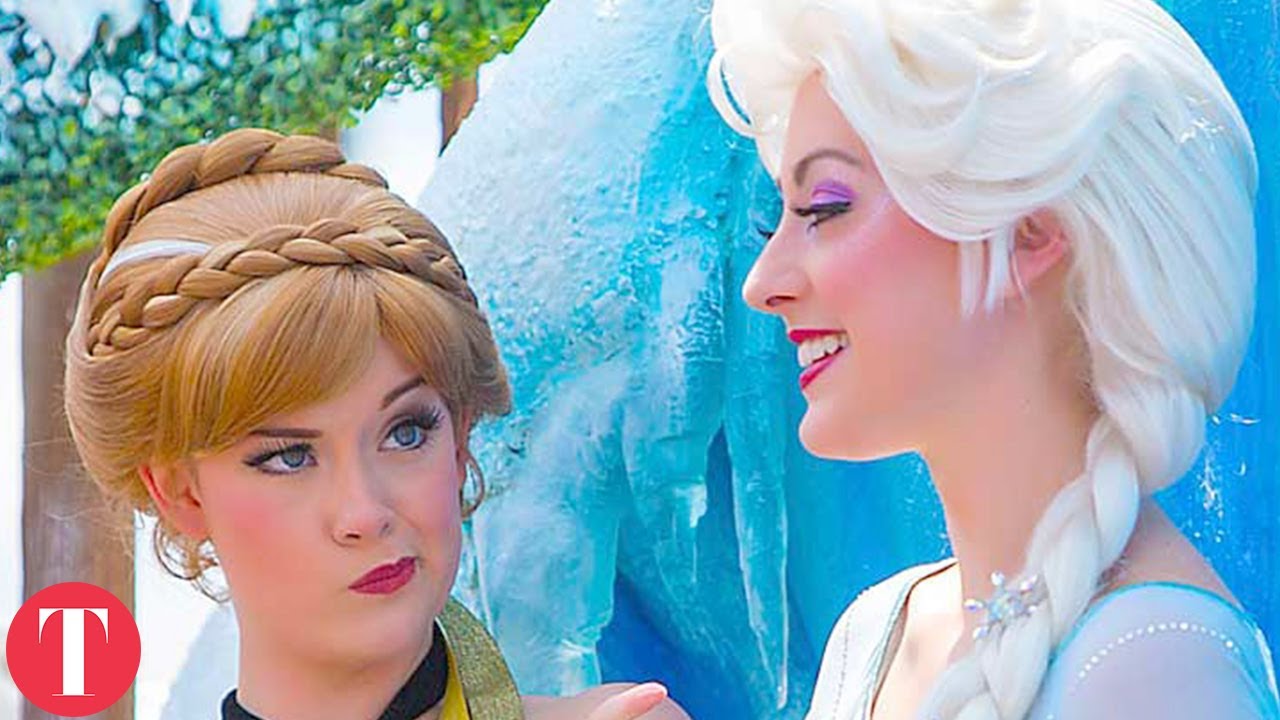

The tiara comes with a rulebook thicker than most job contracts.
Landing a spot as a Disney Princess “face character” isn’t just about singing on pitch or owning the right cheekbones. According to behind-the-scenes accounts and internal audition guidelines, Disney Parks run one of the most rigid appearance-and-behavior systems in entertainment, covering everything from exact height windows to how a performer is allowed to point at a trash can. The job looks like a fairy tale from the front of the castle; from backstage, it runs more like a military inspection.
- Traditional princesses like Cinderella, Aurora, Belle, and Rapunzel require performers standing between 5’3″ and 5’7″, while petite roles such as Tinker Bell and Alice call for 4’11” to 5’2″.
- Performers undergo regular profile checks to confirm their silhouette and facial structure still match their animated counterpart, with no visible tattoos or unnatural hair color allowed.
- Cast members are bound by non-disclosure agreements and are only permitted to say they are “friends with” the character they play, never confirming the role outright.
The Physical Blueprint Disney Demands
Disney’s casting process starts with a tape measure. Because guests photograph princesses standing next to their princes, siblings, and each other, Disney sorts performers into strict height brackets so the lineup never looks mismatched — 5’3″ to 5’7″ for the classic roster, 4’11” to 5’2″ for smaller-statured characters. That same precision carries into facial structure, where Disney looks for performers whose bone structure and features already resemble the animated design before a single stitch of costume goes on.
The scrutiny doesn’t end once someone is cast. Performers face ongoing profile checks to make sure their look and silhouette haven’t drifted from the character’s youthful appearance, and Disney’s standard grooming policy rules out visible tattoos and hair that isn’t natural-looking. It’s a level of physical upkeep that would feel more at home on a modeling contract than a theme-park job — a similar tension to the image demands actresses and singers face when their public persona has to stay locked in, as detailed in stories about musicians who are nothing like they seem off camera.
Mastering the Character Beyond the Costume
Once hired, performers don’t simply memorize lines — they train to become interchangeable with every other person who has ever played that role. That means matching identical mannerisms, voice inflections, and even a character’s fictional backstory word for word, so a guest meeting “Belle” on a Tuesday afternoon gets the same experience as one meeting her on a Saturday morning three years later. Autographs are drilled to match exactly, too, so a signature collected from one performer looks indistinguishable from another’s.
Makeup is part of the training curriculum as well. Performers learn to apply their own specialized stage makeup so that the look stays consistent across shifts and across whoever is inside the costume — right down to the gowns themselves, which echo the kind of exacting detail found in the most elaborate royal wedding dresses ever designed.
Never Breaking the Magic
The toughest rule has nothing to do with appearance. Performers are barred from breaking character under any circumstance, no matter what a guest throws at them. If a kid asks about a smartphone, a movie sequel, or any modern reference that doesn’t exist in the character’s world, the performer is trained to act as though the concept simply doesn’t exist — rather than acknowledge reality and shatter the illusion.
Performers are taught to pretend modern references simply don’t exist in their character’s universe — the illusion outranks the truth every time.
That same commitment to immersion shows up in the smallest physical habits. Cast members are taught never to point with a single finger, using a two-finger point or an open palm instead, and litter has to be picked up with an approved, graceful sweep so nothing ever looks like ordinary custodial work in front of guests.
The Silence Behind the Signature
Perhaps the strangest rule of all governs what performers can say once they clock out. Disney’s non-disclosure agreements prohibit cast members from confirming which specific character they play, whether on social media or in casual conversation. Instead, the internal workaround is to say they’re “friends with” the princess in question — a euphemism designed to keep the theme-park illusion airtight even off the clock.
Put it all together — the height brackets, the profile checks, the identical autographs, the ban on pointing with one finger — and it’s clear Disney treats the princess roster less like a cast list and more like a single character shared by dozens of performers at a time, each one trained to disappear into the same illusion.




Purgatony Episode 08 – What?! Dreams May Come?!
A Timeline Of Zendaya And Tom Holland’s Relationship
The Biggest Lies They Showed On My Super Sweet 16
The Unknown Faces Behind Worlds’ Most Popular FASHION BRANDS
10 Celebs Who Actually DON’T Like Makeup