

10 Celebs Who Famously HATE Photoshop

Ten of pop culture’s biggest names looked at their own magazine covers and said, “That’s not me.”
Photoshop scandals in Hollywood usually follow the same script: a magazine over-edits a star, the star notices, and the internet erupts. But a handful of A-listers didn’t just complain quietly — they went public, forced retractions, and in some cases rewrote their own contracts to keep it from happening again. The video “10 Celebs Who Famously HATE Photoshop” walks through the loudest of those confrontations, and several of them changed how fashion and entertainment brands handle retouching altogether.
- Lady Gaga used her podium speech at the November 2013 Glamour Women of the Year Awards to criticize her own December 2013 Glamour cover, saying her skin looked “too perfect” and her hair “too soft.”
- Zendaya publicly called out Modeliste Magazine in October 2015 for slimming her hips and torso at age 19, posting the unretouched original until the magazine pulled the issue and reinstated the real photos.
- Meghan Trainor pulled her “Me Too” music video offline within hours of its May 2016 release after discovering editors had digitally trimmed her waist, and didn’t put it back up until the unedited cut was restored.
The Gaga Speech That Started the Conversation
Lady Gaga could have just accepted her Woman of the Year trophy and moved on. Instead, standing in front of the exact magazine that had honored her, she told the room the December 2013 cover didn’t look like her — the skin was too smoothed over, the hair too artificially soft — and argued that images built on that kind of manufactured perfection are part of why so many young people struggle with how they see themselves. She didn’t just vent; she directly challenged Glamour and the wider media to change course on how women are presented on their covers.
Kate Winslet Set the Precedent a Decade Earlier
Long before Instagram made instant comparison photos possible, Kate Winslet was already fighting this battle in print. In 2003, she went public after British GQ dramatically shrank her legs and body on a cover without her consent — a move she never agreed to and publicly disavowed. The fallout stuck with her: Winslet went on to insist on strict anti-airbrushing clauses in her beauty contracts, including her deals with L’Oréal and Lancôme, effectively building a no-retouching policy into her business relationships years before it became an industry talking point.
Zendaya and Meghan Trainor Take It to Instagram
By the mid-2010s, the fight had moved from press statements to social media, where stars could show receipts instantly. Zendaya’s October 2015 Instagram post comparing Modeliste’s slimmed-down version of her body to the real photo forced the magazine’s hand within days — the issue got pulled and the original images went back up. Meghan Trainor did the same thing from the other direction in May 2016, yanking her own “Me Too” video after fans noticed her waist had been shaved down digitally, and refusing to let it stay online until the unaltered version replaced it.
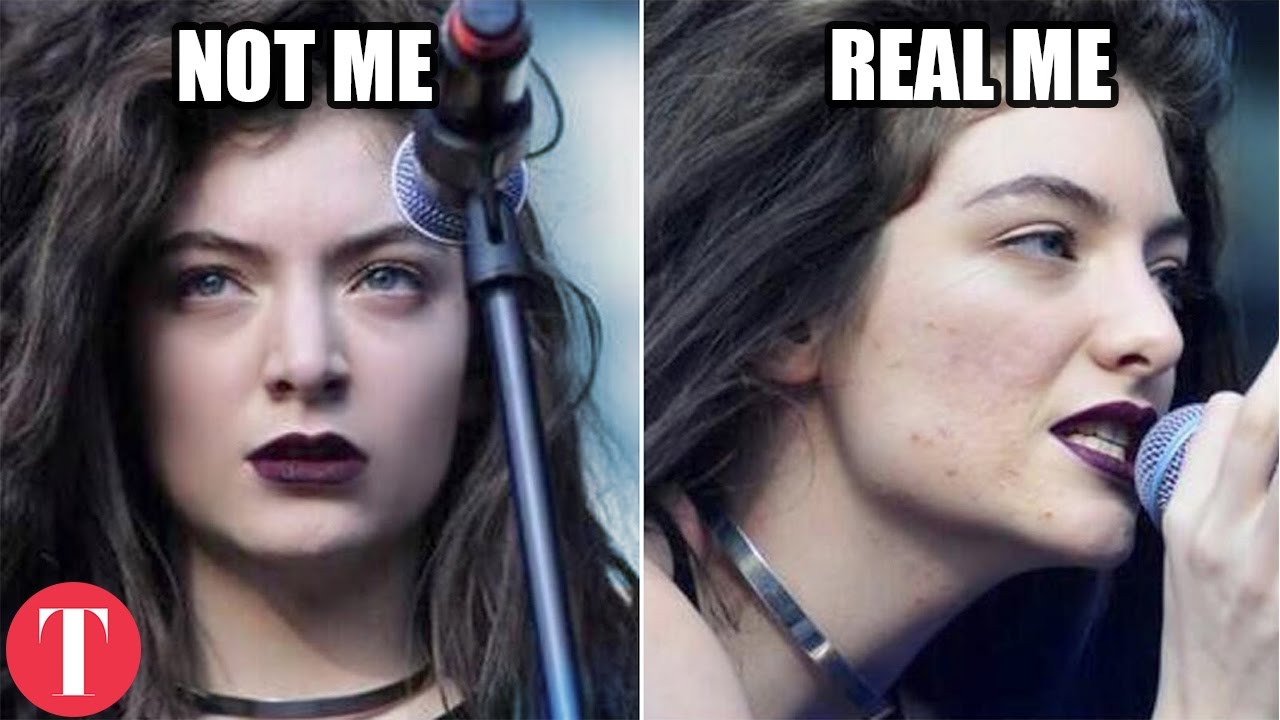
“Flaws are ok” — Lorde, captioning her own unretouched photo next to the airbrushed version in March 2014.
Lorde’s protest was smaller in scale but just as pointed. In March 2014, she tweeted two photos from the same performance — one smoothed over, one showing her actual skin and acne — as a direct rebuttal to the idea that a pop star has to look flawless to be on stage. Kerry Washington took a gentler tone in April 2016, posting about her Adweek cover and noting simply that the retouched image looking back at her didn’t resemble her own reflection.
Beyoncé and the H&M Standoff
Even the biggest names in music got pulled into retail’s editing habits. In 2013, H&M reportedly tried to slim down Beyoncé’s body for a swimwear campaign, and she pushed back hard enough that the retailer ended up running the original, unaltered photos instead. It’s the kind of leverage most models and musicians featured in stories like musicians that are nothing like they seem simply don’t have — but it showed that even a mega-brand campaign wasn’t worth the backlash of ignoring a star’s objection.
What ties Gaga’s Glamour speech to Zendaya’s Modeliste callout and Beyoncé’s H&M standoff is that none of them stayed quiet about it — they went public, and in three separate cases, the publication or brand actually reversed course. That’s the part that stuck: the unretouched photo went back up, the video got re-released, the swimsuit ad ran as shot. Whether the next magazine cover gets the same treatment is still, as always, up to whoever’s holding the crop tool.


10 Magic Tricks To Impress Your Friends
20 Things You Didn’t Know About Melania Trump
10 GIRL Trends That Guys HATE
Tragic Details About Lil’ Kim Revealed
Celebs Who Came Out In 2018