

Why NASA hasn’t gone back to the Moon
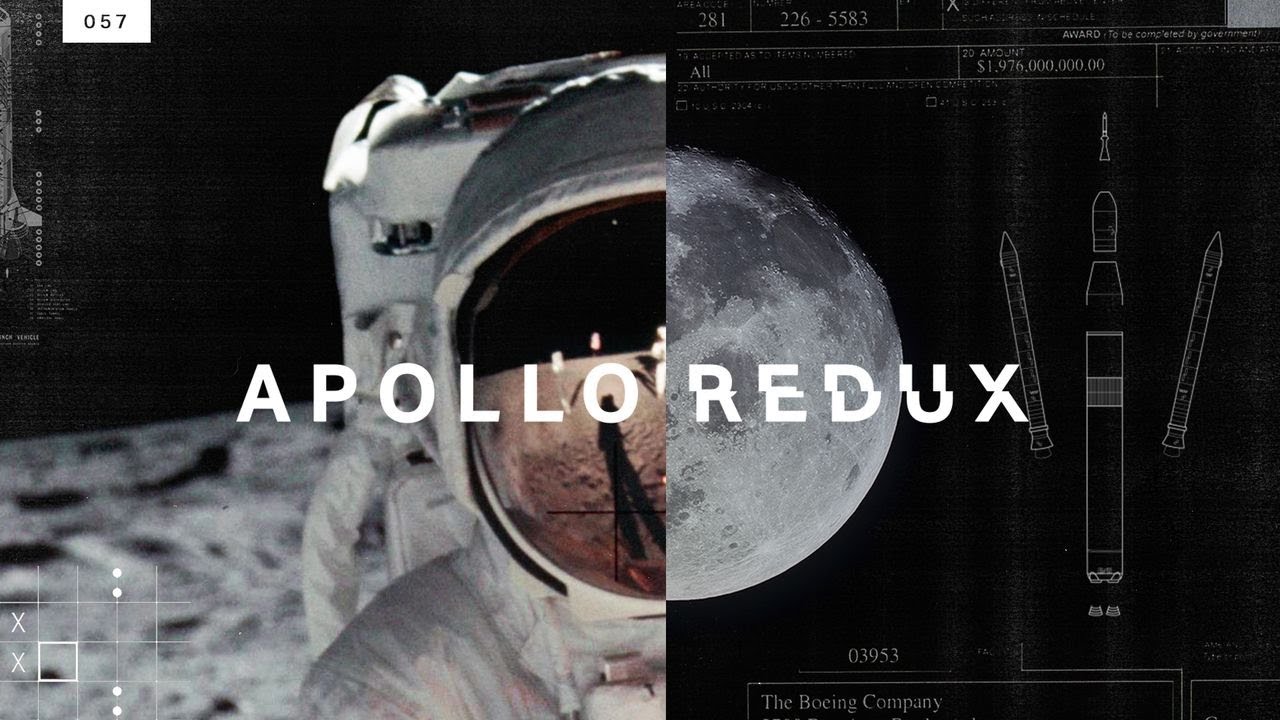

Fifty years after Apollo 11 left the launch pad, NASA still hasn’t put a single astronaut back on the lunar surface.
Verge Science’s breakdown of “Why NASA hasn’t gone back to the Moon” lands right as the space agency marks the 50th anniversary of the Apollo 11 launch, and the timing isn’t subtle. NASA is now chasing a 2024 crewed lunar landing under what would become the Artemis program, but the video digs into why that date is shakier than it sounds, tracing everything back to money, politics, and a rocket that keeps slipping its schedule.
- NASA’s budget ran above 4 percent of federal spending during the height of the Space Race in the 1960s; it now sits around 0.5 percent.
- Past deep-space efforts, including the Space Exploration Initiative and the Constellation Program, were both cancelled before any hardware flew astronauts.
- The Trump administration moved NASA’s lunar landing target up from 2028 to 2024, putting new pressure on the Space Launch System, Orion capsule, and the planned Lunar Gateway.
The Money Problem That Never Went Away
The most basic reason nobody’s walked on the Moon since 1972 is that nobody’s been willing to pay Apollo-era prices to make it happen again. At the program’s peak, NASA ate up more than 4 percent of the entire federal budget — a number that’s almost unthinkable for a civilian agency today. Once Apollo 17 splashed down, that support collapsed to roughly 0.5 percent, and it has stayed there ever since, forcing every subsequent lunar ambition to compete for scraps.
That funding squeeze is why deep-space programs keep dying mid-development. The Space Exploration Initiative under President George H.W. Bush and the Constellation Program under President George W. Bush both promised a return to the Moon, and both got cancelled before a crewed vehicle ever launched. Each new administration effectively resets the clock, which is a pattern the Verge Science video treats as the single biggest reason the 1972 gap has stretched to 2019 and beyond.
SLS, Orion, and the Cost Overrun Problem
NASA’s current answer to all of this is the Space Launch System, a heavy-lift rocket built to work alongside the Orion crew capsule for carrying astronauts back into deep space. On paper, it’s the most powerful rocket NASA has designed since the Saturn V. In practice, SLS has been dogged by years of schedule slips and billions of dollars in cost overruns, which is exactly what’s fueling the skepticism the video highlights about handing NASA’s entire lunar strategy to one government-built rocket.
NASA’s own budget history tells the story better than any press release: 4 percent of federal spending at the height of Apollo, roughly 0.5 percent ever since.
Alongside SLS and Orion, NASA is building toward the Lunar Gateway, a small space station meant to orbit the Moon and serve as a staging point for landings. It’s a smaller, cheaper piece of the architecture than a Saturn V-style direct mission, but it adds another major hardware program that has to work on schedule for 2024 to be realistic.
Commercial Rockets Change the Conversation
The video also puts SLS up against the private sector, and that comparison is where things get uncomfortable for NASA’s traditional contracting model. SpaceX’s Falcon Heavy is already flying, and the company’s Starship program is developing at a pace that has industry analysts and policymakers openly asking whether NASA should keep leaning so heavily on a government-built rocket that hasn’t launched yet. That question has only gotten louder since the Trump administration compressed the timeline from 2028 to 2024, squeezing an already-delayed program even harder.
None of this is purely academic — it’s the same funding-versus-ambition tension that’s followed NASA since Apollo 17. The anniversary week itself turned into a moment of reflection across TV, with networks running documentaries and retrospectives revisiting the original landing, even as the agency’s current hardware sits years behind its own targets.
Requirements for Success in 2024
For NASA to hit a 2024 landing, SLS needs to fly, Orion needs to prove itself on a crewed mission, and the Lunar Gateway needs enough hardware in orbit to support a descent to the surface — all while Congress keeps funding flowing at a level NASA hasn’t seen since the 1960s. The Verge Science video doesn’t pretend that’s a sure thing; it frames 2024 as an aggressive deadline layered on top of a program that was already running late before the date got moved up.
The story kept generating headlines through the anniversary itself, feeding into the kind of wall-to-wall coverage that tends to follow any milestone this big. Whether NASA lands astronauts on the Moon by 2024 comes down to whether SLS finally flies on schedule — and fifty years after Apollo 11, that’s still an open question nobody at the agency is willing to bet the mortgage on.









Super Smash Bros. Ultimate – Mr. Sakurai Presents “Hero”
50 Kendall Jenner Fashion Outfits That Will Give You LIFE
13 Netflix Shows That Will IMPROVE YOUR LIFE
This Umbrella Gets You “Wet” On Purpose | White Elephant Show #7
Can 2HYPE Guard Lakers Center JaVale McGee? 1v1 NBA Basketball