

 InfoSearched
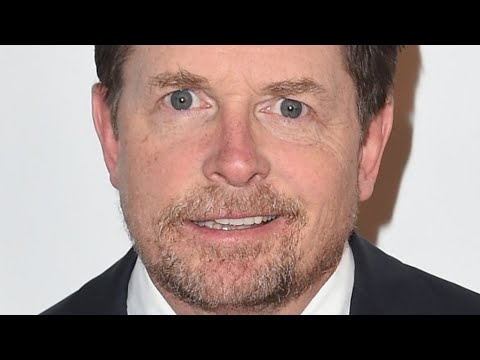
Michael J. Fox says the disease that’s defined half his life has finally taken away the one skill he always counted on.
For nearly three decades, Michael J. Fox built his second act around managing Parkinson’s disease in public — writing books, giving interviews, raising money for research through his foundation. But in November 2020, timed to the release of his fourth memoir, No Time Like the Future: An Optimist Considers Mortality, Fox admitted something new: the disease had finally caught up with the one tool that had carried his entire acting career, his memory.
- Fox, diagnosed with early-onset Parkinson’s in 1991 at age 29 and public about it since 1998, revealed that severe short-term memory lapses now make it nearly impossible for him to memorize dialogue.
- He said his rote-memorization skill, once one of his strongest professional assets, is “profoundly impaired,” effectively ending his days of 12-hour shooting schedules and marking a second retirement from full-time acting.
- Fox detailed a 2018 spinal cord tumor surgery that forced him to relearn how to walk, followed soon after by a fall at his New York home that fractured his arm and required 19 pins and a plate.
A Memory That Used to Be His Edge
Fox has always been candid about the physical side of Parkinson’s — the tremors, the rigidity, the balance issues that have followed him since his diagnosis at 29. What he laid out in No Time Like the Future was different: a cognitive toll that hit directly at his craft. He explained that memorizing scripts, something that once came naturally and quickly, had become a genuine struggle, with short-term memory lapses interrupting his ability to hold onto lines.
That admission carried weight because memorization wasn’t just a job skill for Fox — it was his signature. Producers and co-stars for decades had pointed to his ability to absorb pages of dialogue on short notice. Losing that, he made clear, wasn’t a minor inconvenience but a fundamental shift in what he could still do professionally.
Stepping Back From Full-Time Acting
Fox told readers and interviewers promoting the memoir that the 12-hour days that once defined a working actor’s life were behind him. He framed it as a second retirement, distinct from the reduced schedule he’d already carved out in recent years. The decision wasn’t about desire — Fox has never suggested he wanted to walk away from performing — but about what his body and mind could realistically sustain.
Fox said the rote memorization that had long been one of his greatest natural talents had become profoundly impaired — and with it, the 12-hour days of full-time acting were effectively over.
The Surgery, the Fall, and Rebuilding Optimism
The memoir’s more harrowing passages cover 2018, when doctors discovered a noncancerous tumor on Fox’s spinal cord. The surgery to remove it was complex and risky, and the recovery wasn’t a matter of weeks — Fox spent months in rehabilitation simply relearning how to walk. Just as that process was progressing, he suffered a severe fall at his New York home that fractured his left arm badly enough to require 19 pins and a plate to repair.
Fox has said that stretch briefly cracked the relentless optimism he’s been known for since going public with his diagnosis in 1998. He described rebuilding his outlook around gratitude rather than denial — acknowledging the limitations rather than pretending they weren’t there. That combination of setbacks, laid out candidly in the book and in interviews around its release, is what pushed cognitive symptoms and fall risk associated with long-term Parkinson’s into a wider public conversation.
Fox isn’t the only celebrity whose health admissions have reshaped how fans think about a public figure — outlets have chronicled similarly blunt reckonings in pieces like the tragic details about Eminem, where private struggles became part of the public record only after years of guarded silence.
Fox Candor Enhances Public Record
Fox has spent over two decades as arguably the most visible Parkinson’s advocate in the country, and his foundation has funneled hundreds of millions into research since its founding. What made the 2020 memoir notable wasn’t a new diagnosis or a dramatic reveal — it was the specificity. Fox didn’t just say Parkinson’s had gotten harder; he named the exact skill it had taken from him and the exact accident that had broken his arm. That level of detail is rare from a celebrity of his stature, and it’s part of why the interviews around the book got as much attention as they did, echoing the kind of unfiltered health disclosures covered in The Tragedy Of LL Cool J Is Simply Heartbreaking.
Fox has said before that he doesn’t plan to stop appearing on camera entirely — voice work, cameos, and advocacy appearances remain possible even without the marathon shooting days. But with the memory issues he described and the physical rehab still ongoing from the 2018 surgery, No Time Like the Future reads less like a comeback narrative and more like Fox drawing a clear line under the career he’s had for over 35 years, on his own terms.








Stars Who Treat Their Partners Terribly
‘Bachelorette’ Hannah B. Opens Up About Jed Wyatt’s Emotional Reveal & Her Post-Show Life | PeopleTV
The World’s Longest Drink Waterfall? | This Could Be Awesome #1
OUR FIRST NIGHT AT THE NEW ACE FAMILY HOUSE!!! **FINALLY**
JULIE AND THE PHANTOMS Cast Plays Would You Rather | What’s Your Dream Ghost Date?