

The Tragic Real-Life Story Of Joaquin Phoenix
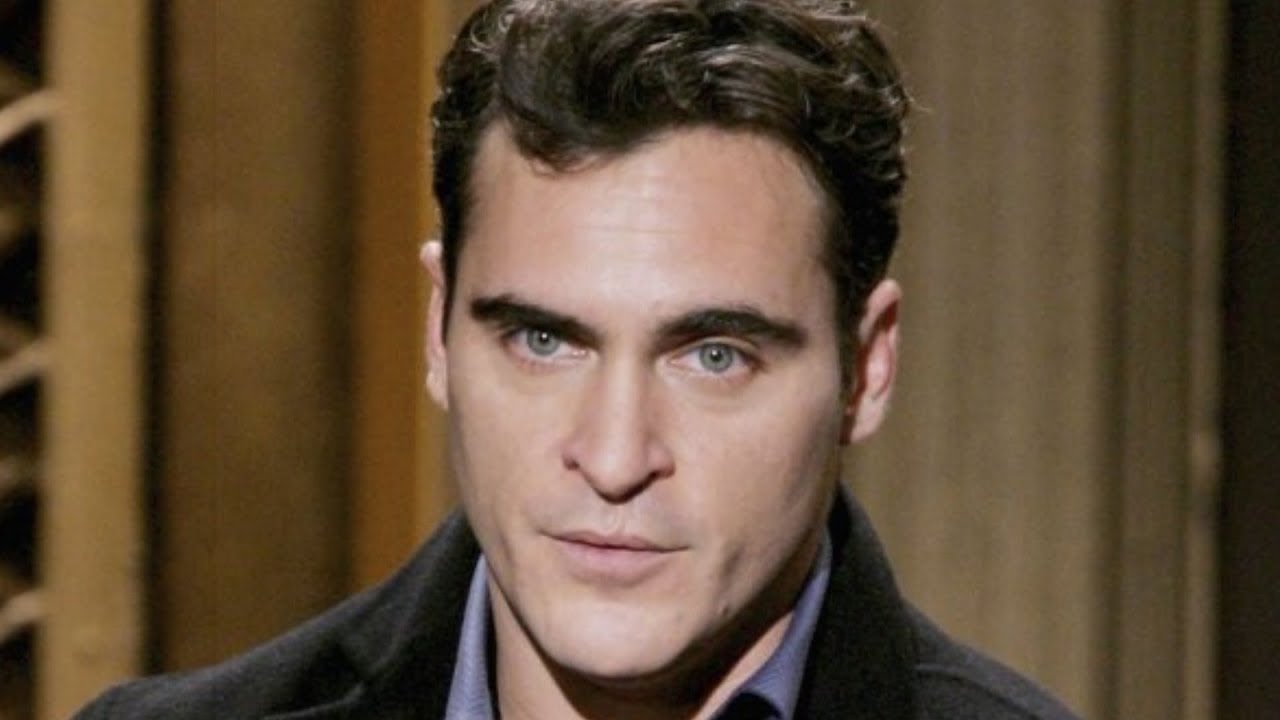

Joaquin Phoenix built one of Hollywood’s most respected careers on top of a childhood spent inside a religious cult and a family tragedy that played out live on national television.
Three Academy Award nominations and a reputation for vanishing completely into a role have made Joaquin Phoenix one of the most talked-about actors of his generation. But the private history behind that acclaim includes a commune upbringing, a brother’s death outside a Los Angeles nightclub, and a two-year hoax that had the entertainment press convinced he’d lost his mind. Here’s the real story behind the performances.
- Phoenix was born Joaquin Rafael Bottom in Puerto Rico in 1974 to parents who were missionaries for the Children of God sect before the family fled the group in the late 1970s and changed its surname to Phoenix.
- His older brother, rising star River Phoenix, died of acute drug intoxication outside The Viper Room on October 31, 1993, at age 23 — and it was Joaquin who made the 911 call that was later broadcast repeatedly on television and radio.
- His 2008 announcement that he was quitting acting for a hip-hop career, including a widely mocked 2009 appearance on the “Late Show with David Letterman,” turned out to be an elaborate performance staged for Casey Affleck’s 2010 mockumentary “I’m Still Here.”
A Childhood Inside the Children of God
Before he was Joaquin Phoenix, he was Joaquin Rafael Bottom, born in San Juan in 1974 to parents who had signed on as missionaries for the Children of God, a religious sect that sent its members traveling through South and Central America. His earliest years were spent on the move with his family rather than in any single home or school.
His parents pulled the family out of the commune in the late 1970s after they discovered the group’s practices had turned increasingly abusive and predatory. The break was total enough that they gave the family a new surname — Phoenix — a name chosen specifically to mark a fresh start after leaving the sect behind.
The Night Outside the Viper Room
On October 31, 1993, Joaquin’s older brother River Phoenix, then a 23-year-old star on the rise, collapsed outside The Viper Room on Sunset Strip and died of acute drug intoxication. Joaquin was the one who called 911 as it happened, and that call was replayed extensively across television and radio in the days that followed.
The public nature of the tragedy compounded the loss. Having his own panicked voice broadcast nationally in the aftermath of his brother’s death left Phoenix traumatized, and he retreated from Hollywood for a stretch rather than continue working in the immediate wake of it.
The Hoax That Fooled Hollywood
Phoenix’s professional life has been defined by total immersion in his roles, and that same intensity spilled into his personal life at points. After the physically and emotionally draining process of playing Johnny Cash in “Walk the Line,” he checked into an alcohol rehabilitation facility in April 2005 to deal with heavy drinking.
Nothing matched the scale of what came in 2008, when Phoenix abruptly announced he was retiring from acting to pursue a career in hip-hop. His disheveled public appearances fueled genuine media panic that he was having a breakdown, culminating in an infamous, near-catatonic 2009 sit-down on the “Late Show with David Letterman.”
“Joaquin, I’m sorry you couldn’t be here tonight.”
Letterman’s deadpan line to a barely responsive Phoenix became one of the most replayed late-night moments of the year. It wasn’t until Casey Affleck’s 2010 mockumentary “I’m Still Here” that the entire stretch was revealed to be a scripted, months-long performance rather than an actual meltdown.
His Own Worst Critic
Even with Oscar-nominated turns in “Gladiator,” “Walk the Line,” and “The Master” behind him, Phoenix has never settled comfortably into fame. He’s spoken openly about persistent anxiety on set and a level of self-criticism that follows him from one project to the next, and he’s kept a deliberately solitary distance from the celebrity circuit that surrounds actors of his stature.
That tension — between the acclaim and the discomfort that comes with it — runs through both his career and stories like the ones covered in Tragic Details About Eminem and The Tragedy Of LL Cool J Is Simply Heartbreaking, where public success and private struggle sit side by side rather than canceling each other out.







The Real Reason Megyn Kelly Is Leaving NBC
Billie Eilish Gives Us A Look Inside Her Tour Closet
WE GOT ONE: Up Close with The Mid-Engine C8 Corvette | Bumper 2 Bumper
10 AMAZING Hidden Details In Disney Movies
Going to the WORST REVIEWED Amusement Park in my City! **bad idea**