

How Remakes Go WRONG – feat. Disney’s The Lion King and Aladdin – Wisecrack Edition
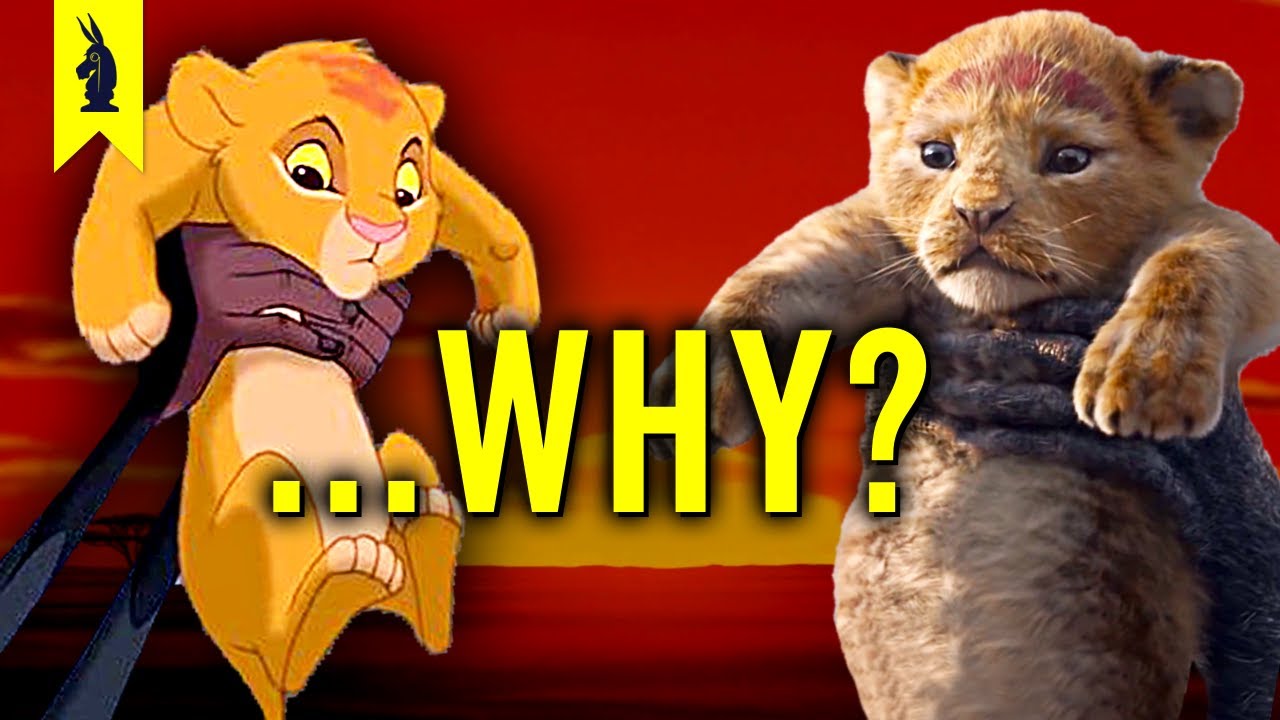

Disney’s remake era finally hit a wall of critical patience in the summer of 2019.
Pop-culture essay channel Wisecrack used the back-to-back releases of Guy Ritchie’s “Aladdin” and Jon Favreau’s “The Lion King” to ask a blunt question: why do these movies keep making so much money while feeling so hollow? Their July 2019 video, “How Remakes Go WRONG — feat. Disney’s The Lion King and Aladdin,” breaks down exactly where the studio’s live-action and photorealistic remake strategy stops being reinvention and starts being repetition with a bigger budget.
- “The Lion King” (2019), directed by Jon Favreau and starring Donald Glover and Beyoncé, landed a 52% score on Rotten Tomatoes despite its box office pull.
- Guy Ritchie’s “Aladdin” arrived in May 2019, just weeks before “The Lion King,” giving Wisecrack two fresh case studies from the same remake cycle to dissect back to back.
- Wisecrack traces the pattern back through “Cinderella” (2015), “The Jungle Book” (2016), and “Beauty and the Beast” (2017) — each a massive earner that primed audiences for diminishing creative returns by the time “The Lion King” hit theaters.
The Machine Behind the Remakes
Disney’s live-action pipeline didn’t start with “The Lion King” — it started years earlier, and the pattern is consistent. “Cinderella” in 2015, “The Jungle Book” in 2016, and “Beauty and the Beast” in 2017 all reworked beloved animated properties into live-action or CGI-heavy spectacles, and all three cleared enormous box office numbers. Wisecrack’s video treats that run as the setup: a studio learning that nostalgia sells tickets regardless of whether the finished film says anything new.
By mid-2019, that formula was showing cracks. Critics who had given the earlier remakes a pass started pushing back on “The Lion King” and “Aladdin” specifically, and Wisecrack argues the backlash wasn’t really about these two films in isolation — it was the accumulated fatigue of watching Disney repeat the same trick with less and less to show for it artistically.
The Lion King’s Uncanny Valley Problem
The central critique Wisecrack levels at Favreau’s “The Lion King” is technical and specific: the decision to render every animal with documentary-style photorealism. It’s an impressive engineering feat, but it comes at a direct cost — lions, meerkats, and warthogs that look like they belong on a nature channel can’t arch an eyebrow or crack a grin the way hand-drawn characters can. The 1994 original leaned on exaggerated, expressive facial animation to sell every emotional beat; the 2019 version, by chasing realism, stripped that expressiveness out.
The Lion King cleared a billion dollars worldwide — and still landed at 52% on Rotten Tomatoes.
That gap between commercial performance and critical reception is exactly what Wisecrack zeroes in on. A cast anchored by Donald Glover as Simba and Beyoncé as Nala should have been a home run on paper, but the photorealistic aesthetic reportedly boxed in even strong voice performances, leaving emotional beats that worked in animation feeling flat when rendered as “real” animals.
Aladdin’s Pacing and Effects Problems
Guy Ritchie’s “Aladdin,” released a couple of months earlier in May 2019, gets a different but related critique. Where “The Lion King” struggled with a lack of expression, “Aladdin” struggled with wooden pacing in its live-action sequences and visual effects that didn’t always land — particularly anything involving the Genie’s magic. Wisecrack frames both films as symptoms of the same disease: a studio so committed to recreating the original shot-for-shot that it leaves little room for the kind of stylistic risk-taking that made the animated versions memorable in the first place.
Nostalgia as the Business Model
Wisecrack’s larger argument is that Disney’s remake strategy isn’t really about storytelling at all — it’s about brand maintenance and technology demonstration. Near shot-for-shot recreations minimize risk because the studio already knows the story works; the “innovation” gets rerouted into visual effects showcases rather than narrative choices. That’s a sustainable business model, but it’s also, in Wisecrack’s telling, why so many of these films end up feeling like museum pieces instead of movies.
It’s a strategy playing out across the industry, not just at Disney — studios leaning on established names is the same instinct behind Amazon’s rollout of The Lord of the Rings: The Rings of Power or Marvel’s push behind Moon Knight, betting that a recognizable name draws a crowd even before a single new idea gets tested.
Whether “The Lion King” and “Aladdin” change how Disney approaches its next remake is the open question Wisecrack leaves hanging — but with “Mulan” and “The Little Mermaid” already in the pipeline as of mid-2019, the studio wasn’t slowing down, no matter what the Tomatometer said about the last two.


Gucci Mane – Long Live Dolph [Music Video]
Katy Perry “Never Really Over” YouTube Space Premiere Event
8 Optical Illusions That Will Trick Your Mind
WE GOT ONE: Up Close with The Mid-Engine C8 Corvette | Bumper 2 Bumper
10 Most Influential Transgender People In The World #ProudToBe