

2020 Chevrolet Corvette Stingray – First Look
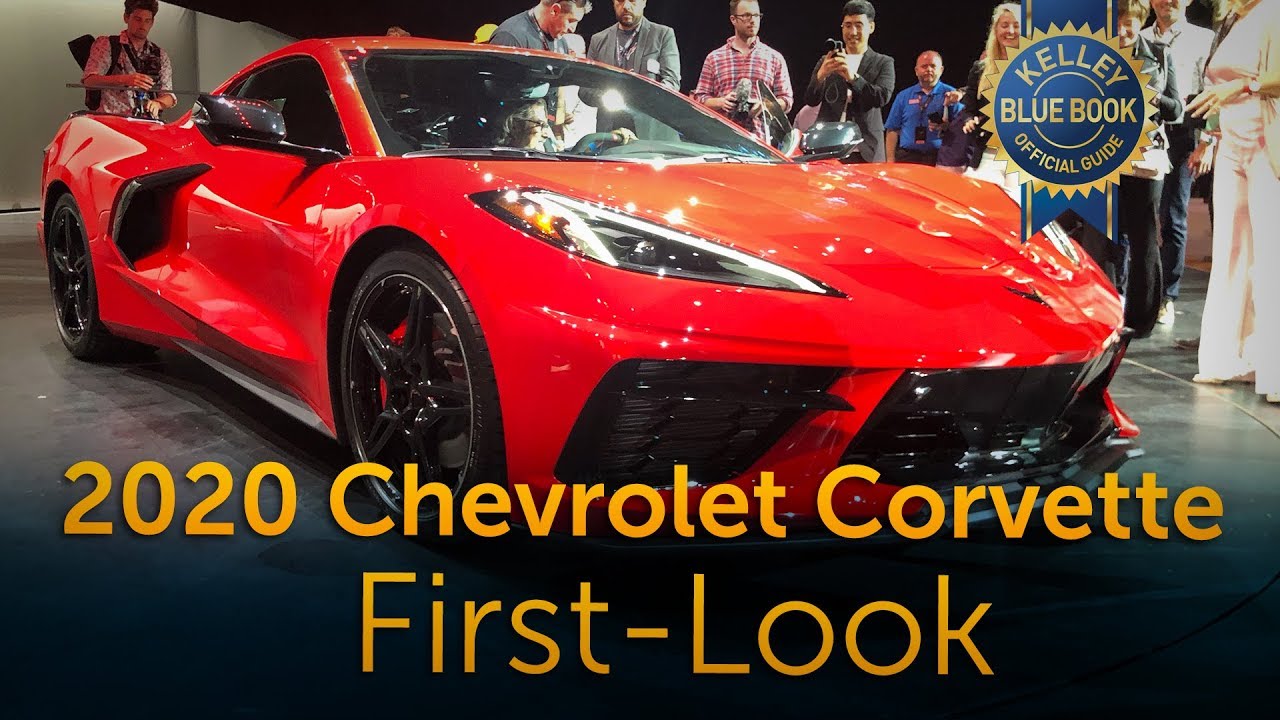

The Corvette just broke six decades of tradition, and the price tag broke expectations right along with it.
General Motors pulled the cover off the 2020 Chevrolet Corvette Stingray on the night of July 18, 2019, in Tustin, California, ending 66 years of front-engine Corvettes in one stroke. Kelley Blue Book’s Micah Muzio got his hands on the production car for KBB’s “First Look” walkthrough, and his verdict lands on two things: the mid-engine layout finally happened, and Chevy somehow kept it cheap.
- The C8 drops its 6.2-liter LT2 V8 behind the passenger cell for the first time in Corvette history, making 490 hp and 465 lb-ft (495 hp/470 lb-ft with the optional performance exhaust).
- A Tremec-built 8-speed dual-clutch automatic — shifted only by wheel paddles or shift-by-wire toggles — replaces the manual gearbox entirely.
- GM President Mark Reuss confirmed the Stingray starts under $60,000, ahead of a late-2019 production launch.
The Mid-Engine Shift
Every Corvette since 1953 put the engine up front. The C8 flips that layout, tucking the LT2 small-block behind the driver and passenger seats, which is the same basic architecture Chevy engineers have chased in prototypes for decades. Muzio treats the reveal itself as the story — this isn’t a facelift of the C7, it’s a structurally different car wearing a Corvette badge.
The redesign shows up everywhere Muzio points the camera: a squared-off two-spoke steering wheel, a 12-inch reconfigurable digital gauge cluster, and an angled central touchscreen that leans toward the driver. A cascading strip of climate control buttons runs down the console, physically separating the driver’s side from the passenger’s — a detail Muzio calls out as one of the more polarizing cabin choices on the car.
Powertrain and the Numbers That Matter
The LT2 V8 is naturally aspirated, no turbo, no supercharger, and it’s paired exclusively with that Tremec 8-speed dual-clutch. There’s no manual option at all — a first for the Corvette lineup. With the Z51 Performance Package installed, Chevy’s own numbers put 0-60 mph at under three seconds, squarely in supercar territory for a car with this price tag.
Muzio also runs through the drive-mode setup, including a customizable “MyMode” and a steering-wheel-mounted “Z” mode that lets a driver snap into a preset performance configuration without digging through menus — useful for a car built to be both a daily driver and a track car depending on the toggle.
Storage That Actually Works
Going mid-engine usually kills a car’s practicality, but Chevy split the difference. The Stingray gets a removable roof panel that stows in the rear trunk, plus a front “frunk” and rear cargo area that together add up to 12.6 cubic feet — Chevy’s benchmark being that it fits two golf bags. It’s a small thing, but it’s the kind of detail that separates a usable sports car from a garage ornament.
The Price Point That Stole the Show
Everything above would be a solid story on its own. What actually made Muzio’s segment is Reuss’s number.
Mark Reuss confirmed it himself on stage in Tustin: the 2020 Corvette Stingray starts under $60,000.
For a mid-engine, sub-3.0-second car with exotic proportions, that starting price undercuts nearly everything in its performance class by a wide margin. It’s the same instinct that makes any story about stretching a dollar further than expected land with people — the same reason a stunt like turning a single cent into a house gets attention: the gap between the input and the payoff is the whole point.
Chevrolet Bets on Future Innovation
Reuss and Chevy are wagering that the C8 draws in buyers who assumed a mid-engine Corvette meant Ferrari-adjacent pricing. Muzio’s walkthrough treats the interior’s quirks — the button waterfall, the squared wheel — as trade-offs buyers will accept once they see the sticker. It’s a similar bet to the one made whenever a brand decides that showing off is worth more than sweating small details, the kind of calculus behind stunts like turning a big number into a bigger spectacle.
Deliveries start in late 2019, and the real test comes once dealers post actual invoice pricing on Z51-equipped cars — the trim that gets the sub-3.0-second run and the number every buyer walking into a Chevy showroom this fall is going to ask about first.









Prince William Doesn’t Wear A Wedding Ring And Here’s Why
LOKI Cast Plays Who Would You Rather: Loki or Mobius?
MORBIUS – Official Trailer (HD)
BJ Novak’s Chilling Tweet About Bob Saget Has Fans Talking
10 Most SAVAGE Celebrity FEUDS