

10 Things Your Sleeping Position Reveals About You
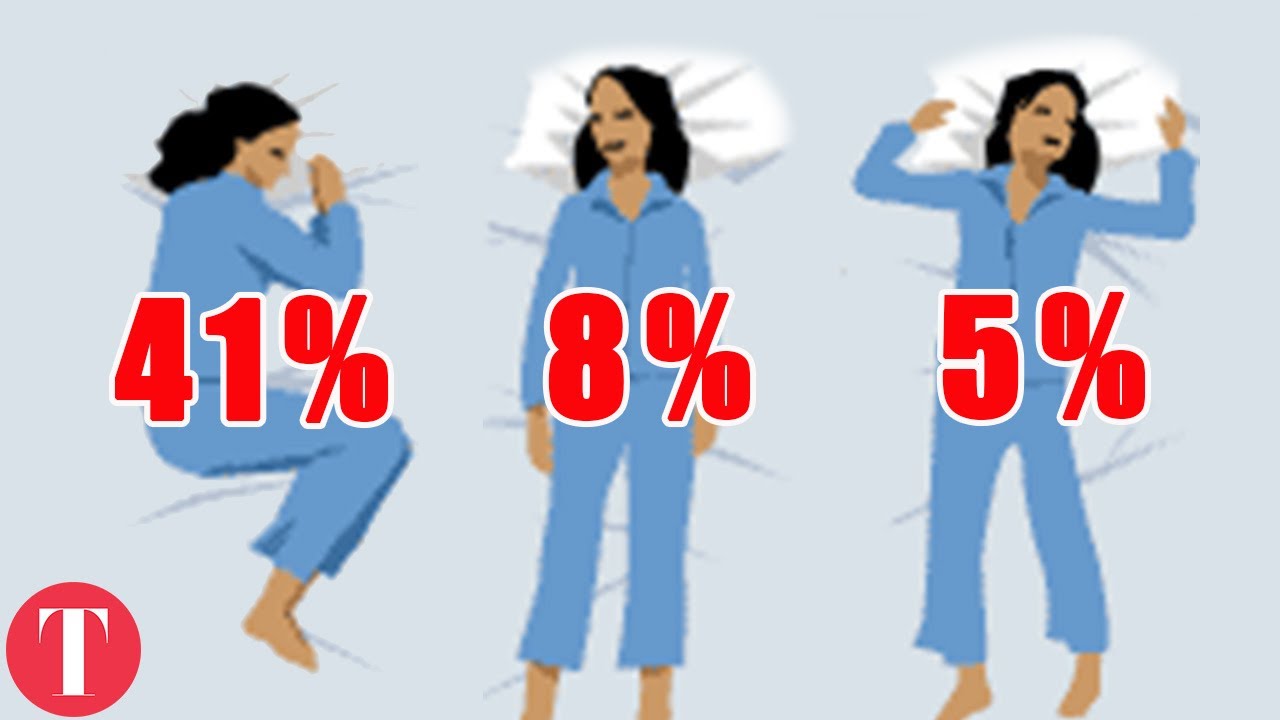

The way you curl up at night might be telling on you before you’ve even had coffee.
Sleep researchers have long argued that the posture you default to every night — fetal, soldier, starfish, or something in between — lines up with recognizable personality traits and even the health of your relationship. The theories trace back to work popularized by psychiatrist Samuel Dunkell and sleep scientist Chris Idzikowski, whose research forms the backbone of “10 Things Your Sleeping Position Reveals About You.” The video breaks down what your body is doing for roughly eight hours a night, and what that says about who you are during the other sixteen.
- The fetal position — curled on your side, knees drawn up — is the most common sleep posture and is linked to people who project toughness while masking real sensitivity underneath.
- Couples who sleep face-to-face tend to show stronger communication and emotional closeness, while back-to-back sleepers with no physical contact may be signaling distance or unresolved tension.
- Back sleeping helps spinal alignment and can ease acid reflux when the head is elevated, but it’s also the posture most associated with snoring and sleep apnea.
Posture Communicates Personal Character Traits
The fetal position tops the list because it’s the one most people default to — curled onto one side with knees pulled toward the chest. According to the research behind the video, that curl-up instinct correlates with a guarded exterior hiding a genuinely sensitive, comfort-seeking interior. It’s the sleep equivalent of crossing your arms during a tough conversation.
Stretch that same side-sleeper out straight with arms down and you get the “log” position — easygoing, social, but according to the breakdown, occasionally too trusting for their own good. Reach the arms forward instead and you’re a “yearner,” a posture tied to people who are open to new experiences but keep a cynical, cautious streak running underneath.
Flip onto your back and the categories change again. Arms pinned straight at the sides is the “soldier” position, linked to reserved perfectionists who hold themselves — and everyone else — to a high standard. Arms thrown overhead is the “starfish,” associated with loyal people who happen to be excellent listeners. Face-down with the head turned to the side is the “freefall,” and that one comes with a warning label: anxiety, impulsiveness, and a thin skin when it comes to criticism.
Sleep Position as a Relationship Barometer
The video treats couples’ sleep habits as a nightly readout of the relationship itself. Partners who sleep facing each other are showing signs of intimacy and open communication — proximity that isn’t accidental. Couples who sleep back-to-back without touching may still be fine, but the posture is flagged as a possible marker of emotional distance or independence that’s tipped into disconnection.
Curl up facing your partner and you’re broadcasting closeness; turn your back with a foot of mattress between you, and you might be broadcasting something else entirely.
It’s the same logic that’s applied, half-jokingly, to celebrity couples whenever body language gets picked apart in public — the kind of read fans tried to apply to signs of trouble brewing between Lisa Bonet and Jason Momoa or the shifting dynamics chronicled in Megan Fox’s relationship history. The video’s point isn’t that one bad night of back-to-back sleep means a breakup — it’s that these patterns, repeated over months, tend to mirror what’s already happening emotionally.
The Health Trade-Offs Nobody Mentions
Beyond personality, the video walks through the physical stakes of each posture. Back sleeping is generally the best for spinal alignment and can reduce acid reflux if the head is propped up — but it’s also the position most likely to aggravate snoring and sleep apnea, since gravity lets the tongue and soft tissue collapse toward the airway. Side sleeping comes out ahead for circulation and digestion, and it’s considered easier on the spine over the long run than sleeping flat on your stomach.
Stomach sleeping, the “freefall” posture, gets the roughest health notes in the breakdown — it’s tied not just to anxiety and impulsiveness on the personality side, but to added strain on the neck and lower back from having the head turned for hours at a stretch.
None of this is presented as a strict diagnosis — nobody’s canceling plans over how their arms happen to land at 2 a.m. But between Dunkell’s original personality categories and Idzikowski’s later research, the throughline is the same: the position you wake up in tomorrow morning is worth a second look tonight.





Celebs Beyonce Has Shaded
The Transformation Of Jason Momoa From Childhood To 42
Twin Strangers – Unrelated Identical People
The Real Reason You Don’t Hear About These Child Rappers Anymore
$50 Hotel Room VS $5,000 Hotel Room