

10 Disney Movie Mistakes That Are TOTALLY On Purpose
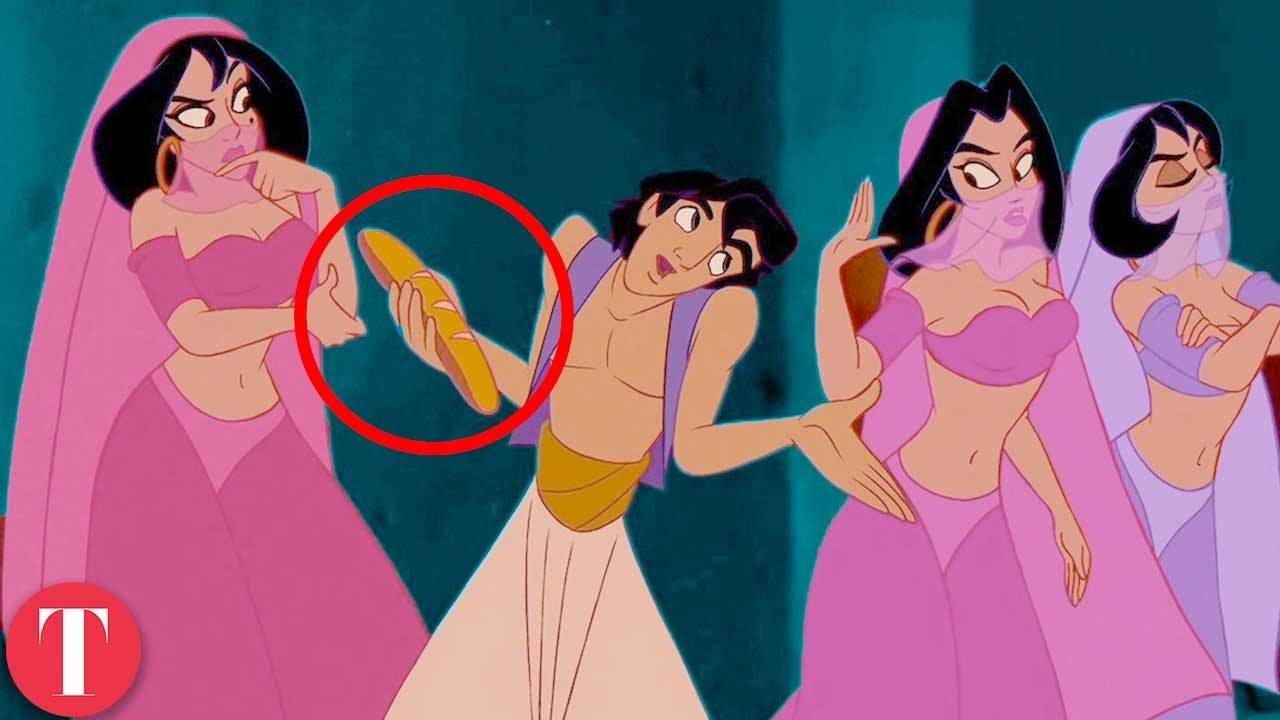

Every “mistake” you spotted in your favorite Disney movie was probably put there on purpose.
Rewatch enough Disney classics on a couch with a remote in slow-motion mode and you start noticing things: a hand that vanishes, a mirror that behaves differently scene to scene, a genie cracking jokes about bridges that don’t exist yet in the story’s own timeline. TheThings Celebrity’s countdown “10 Disney Movie Mistakes That Are TOTALLY On Purpose” runs through exactly these moments and argues that most of them were never mistakes at all — they were animators making calculated choices that only look like errors under scrutiny. The video reframes a decade’s worth of Disney urban legends as evidence of craft rather than sloppiness.
- Genie turns into a contemporary car and jokes about “all that traffic on the Agra-Bahar bridge” in Aladdin (1992), a modern-world reference dropped into a story set centuries before highways existed.
- The enchanted mirror in Beauty and the Beast (1991) sometimes only answers the exact question it’s asked and other times roams freely into other rooms of the castle, an inconsistency the video says was built in on purpose.
- The Lion King‘s hyenas shift between a more realistic character design and a broadly cartoonish one depending on whether the scene needs them to feel threatening or funny.
The Genie’s Anachronism Problem
Robin Williams’ Genie is the loudest offender in the countdown’s list, and also the easiest to explain away. He morphs into a modern car mid-scene and fires off the “Agra-Bahar bridge” traffic line in a movie ostensibly set in a fictionalized ancient Arabia, long before cars or bridges with modern names would make sense. The video leans on the standard fan explanation: Genie has been trapped in a lamp for millennia and has presumably absorbed knowledge of the future, or the filmmakers simply decided a strict internal timeline mattered less than getting a laugh. Either way, the joke was never meant to survive a fact-check — it was meant to land in the room.
Beauty and the Beast’s Mirror Logic
The Beast’s magic mirror is the countdown’s clearest case study in Disney bending its own rules for the sake of drama. In some scenes it functions like a strict oracle, showing only what’s directly requested; in others it drifts through the castle on its own, feeding the Beast information he didn’t ask for. The video treats this less as a plot hole and more as a directing choice — the mirror’s powers expand or contract depending on what the story needs it to reveal at that exact moment, which keeps its “rules” mysterious instead of mechanical.
“All that traffic on the Agra-Bahar bridge.”
Faces That Change With the Scene
The Lion King‘s hyenas aren’t drawn the same way twice, and the video argues that’s the point: a rounder, more cartoonish look plays for comic relief, while a leaner, more menacing design shows up whenever the scene needs teeth. The same logic gets applied to Mother Gothel in Tangled, whose appearance visibly shifts during her musical number — a subtle tell, per the countdown, that her youth is borrowed magic rather than something real, long before the story spells that out.
Shadows, Sizes, and Shortcuts
The rest of the list works through the smaller, older continuity quirks fans have picked apart for decades. Peter Pan’s shadow behaves with a mind of its own rather than tracking its owner’s movements — treated in the video as deliberate character-building rather than animation error. Snow White’s dwarfs subtly change size scene to scene, Cinderella’s hair shifts color and style across the original film, and Sleeping Beauty’s overall palette drifts depending on which artists were working a given sequence, differences the countdown chalks up to stylistic choice as much as production reality. Even the more famous “gotcha” moments — Ariel’s disappearing hand in The Little Mermaid, Elsa’s wildly inconsistent ice-power output in Frozen — get folded into the same argument: some are storytelling shorthand for a character’s emotional state, others are simply animators taking a shortcut nobody was ever supposed to notice at 24 frames a second.
Disney’s habit of hiding adult-aimed winks inside kids’ films didn’t stop when hand-drawn animation did — the studio kept doing it straight through the Disney+ era, whether it’s Diane Guerrero and Stephanie Beatriz trading verses on “What Else Can I Do?” from Encanto or the tonal left turn Disney took with the Moon Knight trailer on the Marvel side of the library. Next time Genie name-drops a bridge that has no business existing in Agrabah, that’s not a slip — somebody in the writers’ room decided the joke was worth breaking the timeline for.
Quentin Tarantino on New Movie with Leonardo DiCaprio, Brad Pitt & Margot Robbie
Young Thug – The London ft. J. Cole & Travis Scott [Official Video]
I Surprised Bella Poarch With 20 Custom Macbooks
10 Celebrities Who Won’t Admit To Plastic Surgery
How Marvel Heroes feel about Phase 4