

OLDEST Dim Sum House vs. LUXURY Dim Sum in Hong Kong | How to Eat Dim Sum in Hong Kong Guide!
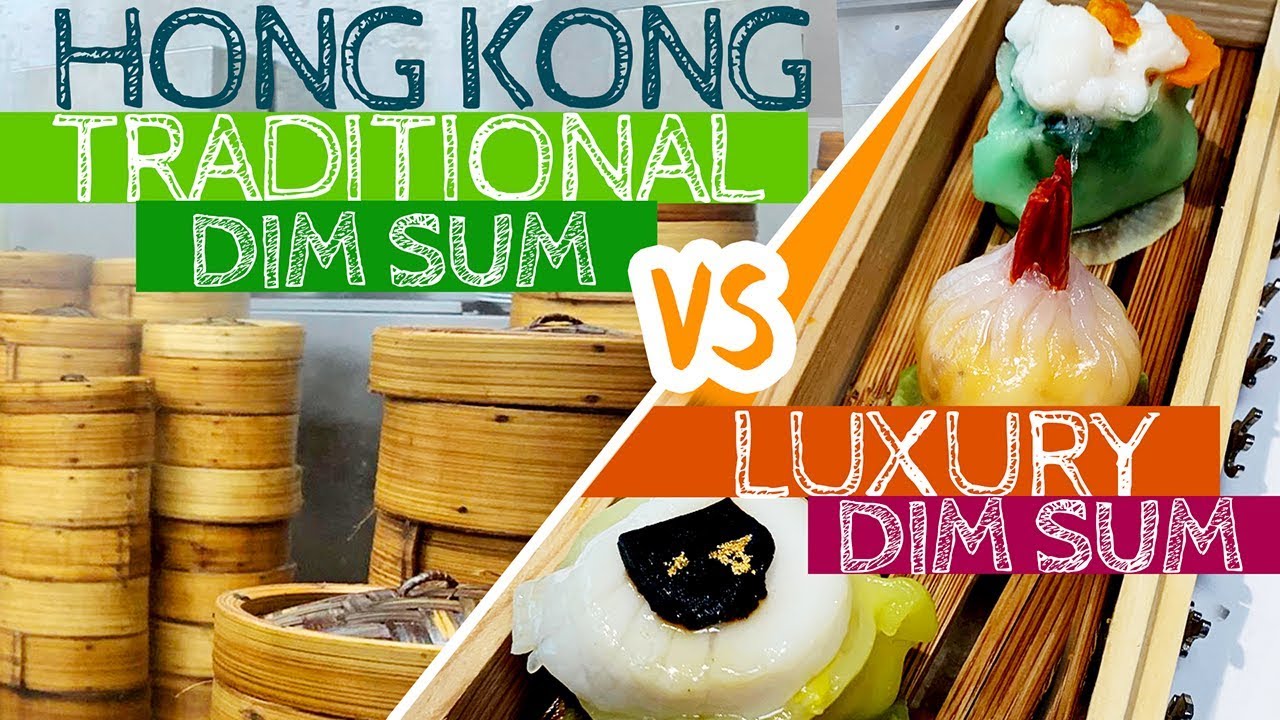

Two dim sum houses in Hong Kong, separated by nearly a century of tradition, tell you everything about how the city eats.
Mike Chen of Strictly Dumpling spends this guide bouncing between two extremes of Hong Kong’s dim sum culture, and the contrast is the whole point. On one side is Lin Heung Tea House (蓮香樓), a Cantonese institution tracing back to 1889 Guangzhou with roots that predate most of the skyline around it. On the other is Yan Toh Heen, the Michelin two-star dining room tucked inside the InterContinental Hong Kong, where jade place settings and Victoria Harbour views replace the shouting and shoving of old-school tea house service.
- Lin Heung Tea House was founded in Guangzhou in 1889 and opened its Hong Kong branch in Central in 1926, seating diners at roughly 50 packed communal tables where pushcart aunties stamp a paper tally card for every basket selected.
- Diners at Lin Heung sterilize their own utensils with hot tea poured into a basin, and staff refill teapots with heavy kettles whenever a guest signals for more by turning the lid askew.
- Yan Toh Heen, located on the lower level of the InterContinental Hong Kong on Salisbury Road in Tsim Sha Tsui, serves dim sum built around caviar-topped dumplings and black truffle, a Michelin two-star answer to the chaos across the harbor in Central.
Inside Lin Heung’s Old-School Ritual
There’s no hostess stand at Lin Heung. Chen shows diners finding their own seats among strangers at communal tables, then fending for themselves the moment a pushcart rolls into view stacked with bamboo steamer baskets. Selecting a dish means physically flagging down the cart and letting the attendant stamp a paper tally card, the same low-tech system that’s tracked orders here for decades.
The teahouse customs go deeper than the pushcarts. Diners pour hot tea into a basin to rinse their own bowls and chopsticks before eating, a self-service sterilization step that’s standard at old Cantonese tea houses but startling to first-timers. When a table wants a refill, the signal isn’t a raised hand — it’s turning the teapot lid askew, which tells staff carrying heavy kettles through the crowd to top it off without breaking stride.
The food itself is the genre’s greatest hits: har gow, shumai, steamed pork ribs, and lo mai gai — glutinous rice and chicken wrapped in a lotus leaf big enough to anchor the table. None of it is plated for a photo. It’s built for volume, speed, and a room that’s been running this exact system since 1926.
Fifty communal tables, one paper tally card, and a system for ordering dim sum that hasn’t changed since the 1920s.
The Michelin Two-Star Alternative
Cross the harbor to Tsim Sha Tsui and the entire experience flips. Yan Toh Heen sits inside the InterContinental Hong Kong on Salisbury Road, and instead of chasing carts, diners sit at jade-inlaid tables with a clear line of sight to Victoria Harbour. There’s no tally card here — the craftsmanship comes to the table already finished.
Chen highlights the kitchen’s signature moves: dumplings topped with caviar, dim sum built around black truffle, and seafood parcels pleated with a precision that has nothing in common with the fast-hands folding happening across town at Lin Heung. It’s the same basic format — small steamed and wrapped bites meant for sharing — executed at a completely different register.
Reading Hong Kong’s Dim Sum Spectrum
What makes the guide work is that neither restaurant is presented as the “right” way to eat dim sum. Lin Heung represents the format in its rawest form — communal, loud, self-service, unchanged by nearly a century of Hong Kong’s growth around it. Yan Toh Heen represents what happens when the same dishes get Michelin-level technique and a harbor view attached to the bill. Chen’s guide treats both as authentic expressions of the same cuisine rather than ranking one above the other, which is the more useful takeaway for anyone actually planning a trip.
For visitors trying to plan an itinerary around this, the practical math is simple: budget a chaotic, cash-and-carry breakfast at Lin Heung on Wellington Street early in the day, when the pushcarts are freshest and the tables turn over fast, then save Yan Toh Heen for a slower dinner reservation when the harbor lights up after dark.








10 Famous People Who Don’t Age
VOLKSWAGEN JETTA – Everything You Need to Know | Up to Speed
Blake Shelton Picked A Side In Kelly Clarkson’s Divorce
VOLKSWAGEN JETTA – Everything You Need to Know | Up to Speed
The REAL Story Behind Hilarious Internet Memes (1/3)