

The Sony WF-1000XM3 Just Changed The Game
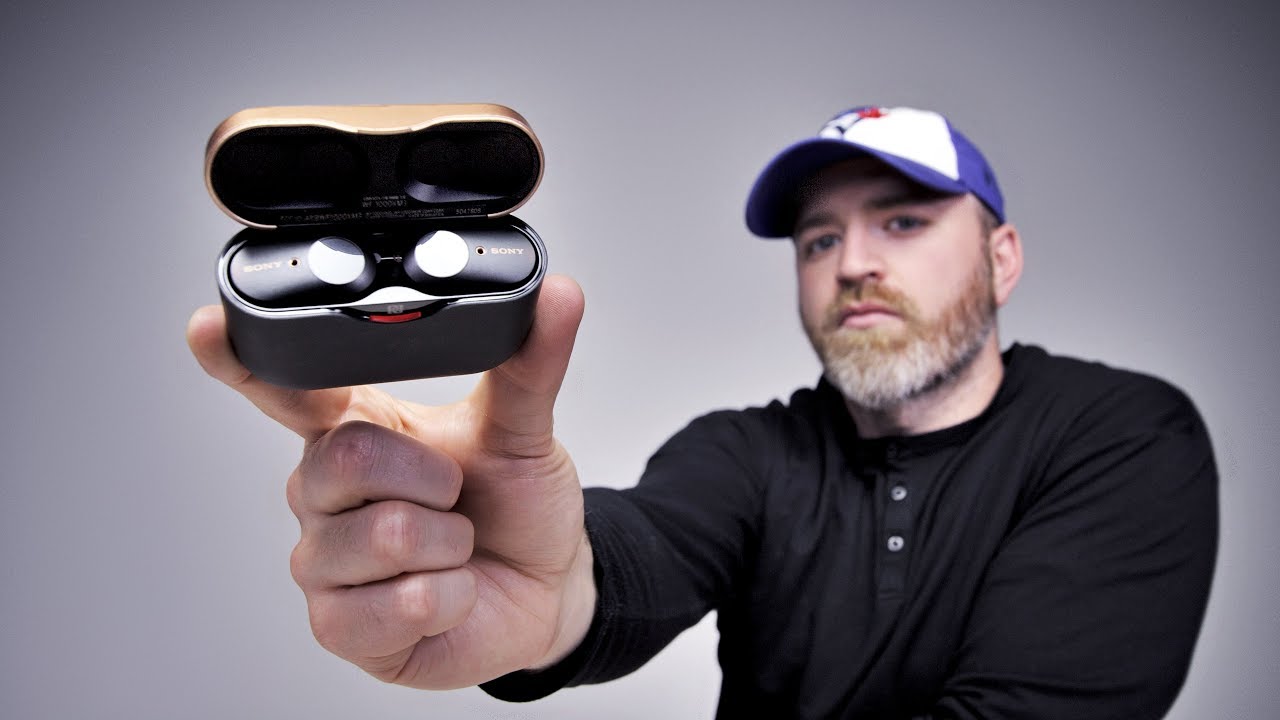

Sony just handed the true wireless earbuds category its first real noise-cancelling flagship.
Lewis Hilsenteger of Unbox Therapy titled his review “The Sony WF-1000XM3 Just Changed The Game,” and after putting Sony’s newest true wireless earbuds through their paces, it’s clear why. Priced around $230 at launch in mid-2019, the WF-1000XM3 doesn’t just compete with Apple’s second-generation AirPods and the Beats Powerbeats Pro — it brings a feature set those earbuds simply don’t have. For the first time, buyers get flagship-level active noise cancellation in a fully wireless, in-ear form factor.
- The WF-1000XM3 runs Sony’s dedicated HD Noise Canceling Processor QN1e with a dual-microphone sensor system, marking the first time flagship-grade ANC has appeared in a true wireless earbud.
- Battery life is rated at 6 hours with ANC on (8 hours without), stretching to 24 hours total via the USB-C case, with a 10-minute quick charge delivering 90 minutes of playback.
- The earbuds ship without an official IPX water-resistance rating and carry a noticeably larger charging case than rivals — the two clearest trade-offs reviewers flagged against the Powerbeats Pro and AirPods 2.
The Noise Cancellation Nobody Else Had
Until the WF-1000XM3, true wireless ANC was either absent or an afterthought bolted onto a mediocre earbud. Sony instead shrank its over-ear noise cancellation know-how into the QN1e processor and paired it with a dual-mic array capable of reading ambient sound in real time. Hilsenteger’s unboxing walkthrough treats this as the headline development — earbuds this small delivering cancellation quality that, until now, belonged strictly to over-ear headphones.
That distinction matters because neither the AirPods 2 nor the Powerbeats Pro offer any active noise cancellation at all. Apple’s earbuds rely on passive isolation; Sony built dedicated silicon to actively cancel it. For commuters and frequent flyers, that’s the difference between a decent earbud and one that can replace a pair of over-ear travel headphones entirely.
Audio Engineering Under The Hood
Beyond ANC, Sony packed in 24-bit audio signal processing and Bluetooth 5.0 with simultaneous left/right ear transmission, a setup designed to cut the latency and dropout issues that have long plagued cheaper true wireless models. Sending audio to both earbuds at once, rather than relaying it from one bud to the other, is a meaningful engineering choice that shows up in real-world stability.
Touch-capacitive controls round out the experience, giving users Quick Attention mode — a tap-and-hold that lets ambient sound flood in without pulling the earbuds out — along with the ability to toggle ambient sound modes on the fly. It’s the kind of control scheme that makes the ANC genuinely usable in daily situations rather than something to switch on once and forget.
The Sony WF-1000XM3 Just Changed The Game.
Battery Life And The Charging Trade-Off
Sony rates the WF-1000XM3 at up to 6 hours of listening with ANC engaged, or 8 hours with it switched off — numbers that hold up well against competitors that don’t have ANC to manage in the first place. The USB-C charging case pushes total playback to 24 hours, and Sony’s quick-charge implementation means a 10-minute top-up in the case is enough for another 90 minutes on the go.
The catch is size. That case is noticeably bulkier than the AirPods or Powerbeats Pro cases, and the earbuds carry no official IPX water-resistance rating — a real consideration for anyone planning to work out in them. Reviewers were consistent on this point: the trade-off for near-over-ear ANC performance in an in-ear shape is a case that doesn’t slip into a pocket quite as easily.
Future Outlook for AirPods and Powerbeats
Hilsenteger’s framing throughout the video is competitive by design — this is Unbox Therapy putting Sony’s new earbuds directly up against Apple’s ecosystem. The Powerbeats Pro answered AirPods 2 with better battery life and a more secure fit; the WF-1000XM3 answers both with something neither has: active noise cancellation built around dedicated processing, not a compromise squeezed into leftover space.
At $230, Sony isn’t undercutting Apple on price. It’s betting that true wireless buyers who want flagship noise cancellation will pay for it, the same way headphone buyers already do in the over-ear category with Sony’s own WH-1000XM3.









Honey Boo Boo Has Grown Up Quite A Bit
Purgatony Episode 08 – What?! Dreams May Come?!
If you beat this, I give you $2000…
The Richest YouTube Child Stars
50 Kendall Jenner Fashion Outfits That Will Give You LIFE