

 InfoSearched
For 53 days in the spring of 1453, the last emperor of Rome stood on a crumbling wall and refused to leave.
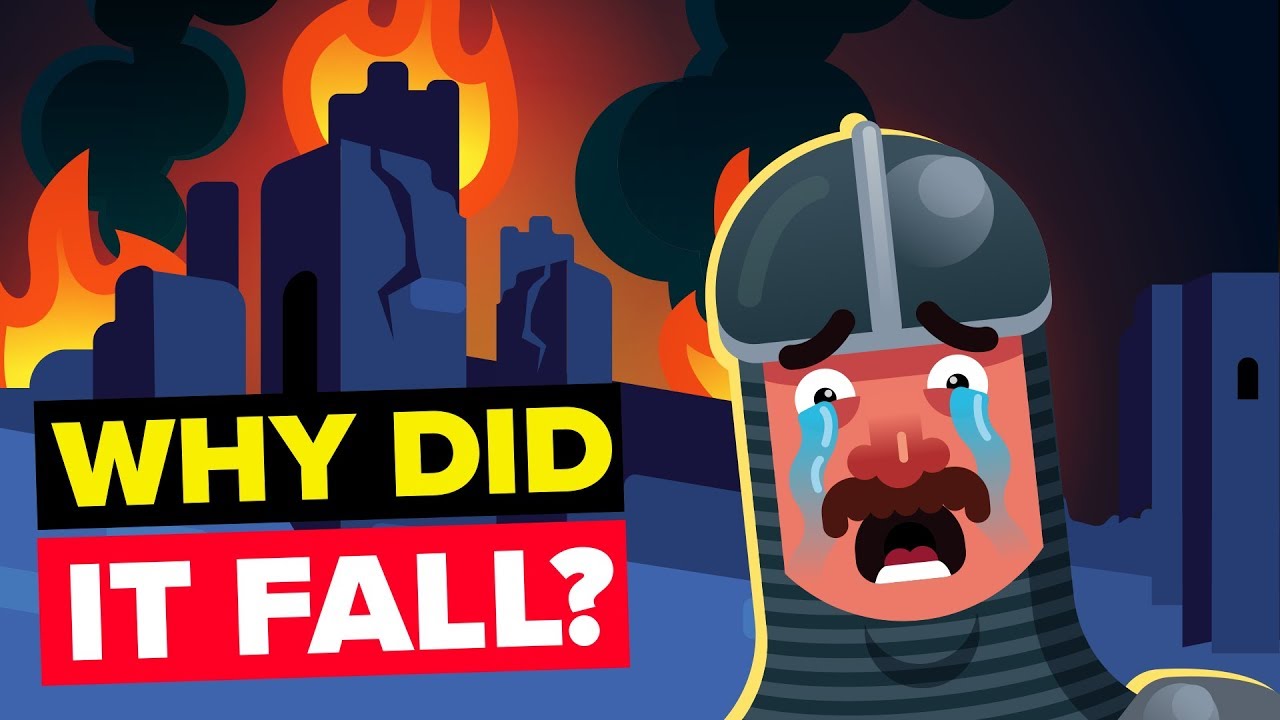
The Infographics Show’s animated breakdown, “The Fall of Constantinople,” walks through the siege that ended the Byzantine Empire and, with it, the eleven-century-long afterlife of the Roman Empire itself. It’s a story of outdated walls versus a teenage sultan’s new cannons, of a city that had survived a thousand years of sieges finally running out of time, and of an emperor who chose to die in the breach rather than watch his empire surrender without him.
- The siege ran from April 6 to May 29, 1453 — 53 days that ended the Byzantine Empire.
- Roughly 7,000 to 8,000 defenders, including Genoese commander Giovanni Giustiniani’s volunteers, held twelve miles of walls against an Ottoman army numbering in the tens of thousands.
- Sultan Mehmed II’s engineer Orban built colossal siege cannons — including the massive bombard nicknamed the “Royal One” — to batter down the centuries-old Theodosian walls.
A City Built to Be Unbreakable
Constantinople’s Theodosian walls had turned back Arab armies, Bulgarian khans, and Crusader fleets for the better part of a millennium. By 1453, though, the empire behind those walls was a shell of its former self — a fraction of its old territory, with a population and treasury nowhere near what was needed to man twelve miles of fortifications. Emperor Constantine XI Palaiologos, the last of the Palaiologan dynasty, had somewhere between 7,000 and 8,000 men to defend a city that once counted its garrisons in the tens of thousands.
That force included citizens pressed into service alongside Byzantine regulars, plus Genoese and Venetian volunteers under Giovanni Giustiniani, whose professional soldiers became the backbone of the defense wherever the fighting got worst. Against them stood Sultan Mehmed II, just 21 years old, commanding an Ottoman army that dwarfed the defenders by any count and backed by a navy meant to seal the city off from resupply by sea.
Orban’s Guns and the Breaking of the Walls
Mehmed’s decisive advantage wasn’t manpower alone — it was artillery. The sultan hired the engineer Orban to cast a series of massive bombards, including one gargantuan cannon known as the “Royal One” or Basilica, capable of firing stone balls that no medieval wall was built to absorb. Week after week, the bombardment chipped away at sections of the Theodosian defenses that had stood unbroken since the fifth century.
The defenders patched breaches at night, threw back assault after assault, and even managed to keep the Golden Horn partially defended by stringing a chain across its mouth — until Mehmed had ships hauled overland on greased rollers to bypass it entirely. By late May, the walls near the Gate of St. Romanus had been pounded down to rubble the Ottomans could finally push through.
The Final Hours
On May 29, 1453, Ottoman forces broke through the battered fortifications and poured into the city. In the hours before the end, Latin and Greek Christians — divided for centuries by the schism between Rome and Constantinople — set that history aside and worshipped together inside the Hagia Sophia, the basilica that had defined the city’s skyline since Justinian built it in the sixth century.
Constantine XI tore off his imperial regalia and died fighting in the breach alongside his soldiers rather than be captured.
His body was reportedly never conclusively identified afterward, a fitting end for an emperor whose empire itself simply stopped existing that day. It’s the kind of ending that would sit right at home among the doomed monarchs and dynasties covered in pieces like Royal Family Members That Are Nothing Like They Seem — except here, the throne room disappeared along with the man sitting in it.
Mehmed’s Early Imperial Inheritance
Mehmed II claimed the city and made it his new capital, earning the title “the Conqueror” and turning Constantinople into the seat of the Ottoman Empire for centuries to come — the same city later known as Istanbul. Historians widely mark the fall as the symbolic close of the Middle Ages, the moment the last direct institutional link to the Roman Empire finally went dark. It’s the same instinct that drives a show like Da Vinci Code: Last Week Tonight with John Oliver — picking apart how much of Christendom’s internal politics trace back to fractures like the one on display in the Hagia Sophia that final night.
The Infographics Show’s rendering doesn’t dress it up as inevitable. Constantinople held for 53 days against odds that most cities wouldn’t have survived 53 hours, and it took Orban’s cannons, Mehmed’s ships on rollers, and a breach at exactly the right gate to finally end a run that started with Constantine the Great more than eleven hundred years earlier.









Weird Things Everyone Just Ignored About Tom & Katie’s Marriage
10 Ancient Beauty Secrets That Are Useful Even Today
The Real Reason Tatum O’Neal And John McEnroe Got Divorced
Street Food in Peru – ULTIMATE 14-HOUR PERUVIAN FOOD + Market Tour in Lima!
Da Vinci Code: Last Week Tonight with John Oliver (Web Exclusive)