

The Definition of SEXY In Other Countries

Tokyo Beauty Standards Violate Ethiopian Laws
A viral breakdown from TheThings Celebrity, produced under the TheTalko network, strips away the assumption that straight teeth, clear skin and a slim frame are universal markers of attractiveness. “Different Beauty Standards Around The World” travels from Japan to Myanmar to Ethiopia’s Omo Valley to Tehran, laying out practices that Western viewers often mistake for body modification stunts but that, in their home cultures, function as beauty routines as ordinary as a manicure.
The throughline is simple: what reads as a flaw in one country reads as status, maturity or charm in another. A crooked tooth, a coiled neck, a lip stretched around a wooden disc — each carries a specific social meaning the video unpacks region by region.
- In Japan, women pay for cosmetic dental work to push their canines forward into a crowded “snaggletooth” look known as yaeba, prized as youthful and endearing rather than corrected.
- The Kayan Lahwi women of Myanmar and Thailand begin stacking brass neck coils in early childhood to create the visual illusion of an elongated neck, a tradition tied to identity and prestige.
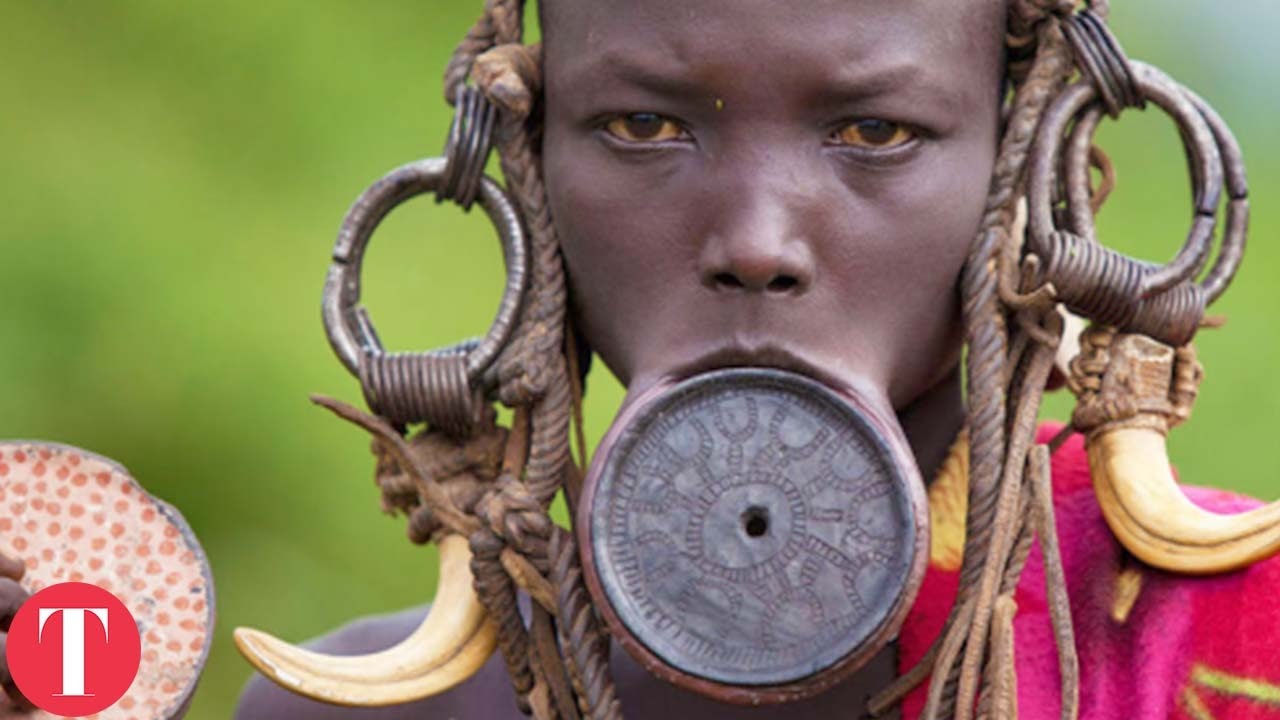
- Mursi and Suri women in Ethiopia’s Omo Valley insert progressively larger wooden or clay discs into the lower lip, with size signaling a woman’s status and readiness for adulthood.
Japan’s Yaeba And The Appeal Of Imperfect Teeth
Where American orthodontics is built around eliminating overlap, yaeba does the opposite. Cosmetic dentists in Japan push the canine teeth forward to create a fang-like overlap, and the look has been marketed as approachable and girlish rather than in need of fixing. The video frames it as a direct rebuttal to the Western assumption that a perfectly aligned smile is the only version of an attractive smile.
The same section notes that Japan has its own historical counterexample in ohaguro, the centuries-old practice of blackening teeth, once considered a mark of beauty and maturity among married women before it faded out of common use.
Neck Coils, Lip Plates And Markers Of Maturity
Among the Kayan Lahwi, brass coils are added incrementally as a girl grows, gradually compressing the collarbone and shoulders to produce the appearance of a stretched neck — a look tied to cultural identity that has also become, somewhat controversially, a draw for tourism in Myanmar and Thailand.
The lip-plating tradition among the Mursi and Suri carries a parallel logic: discs start small and are swapped for larger ones over time, with the practice functioning as a rite of passage into adult womanhood rather than decoration for its own sake.
What looks like an ancient oddity to outsiders is, inside these communities, simply what growing up and being seen as beautiful looks like.
Tehran’s Nose Job Bandages As A Status Symbol
Iran, and Tehran specifically, gets one of the video’s stranger turns. Rhinoplasty is so common and so socially desirable that the post-surgical nose bandage itself became a public status marker — worn out in the open long after the swelling healed, and in some documented cases worn by people who never had the surgery at all, purely to signal they could afford it. It flips the Western instinct to hide cosmetic work into something closer to a public flex.
Filed Teeth And Fuller Figures
The Mentawai of Indonesia and traditional communities in Malawi file or chisel teeth into sharp points as part of coming-of-age beauty customs, another direct contrast to the polished, whitened smile Western beauty campaigns push. The video closes its body-type comparison in Mauritania and parts of Africa, where fuller figures and even deliberate weight gain have long signaled prosperity and high social standing — the inverse of the slimming standard that dominates Western fashion and modeling, a contrast the outlet’s earlier piece on what the winners of America’s Next Top Model look like today makes even sharper when set side by side.
Taken together, the six practices the video covers — yaeba, neck coils, lip plates, nose bandages, filed teeth and weight gain as status — aren’t presented as a checklist of “weird” customs but as evidence that beauty standards are local currency, not a universal exchange rate. That’s the same tension that surfaces whenever a young public figure gets pushed toward a single, narrow look, the kind of pressure covered in discussions around Shiloh Jolie-Pitt and the modeling industry.
None of these traditions are relics performed for cameras — Kayan women in Myanmar still add coils today, Mursi women still choose their own disc size, and Tehran’s rhinoplasty rate has stayed high enough that the bandage-as-status-symbol habit shows no sign of going away.




Inside The Last Day Alive For These Celebs
10 Most Underrated Supermodels In The Fashion Industry
Strange Things About Kristin Cavallari’s Marriage
10 Things You Didn’t Know About ACNE
What Kim and Pete Think Of Kanye’s Recent Behaviour