

8 Optical Illusions That Will Trick Your Mind
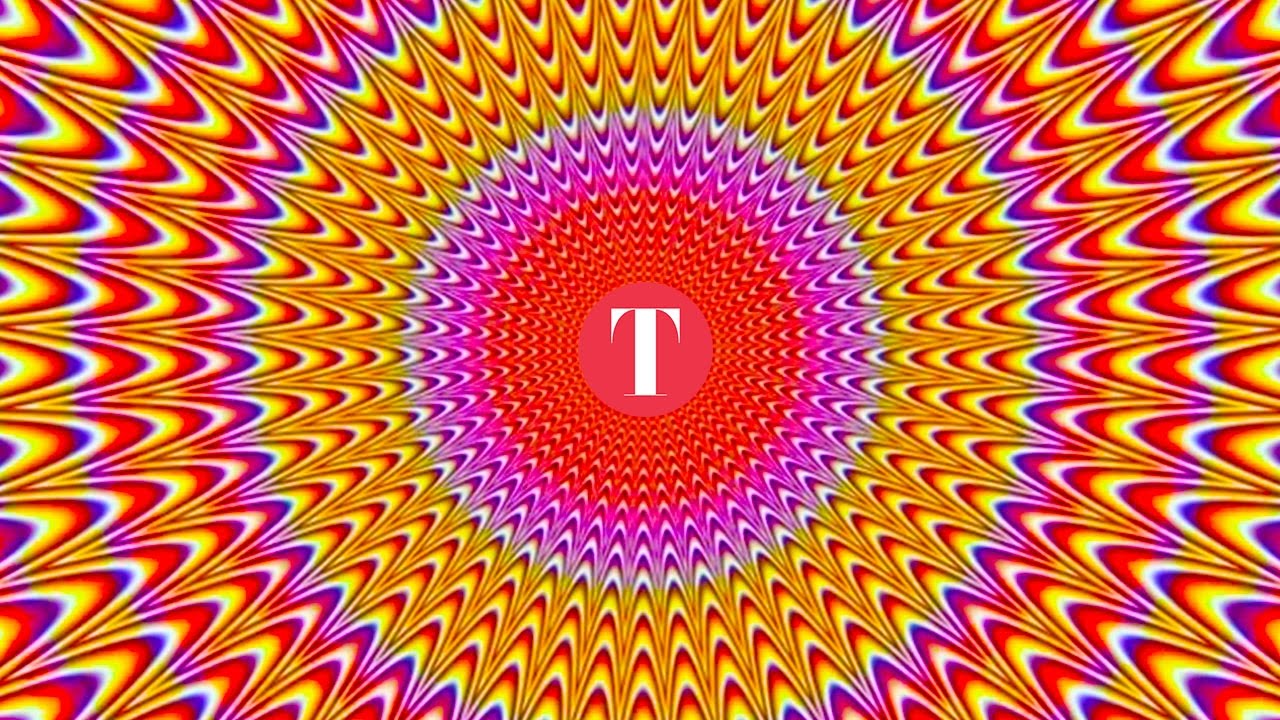

Your brain is about to fail you eight different ways, on purpose.
TheThings Celebrity, the digital entertainment channel that launched in 2015, dropped a rundown titled “8 Optical Illusions That Will Trick Your Mind,” and it’s less a listicle than a quick tour through decades of visual-perception research. Rather than chasing a news hook, the video walks through eight brain teasers built on geometry, contrast, and forced perspective — the same tricks vision scientists have used for the better part of a century to expose how the brain fills in gaps it shouldn’t. Two entries carry real scientific pedigree worth unpacking: the Ames Room and the Scintillating Grid.
- The Ames Room, one of the eight illusions featured, was invented and patented by American scientist Adelbert Ames Jr. in 1940.
- The Scintillating Grid illusion, also featured, was discovered in the 1990s as a variation of the older Hermann grid effect.
- The video comes from TheThings Celebrity, a channel that has been producing this kind of pop-science and pop-culture content since its 2015 launch.
The Ames Room’s Century-Old Trick
Adelbert Ames Jr. patented his distorted room in 1940, and it’s still the gold standard for forced-perspective illusions nearly 80 years later. The room is built as an irregular hexahedron — not a simple trapezoid, but a genuinely skewed box with a receding floor, slanted ceiling, and walls of uneven length — viewed by a single observer through a peephole. Seen with one eye and no depth cues to correct it, the brain defaults to its lifelong assumption that rooms are rectangular, so a person walking from the far corner to the near corner appears to grow several feet, or shrink to child-size, in the space of a few steps.
It’s the same principle that’s been used in film and photography for generations to make actors look abnormally large or small next to each other without any digital trickery — a peephole and a carefully warped set doing all the work.
Grids, Dots, and Peripheral Vision
The Scintillating Grid illusion is the newer entry in the video, discovered in the 1990s as a twist on the classic Hermann grid. Instead of plain intersecting lines, this version places white circular discs at every intersection of a grid of white or light-gray lines set against a dark background. Stare anywhere but directly at a disc, and the ones sitting in your peripheral vision appear to flash black, one after another, as your eyes drift across the pattern.
The dots only go dark when you’re not looking straight at them — the moment your eyes settle on one, it turns white again.
The effect comes down to how peripheral vision processes luminance contrast differently than the fovea, the sharp-focus center of your visual field — a gap the brain papers over with a false signal instead of admitting it doesn’t have full information.
Lines That Lie: Ponzo, Müller-Lyer, Ebbinghaus, Hering
The remainder of the eight leans on perspective and context rather than lighting. The Ponzo illusion makes two identical lines look like different lengths by placing them against converging lines that mimic a road or railway track receding toward the horizon — the brain assumes the “farther” line must be longer to look the same size up close. The Müller-Lyer illusion does something similar with inward- and outward-pointing arrowheads capping otherwise equal lines, while the Ebbinghaus illusion surrounds two identical circles with rings of different sizes so one center circle reads as bigger or smaller depending on its neighbors. The Hering illusion, meanwhile, bends two straight parallel lines into apparent curves simply by running a fan of diagonal lines behind them.
Impossible Shapes and Moving Illusions
The video also touches on impossible objects like the Penrose triangle — a shape that reads as a solid three-dimensional triangle on paper but could never physically exist, since each corner is drawn with a twist that contradicts the one next to it. Rounding out the eight is the motion aftereffect, the familiar experience of staring at something moving — a waterfall, a spinning wheel — then looking away and briefly seeing stationary objects appear to drift in the opposite direction, a byproduct of motion-detecting neurons resetting after overstimulation.
Anyone who’s burned an afternoon down a rabbit hole of illusions like this will get a kick out of other mind-bending InfoSearched entertainment picks, including the hardest tongue twister for a different kind of brain jam, or the claustrophobic puzzle-solving in World’s Most Dangerous Escape Room for a physical version of the same principle — spaces built specifically to outsmart the person standing in them.
None of these eight are new discoveries — Ames built his room in 1940 and the Hermann grid dates back even further — but stacking them together in one seven-minute rundown is exactly the kind of format that keeps a channel like TheThings Celebrity’s back catalog getting rediscovered years after upload, one confused comment section at a time.









20 Things You Didn’t Know About EMINEM
10 Famous People Ruined By Reality TV
Can Julian Newman WIN The Finals, Or Will Mikey Williams & Kyree Walker Take The Crown!? ????
Celeb Kids Who Disgraced Their Parents
Pokémon Presents | 8.18.21