

10 Flight Attendants Who Dress BETTER Than You

Somewhere between the runway and the jet bridge, high fashion found its most unlikely client: the airline industry.
The days of the drab blazer and the knee-length skirt are over. Major carriers have spent decades quietly hiring couturiers — the same names dressing red carpets and bridal parties — to redesign the uniforms their cabin crews wear thousands of feet in the air. TheThings Celebrity’s video “10 Flight Attendants Who Dress BETTER Than You” runs through the designers behind those looks, from Christian Lacroix’s work for Air France to Vivienne Westwood’s culottes for Virgin Atlantic. What emerges is less a wardrobe rundown than a history of airlines using their crews as a mobile runway.
- Christian Lacroix redesigned Air France’s cabin crew uniform with navy tailoring set off by a signature red sash.
- Pierre Balmain created Singapore Airlines’ floral-batik “Sarong Kebaya” uniform, a design the airline has kept in service for decades.
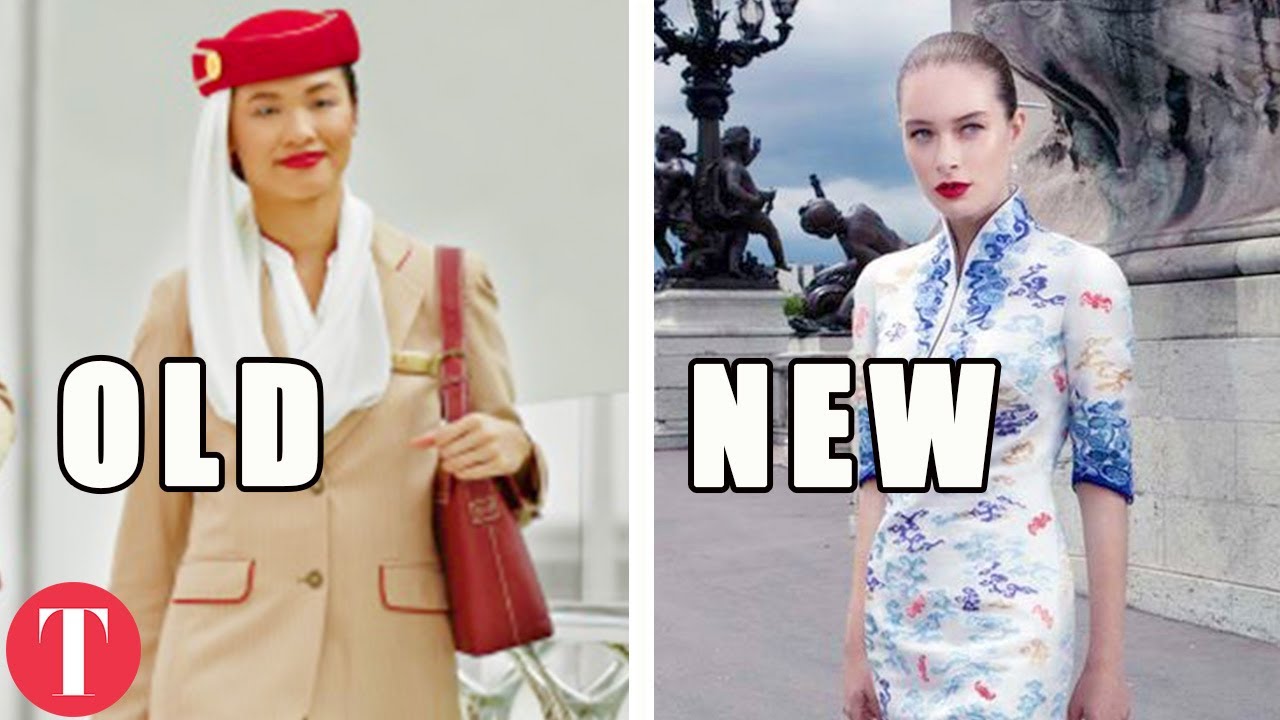
- Emirates’ Simon Jersey uniform — beige suiting, red pillbox hat, white silk scarf — comes with a strict grooming protocol for crew.
Couture Houses Take Over the Cabin
Airlines didn’t back into this arrangement — they went shopping for it. Rather than farming uniform design out to a corporate uniform supplier and calling it done, carriers like Air France, Etihad, Emirates and Singapore Airlines went directly to designers with runway pedigree. The logic is simple: a flight attendant is the first and last face a passenger sees on a trip, and a distinctive silhouette photographs as well on a boarding ramp as it does at a fashion show.
Christian Lacroix’s contribution to Air France sits at the center of that strategy. His navy ensembles, cut with the same precision he brought to his own couture house, are finished with a bold red sash that instantly signals the airline’s brand without needing a logo in sight.
Continental Contrasts: Etihad and Alitalia
Designer Ettore Bilotta took a different route for Etihad Airways and Alitalia, leaning into retro tailoring pulled straight from 1960s Italian style. His uniforms for both carriers pair fitted jackets with distinctive headwear, giving each airline a look that reads as heritage rather than corporate branding exercise — a deliberate nod to an era when air travel itself was still a luxury event.
Singapore Airlines’ Sarong Kebaya Legacy
No uniform in the video carries more history than Pierre Balmain’s work for Singapore Airlines. His floral-batik “Sarong Kebaya,” introduced decades ago, became one of the most recognizable cabin crew looks in commercial aviation and has stayed largely untouched ever since — a rare instance of an airline refusing to chase trend cycles. Balmain had already proven his instinct for aviation style earlier in his career, tailoring uniforms with bowler hats for regional Asian carriers.
Emirates’ cabin crew are required to keep their look camera-ready down to the last detail — the beige suit, the red pillbox hat, and the white silk scarf are all governed by a strict grooming protocol.
American Carriers Play It Bold
Stateside, the palette gets louder. Stan Herman’s designs for United Airlines and Richard Tyler’s work for Delta Air Lines both leaned into saturated color — vibrant red and deep navy wrap dresses replacing the muted separates that defined earlier decades of domestic flying. It’s a visual shorthand any traveler who’s spent time comparing airlines’ brand identities would recognize immediately, similar to how designer collaborations elsewhere in pop culture — think the kind of high-profile designer commissions that turn up around royal weddings — get used to make an institution look current without changing what it actually does.
Runway Details at 35,000 Feet
The newest wave of designs borrows straight from current runway trends. Vivienne Westwood’s work for Virgin Atlantic and Prabal Gurung’s contributions bring in culottes, capes, structural trench coats and patterned silk scarves — details that wouldn’t look out of place at fashion week, adapted for crew who still need to lift luggage bins and demonstrate seatbelts. It’s the clearest sign yet that airlines see uniform design the same way any brand chasing celebrity-level style attention does: as a walking advertisement that happens to also do a job.
What ties Lacroix’s sashes to Westwood’s culottes to Balmain’s batik kebaya is that none of it was designed to be practical first — it was designed to be noticed, then made to work within FAA and safety requirements after the fact. That’s the trick the video keeps circling back to: the uniform has to survive a beverage cart and an emergency exit demo, and somehow still look like it belongs on a runway instead of a jet bridge.






Draymond and KD Reveal What Really Happened with Warriors Fallout | FULL INTERVIEW (Chips)
The 10 Most Controversial Barbies Ever
The Former Cosby Show Star Who Now Works At Trader Joe’s
10 Amazing Photos of the Most Powerful People
Hannah Goes Off During Men Tell All – The Bachelorette