

CHEVELLE – Everything You Need to Know | Up To Speed
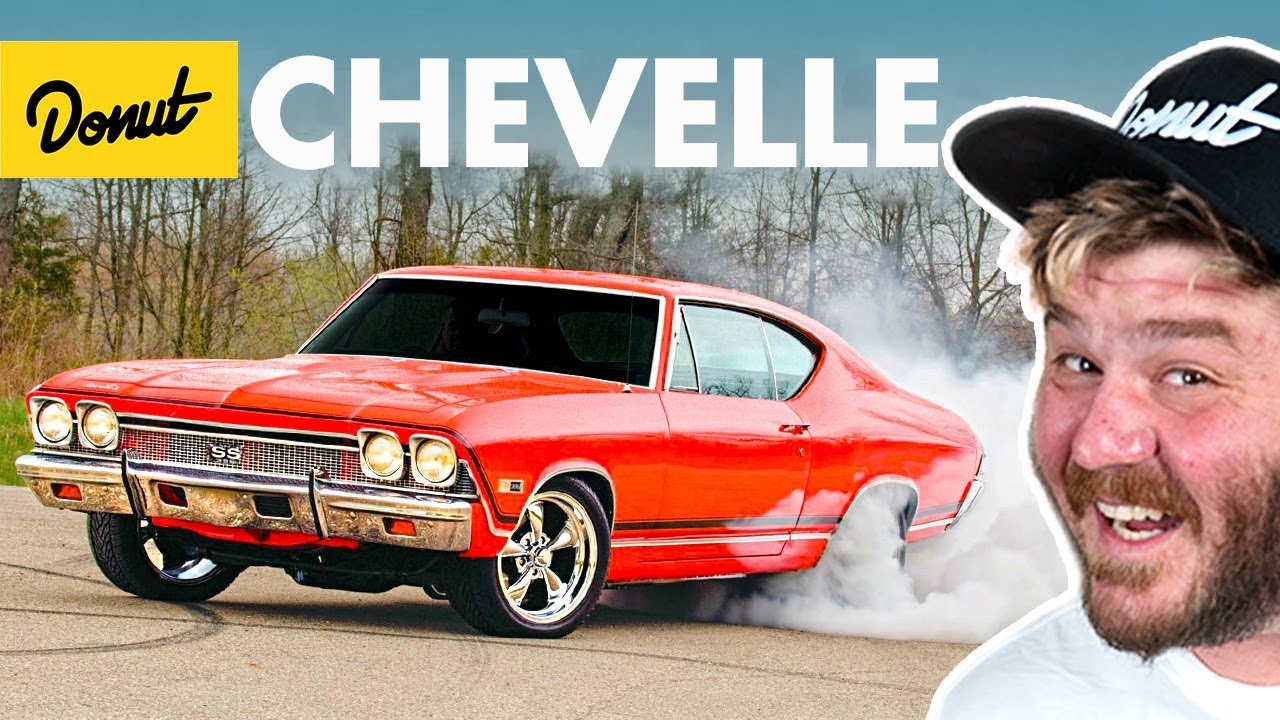

General Motors built a mid-size muscle car that ended up eating its own siblings alive.
Donut Media’s James Pumphrey turns the spotlight on the Chevrolet Chevelle in the latest episode of “Up to Speed,” tracing how a car built to split the difference between the full-size Impala and the compact Chevy II/Nova became one of the defining names of the muscle car era. The Chevelle wasn’t flashy by design — it was a mid-size workhorse offered as a sedan, convertible, and station wagon. But its Super Sport trims turned it into something else entirely.
- Chevrolet introduced the Chevelle in September 1963 for the 1964 model year, positioning it between the Impala and the Chevy II/Nova.
- Only 201 units of the ultra-rare 1965 Z-16 SS 396 package were ever built.
- The 1970 SS 454 packed the LS6 big-block V8 rated at 450 horsepower, the peak of the muscle car wars.
Filling the Gap Between Impala and Nova
Chevrolet didn’t build the Chevelle to be a halo car. It existed to plug a hole in the lineup — a mid-size platform that could carry a family on Monday and a big-block V8 on Saturday. According to the “Up to Speed” breakdown, that positioning between the full-size Impala and the compact Chevy II/Nova is exactly what let Chevrolet stuff increasingly serious engines into an otherwise ordinary body over three generations of production, from 1964 all the way to 1977.
The versatility is easy to miss now that the Chevelle is remembered almost entirely for its SS badge. In period, though, the same chassis underpinned sedans, wagons, and convertibles built for buyers who never intended to run a quarter-mile. That everyday foundation is part of why the performance variants hit as hard as they did — nobody expected the family hauler to double as a drag strip weapon.
The Z-16 and the Rise of the Super Sport
The Super Sport package is where the Chevelle earns its reputation, and the video walks through just how scarce the earliest high-water mark actually was. Chevrolet built only 201 examples of the 1965 Z-16 SS 396, a package that dropped a 396-cubic-inch big-block into the Chevelle years ahead of when that kind of displacement became standard muscle car fare. That rarity alone makes surviving Z-16 cars among the most sought-after Chevelles at auction.
From there, the SS lineage escalated year over year as Chevrolet, Pontiac, Ford, and Chrysler traded blows in what’s remembered as the muscle car wars. The Chevelle kept pace by leaning harder into big-block power rather than chasing handling refinements, which is exactly the strategy that produced its most famous variant.
1970 SS 454: The Peak of the War
Nothing in the Chevelle’s run tops the 1970 SS 454 with the LS6 big-block, and the “Up to Speed” episode treats it as the nameplate’s high-water mark for good reason. Rated at 450 horsepower, the LS6 was one of the most powerful engines GM offered to the public during the entire muscle car era, and it landed in a car that was still, on paper, a mid-size Chevrolet built to share a factory with station wagons.
Only 201 of the 1965 Z-16 SS 396 were ever built — and five years later, the same nameplate was putting a 450-horsepower LS6 in showrooms.
That leap from a limited-run 396 to a mainstream-catalog 454 in half a decade says everything about how fast the horsepower arms race moved before regulators stepped in.
NASCAR, the Colonnade Era, and the Long Fade
The Chevelle’s second act played out on oval tracks. The Chevelle Laguna, driven by drivers including Cale Yarborough, found NASCAR success built around aerodynamic styling rather than sheer displacement, giving the nameplate a competitive identity even as street performance began to slide. Chevrolet reshaped the road-going Chevelle in 1973 with the “Colonnade” platform, a styling shift that moved the car further from its muscle car roots and toward a more conventional mid-size sedan.
Tightening emissions regulations through the mid-1970s did the rest, diluting the performance that had defined the car for a decade. Chevrolet finally retired the Chevelle name after the 1977 model year, folding its mid-size lineup into the newly downsized Malibu — a nameplate that’s still on Chevy lots today, even if it carries none of the LS6’s menace.
For a deeper dive into the personalities and history behind automotive icons like this one, “Up to Speed” has built its whole run around exactly this kind of breakdown — engines, numbers, and the decisions that turned ordinary cars into legends.







Nintendo Direct – 9.23.2021
Celebs Who Died In 2021 So Far
10 Basic Beauty Tips For The BEGINNER
The Shady Side Of Nick Cannon Revealed
KIDS BUILD Mind Blowing Water Slide