

 InfoSearched
Succession Reform Challenges for Monarchy
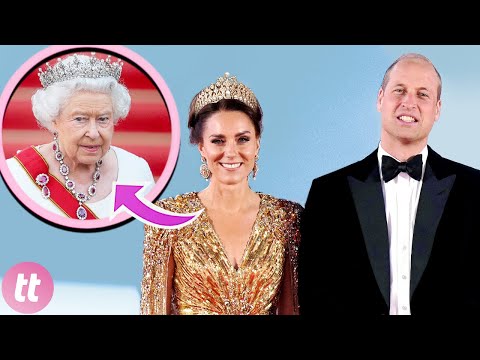
Speculation has swirled for months over whether Queen Elizabeth II might bypass her eldest son and hand the throne straight to Prince William and Kate Middleton. With the Queen now 95 and marking nearly 69 years on the throne, the question of what happens next has become one of the most searched royal storylines of the year. The answer, according to constitutional experts, has far less to do with popularity polls and far more to do with centuries-old law.
- Queen Elizabeth II has reigned since 1952, a stretch approaching 69 years, and is 95 years old as of this reporting.
- The Act of Settlement 1701 governs succession automatically — the monarch has no legal authority to choose or reorder heirs, meaning Charles remains first in line regardless of public sentiment.
- The only way William could ascend ahead of his father is if Charles predeceases the Queen or formally abdicates through an act of Parliament, the same process used in 1936 when King Edward VIII stepped aside.
Legal Authority Over Royal Succession
Royal fans hoping the Queen could simply “choose” William and Kate are up against hard statute, not tradition. The Act of Settlement 1701 removes any personal discretion from the monarch — the crown transfers automatically and immediately upon death to the next eligible heir. That puts Prince Charles, not William, at the front of the queue the moment the Queen’s reign ends, full stop.
Under British law, the crown doesn’t skip a generation just because the public prefers the next one in line.
The Only Path Around Charles
There are exactly two scenarios in which William would take the throne before his father: Charles dies before the Queen, or Charles accedes and then formally abdicates. Either path would require an act of Parliament to execute, mirroring the constitutional process Britain last used when Edward VIII gave up the crown in 1936 to marry Wallis Simpson. Short of one of those two outcomes, Charles becomes king the instant his mother’s reign ends — there is no legal mechanism for the Queen to reroute the succession herself.
William, Kate and the Popularity Factor
None of this has stopped the public conversation. Polling and media coverage have repeatedly shown the Duke and Duchess of Cambridge as the more modern, more popular face of the monarchy’s future, and both have kept expanding their public duties accordingly. Kate has steadily built out her own portfolio in anticipation of one day serving as Queen Consort, while William has continued taking on higher-profile royal engagements — the kind of preparation that looks a lot like grooming for the top job, just not on any accelerated timeline. Fans curious about how other royals have handled the pressure of public image might find it worth revisiting royal family members who turned out to be nothing like they seem, a reminder that the Windsor family’s public and private faces don’t always match.
Charles, for his part, remains the designated heir apparent with no legal cloud over that status. The gap between what royal watchers want and what the statute books allow is exactly why this story keeps resurfacing every time the Queen’s health or age comes up in the press — for more on how tabloid narratives around the family have played out, see the coverage of royal wedding spending that shows just how closely every detail of this family gets tracked.
So barring an abdication announcement or a shift no one currently sees coming, Charles becomes king the moment the Queen’s reign ends, and William waits his turn as second in line — popularity polls notwithstanding.






The Untold Truth Of Little People Big World’s Caryn Chandler
Netflix’s YOU Season 3 Explained | Season 4 Teases | Victoria Pedretti, Penn Badgley
How These Pop Stars Looked Before And After Plastic Surgery
The Two Generals’ Problem
10 Things To Know Before Prom